
MAKE THE NEXT DECISION WITH BETTER EVIDENCE
Mould Inspection in London
Get a clear explanation before treatment.
An inspection is useful when you can see the mould but do not yet know what work makes sense. We look at accessible affected surfaces, the room around them and the history of the problem, then explain what the evidence supports and what remains uncertain.
- Mould reappearing in the same place
- An unexplained musty smell
- Different rooms developing similar patches
020 4600 5416 Monday – Saturday
THE STARTING POINT
Understand the moisture.
Then decide the work.
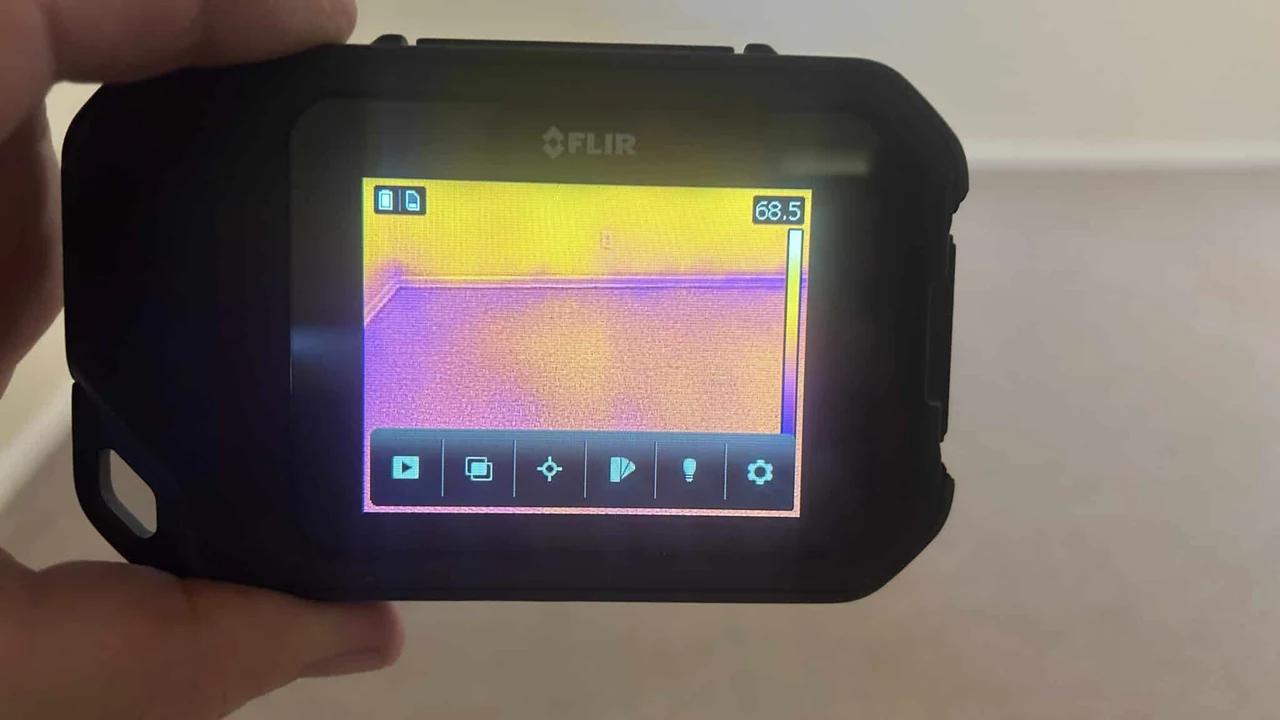
Reference photograph; not a company job. Photo: iDry Columbus · CC BY 4.0 (resized WebP).
What question do you need answered?The inspection connects the surface with the propertySeveral moisture questions can remain open at onceAccessible inspection and concealed investigation are differentFindings should make the next action understandableTreatment follows a separate scope decisionQuestionsContact
What question do you need answered?
You might want to understand why bedroom growth returns, whether a ceiling mark relates to a known leak, or which areas should be included in a treatment proposal. Start with that question when calling. An appointment to examine an accessible wall is different from a request to investigate a concealed plumbing route or provide findings for a property purchase. Explaining the intended use of the findings helps us discuss a suitable scope.
If somebody else arranges the visit, make sure the occupier’s account reaches us too. A booking described as a small spot may involve a wall hidden behind fitted furniture. Earlier photographs, the date of a repair and a simple room sketch can be more useful than a guessed cause. You do not need to buy instruments or carry out tests before asking for an appointment.
For examples of how a property question changes the enquiry, read the guides for Clapham, Battersea and Wandsworth. Their property, diagnostic and outside-connection questions can help you describe the decision you need. Give us the postcode, affected rooms and known water incidents, including any furniture or locked space limiting access.
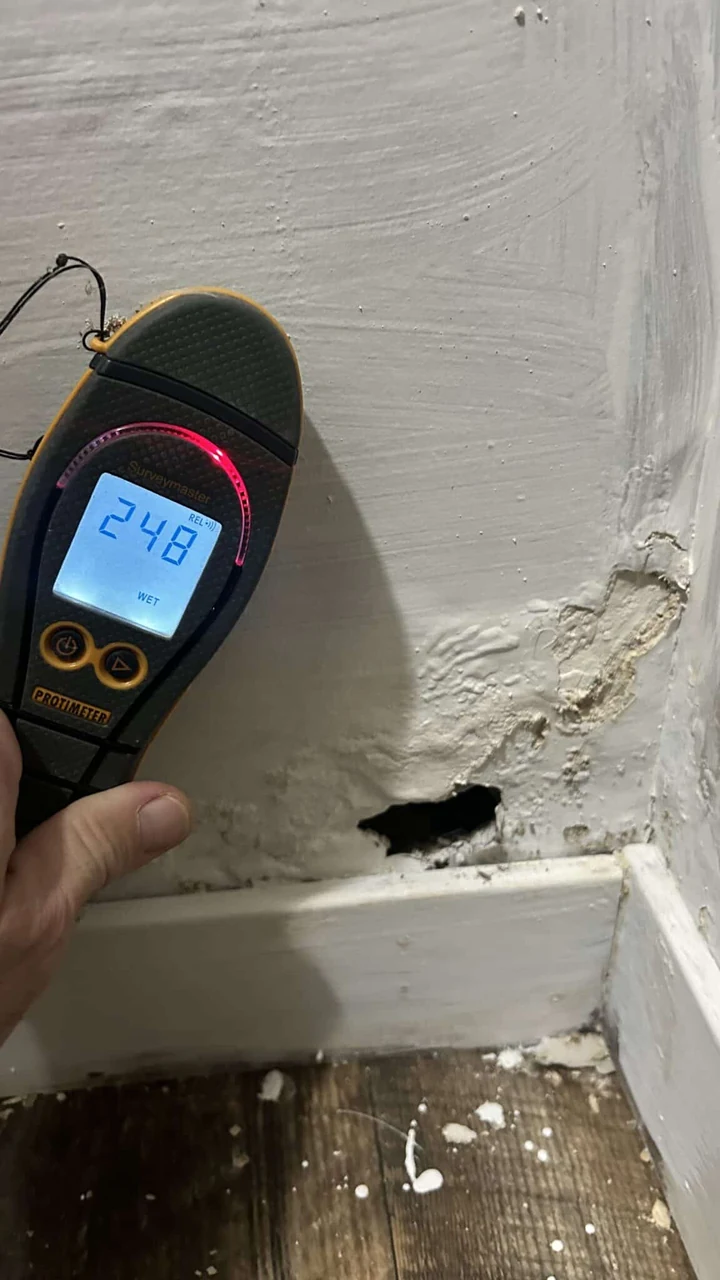
Reference photograph; not a company job. Photo: iDry Columbus · CC BY 4.0 (resized WebP).
The inspection connects the surface with the property
We examine the accessible areas agreed for the visit and discuss where growth appears, which materials are affected and how the pattern developed. A frame joint, painted plaster and damaged timber are different surfaces. Nearby rooms, external walls, fitted units and water fittings may help define the enquiry. The visible area matters, but its outline alone does not identify the moisture route.
Suitable moisture or room-condition checks can support that assessment. They need a location and a reason: comparing a suspect patch with appropriate surrounding material is more informative than presenting an isolated number. Where a question concerns persistent wall wetting rather than visible growth, a focused damp inspection may be the better starting point. Explain which evidence you already have so it can be considered in context.
Several moisture questions can remain open at once
Indoor moisture collecting on a cool surface, water entering through a building detail and a plumbing escape can produce overlapping observations. A wet bedroom window does not exclude a separate wall problem. Equally, a past leak does not establish that every new mark has the same source. We keep the evidence for each possibility separate rather than make the appearance carry more certainty than it can support.
For window-related concerns, the glass, frame and surrounding-wall guide explains why those components need distinct descriptions. If marks return after repeated cleaning, tell us how quickly they return and whether the same position is affected. That history can change the next check; it is not proof that one product or one ventilation measure will solve the problem.
Accessible inspection and concealed investigation are different
A wardrobe lining can prevent examination of the wall behind it. A service box may be locked, and a ceiling can conceal several layers. The initial appointment should identify those limits. Removing finishes, entering a roof space, opening a fitted unit or accessing another dwelling requires the right permission and an agreed purpose. It is not automatically included because a photograph shows mould nearby.
Where further access is recommended, ask what it would establish and how the result could change the proposed work. A targeted investigation is useful when it answers an unresolved question. It should also be clear who will arrange access and making good. Our hidden-water-source service addresses a different enquiry from visual inspection of accessible growth.
Findings should make the next action understandable
We explain what was observed in the accessible areas, how those observations fit the moisture history and which next action is supported. The practical output is a clearer explanation of the concern and what needs attention, rather than an unexplained list of meter numbers. Keep any limitation attached to the relevant position: a wall behind an unopened lining has not been cleared by examining the lining face. Ask which recommendation concerns growth and which concerns moisture.
If you need written findings for an agent, property record or another contractor, discuss the required format before booking. Do not assume a room appointment provides a full building survey, a laboratory identification or a certificate clearing concealed construction. For a purchase-related question, the pre-purchase inspection enquiry helps clarify the decisions and access available before completion.
Treatment follows a separate scope decision
Inspection does not automatically include removal. Once the material and moisture questions are clearer, mould treatment can be discussed for the identified areas. A sound finish with surface growth and a weakened finish exposed to continuing water may need different responses. Repairs, drying and reinstatement should remain visible in the plan instead of being implied by the word treatment.
For a rental property, arrange attendance with the occupier and identify who can approve the proposed work. The landlord service explains the practical handover between observation, access and action. We do not decide contractual responsibility simply by viewing a stain. The relevant parties need findings they can use without overstating what was checked.
YOUR QUESTIONS
Questions about mould inspection
Does an inspection include removing the mould?
Only if treatment has been discussed and included in the agreed work. The inspection and treatment decisions have different purposes. Tell us if you want both considered so the affected surfaces, access and appointment requirements can be explained.
Can a photograph establish the cause?
It can locate a concern and help plan a visit, but it cannot establish concealed construction, current material condition or every possible water route. Send a wider room view as well as a close-up, and describe when the pattern changes.
Will you identify the mould species?
Appearance alone does not confirm species. A property and moisture inspection has a different purpose from laboratory testing. If a particular testing requirement matters to you, raise it before booking rather than assume it is part of the visit.
What if the room looks dry on the day?
Earlier observations still matter. Explain the usual timing and provide dated photographs where available. A dry visit can supply useful accessible evidence while leaving an intermittent condition unresolved; any recommended follow-up should state what further observation would answer.
Can you provide findings for a managing agent?
Discuss the required format, areas and intended use beforehand. Access to shared parts may need the agent’s involvement. Findings should distinguish what was examined in the room from any external or concealed question still awaiting another appointment.
Should I move fitted furniture before attendance?
Tell us what it conceals first. Do not dismantle fixed units simply to prepare for a visit. Where further access is needed, its purpose, permission and reinstatement should be agreed instead of turning a room inspection into an unplanned strip-out.
SPEAK TO A TECHNICIAN
Tell us what you need the inspection to answer.
Call 020 4600 5416 with your postcode, the affected rooms and any earlier repairs. We will discuss the enquiry, available access and appointment availability.
SPEAK DIRECTLY TO A TECHNICIAN
Monday – Saturday
Have your postcode and the affected rooms in mind. Tell us about any known leak or previous treatment.