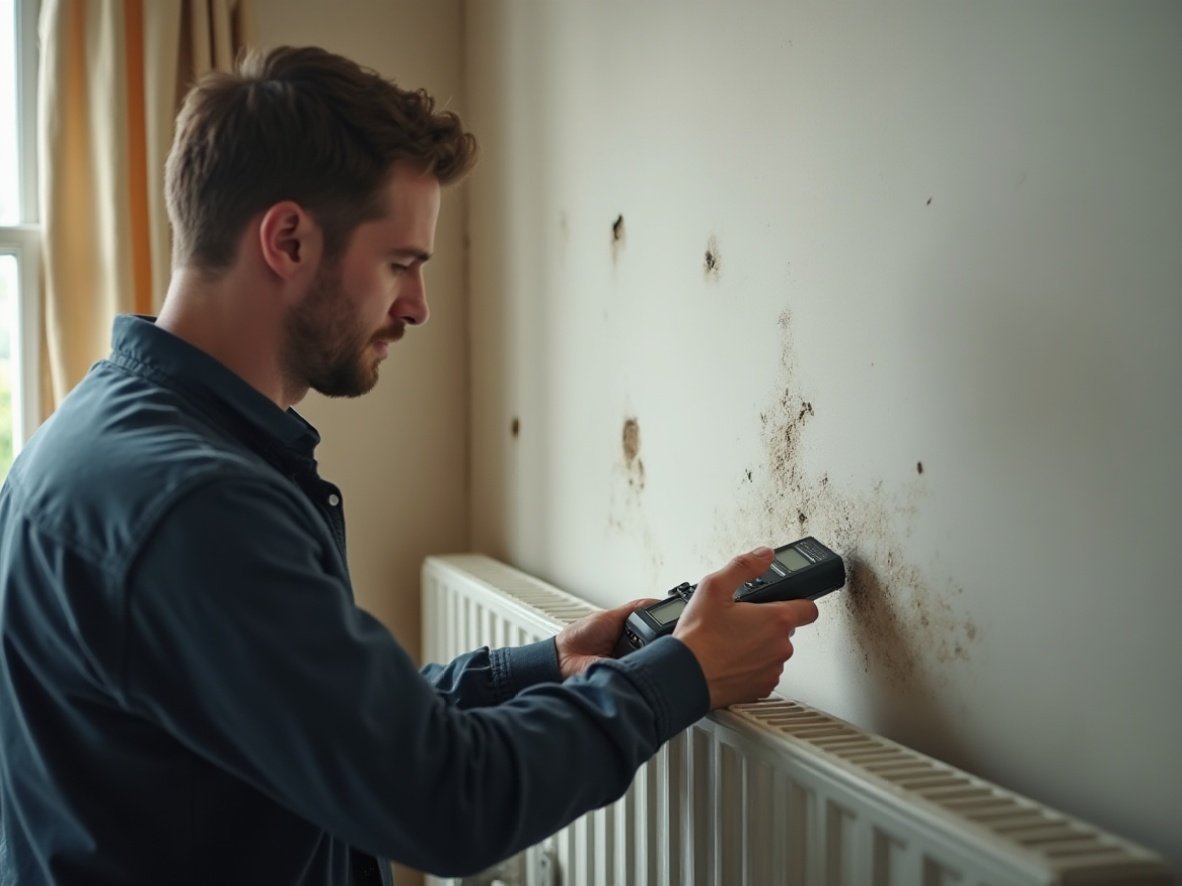
Proper Cause Detection
We don’t just remove visible mould. We identify whether it’s condensation, damp, or a hidden leak before treating it.
Buying a property in London can hide moisture problems that aren’t obvious during viewings, especially in empty or recently redecorated homes. At Mould Inspection London, we assess how the property actually behaves, not just how it looks on the surface. This helps you understand potential mould risks early, before they turn into costly or ongoing issues after purchase.




When you view a property, it’s usually presented at its best — freshly painted, aired out, sometimes even unoccupied. That can hide early signs of moisture issues that only show up once someone is living there day to day. A pre-purchase mould inspection focuses on how the property is likely to behave over time, not just how it looks during a short viewing.
We recently inspected a ground-floor flat in Southwark that had been redecorated before going on the market. Everything looked clean, but there were subtle signs — slightly cooler sections along one wall and faint marks near the skirting. Testing showed elevated humidity levels in that area, and the wall was holding moisture longer than it should. It hadn’t developed into visible mould yet, but the conditions were already there.
London properties vary a lot, and so do the risks. Basement and ground-floor flats tend to deal with cooler temperatures and slower drying times, which increases the chance of condensation build-up. Top-floor flats, on the other hand, can trap heat and moisture if ventilation is limited, especially in newer builds with sealed windows.
Converted properties often have uneven insulation. One room might stay warm and dry, while another develops cold spots where condensation forms more easily. These differences aren’t always visible during a viewing, but they affect how moisture behaves once the property is occupied.
We also look at how ventilation is set up. Extractor fans, vents, and window design all influence how humid air moves through the space. If airflow is restricted, moisture will settle in predictable areas — corners, ceilings, and around windows — even if there’s no current mould present.
A mould inspection before purchase isn’t about finding faults in every property — it’s about understanding risk. Some level of condensation is normal, especially in London’s climate. The question is whether the property can manage it effectively.
There are also limitations. If a property is empty, it won’t produce the same level of moisture as when it’s lived in. That means we assess based on indicators — temperature differences, material condition, and how the layout affects airflow — rather than waiting for visible mould to appear.
At Mould Inspection London, the aim is to give you a clear picture before you commit. That might confirm the property is low risk, or it might highlight areas that need attention. Either way, it helps you make a decision based on how the property will perform in real living conditions, not just how it looks on the day of viewing.

Mould kept coming back behind our wardrobe no matter how many times we cleaned it. The technician explained it was condensation getting trapped against the wall. After the treatment and moving the furniture slightly, it hasn’t returned.
Booked them after trying to deal with it myself for months. What I liked is they didn’t just clean it and leave — they explained why it was happening and what to change. Feels properly resolved now.
We had mould on the ceiling near the bathroom and thought it was just poor cleaning. Turned out the extractor fan wasn’t working properly. They sorted the mould and explained what needed fixing.
I was expecting a quick clean, but they pointed out a small leak I hadn’t noticed. That explained why the mould kept coming back. Glad we dealt with it properly instead of just covering it up again.
The mould around our windows was getting worse every winter. The visit was straightforward, no overcomplicating things. They treated the areas and explained how to manage condensation better. Big improvement since.
We had a constant musty smell in the bedroom and didn’t realise it was mould starting in the corner. They didn’t rush the job — first checked the room properly, then treated the area. Also gave practical advice that actually made sense.

A general property survey will often note damp readings or visible staining, but it doesn’t always go far enough to explain how or why moisture behaves in certain areas. That’s where problems get overlooked. You might get a comment about “possible condensation risk,” but without context, it’s hard to judge how serious that is.
We inspected a maisonette in Wandsworth where the survey had flagged minor damp readings near a window. On closer inspection, the issue was linked to poor air circulation in that room and a consistent temperature drop along the window reveal. It wasn’t structural damp, but without addressing that pattern, it would have developed into recurring mould once occupied.
Another common gap is how different materials respond to moisture. Plasterboard, paint layers, and insulation all react differently depending on humidity and temperature. In some cases, a wall can feel dry on the surface but still hold residual moisture deeper within. That’s not something you’ll usually pick up without a more focused inspection.
Even if a property looks fine structurally, the layout can make it more prone to mould once someone moves in. Smaller rooms, limited storage, and multi-use spaces often lead to restricted airflow, especially when furniture is placed against external walls. That’s when hidden areas start holding moisture.
We saw this in a flat in Camden where the bedroom layout meant the bed had to sit against an external wall. There was no visible mould at the time of inspection, but the wall stayed noticeably cooler than the rest of the room. With regular use, that kind of setup would almost certainly lead to surface condensation and mould forming behind the bed.
Ventilation habits also matter. Some properties rely heavily on occupants opening windows, while others depend on mechanical systems. If those systems are weak or inconsistently used, humidity levels can rise quickly, especially in winter when windows stay closed.
A pre-purchase mould inspection isn’t about avoiding every risk — it’s about knowing what you’re taking on. Some properties will always require more attention to ventilation or heating patterns. The key is understanding that before you buy, not discovering it months later.
There are also cases where minor issues can be managed easily with the right adjustments. Others may need improvements to ventilation or insulation to prevent ongoing problems. Knowing the difference helps you plan realistically.
At Mould Inspection London, we aim to give you a practical view of the property. Not just whether mould is present, but how likely it is to develop under normal living conditions. That way, you’re making a decision based on how the property will perform over time, not just how it appears during a viewing.
Recurring Mould Solved
We regularly deal with mould that keeps coming back — identifying the real cause before treating it properly.
Cause, Not Just Cleaning
We don’t just remove surface mould. We check moisture levels, airflow, and hidden issues behind the problem.
Built for London Homes
From compact flats to older properties, we understand how mould develops in real London living conditions.
Clear, Practical Advice
You’ll know exactly what caused the issue and what needs to change to stop it returning.