
YOU CLEANED IT, BUT THE SAME CORNER RETURNED
Mould Inspection Peckham
You have scrubbed the mark, tried a different product and perhaps repainted, yet the surface changes again. A Peckham mould inspection can use that history to investigate the room and moisture source, rather than send you back to another unsupported cleaning routine.
- Identify what returned and how soon after the last attempt
- Keep product and decorating history with the room evidence
- Choose inspection or treatment for a clearly stated purpose
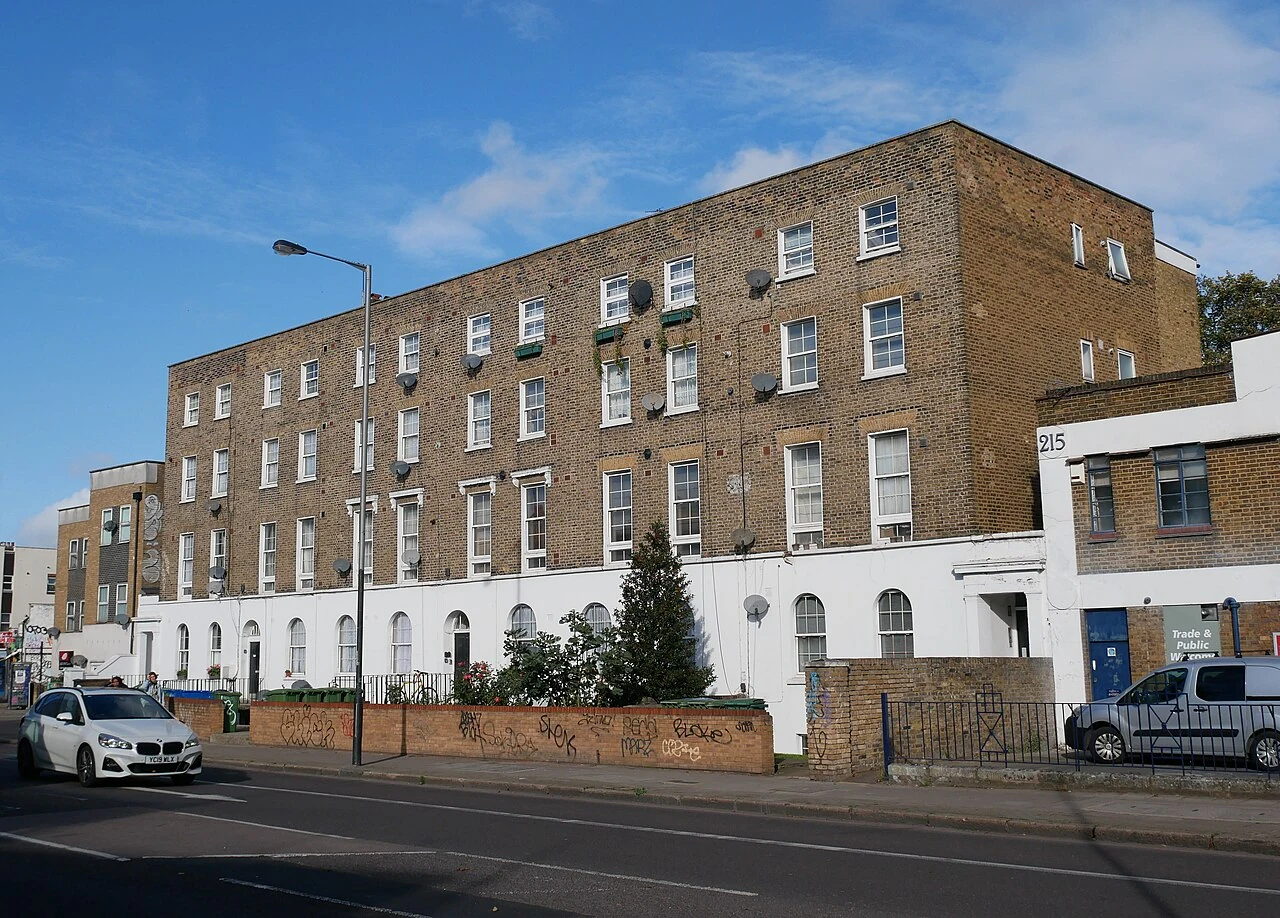
Property reference photograph; not a company job. Photo: Doyle of London · CC BY-SA 4.0 (resized WebP).
The cleaning history can be useful evidence
Write down the dates of cleaning and redecoration, the products used and whether the wall was still wet. Identify whether the new mark occupies exactly the original position or a different surface nearby. A changed pattern can be missed when each attempt begins by describing the whole room as mouldy.
Photographs before and after the work help show what was actually removed or covered. You do not need to recreate the growth to prepare for an appointment. Our moisture inspection can discuss the remaining evidence and the history without asking an owner to leave an active concern untouched merely for demonstration.
A clean surface and a resolved cause are different findings
Some products can improve the visible surface without establishing why it became affected. Reappearance does not automatically identify an ineffective product or demand a stronger chemical. The finish, room conditions and any continuing water route still need consideration.
Describe whether the material flakes, remains damp or carries only visible surface growth. A wallpaper seam and a sound painted wall may involve different practical decisions. Do not layer several treatments together in the hope that their combined effect will diagnose the underlying issue; follow the relevant product instructions and discuss the moisture question separately.
If you have already covered the mark, tell us where it was. The earlier photographs may help locate appropriate accessible checks while the new finish’s limitations remain recorded.
Ask what happens between each attempt
Does the mark follow occupied nights, a shower next door or periods of rainfall? Report window wetting separately from a wall that stays damp. That distinction can guide the appointment more effectively than the number of times the surface has been wiped.
A room and extraction assessment may be useful for repeated indoor moisture, while persistent wetting can prompt another enquiry. Heating and ordinary room use are context; they are not reasons to disregard a suspected building or plumbing defect.
Give the inspection access to the relevant position
Tell us if the patch sits behind a heavy wardrobe, above fixed shelving or beneath a new covering. We discuss the affected accessible areas and suitable moisture checks within the agreed scope. Movement of large furniture or removal of fixed finishes should be arranged safely rather than assumed at attendance.
If a wall stays wet, checking the affected material can help frame the next step. A proposed concealed opening should answer a specific question and include permission and making good. Repeated surface failure does not justify indiscriminate stripping of the entire room.
Southwark’s Peckham Hill Street appraisal identifies both terraces and paired houses, including raised-ground-floor examples with basements. If your cleaned patch is in a property of that arrangement, record the room’s level and the corresponding outside wall rather than compare it with a dry room upstairs. A new coat over a lower-wall mark can hide useful evidence. Keep any earlier photographs showing the finish and nearby window so accessible checks can address that precise position.
Local building context: Southwark: Peckham Hill Street appraisal, house forms and basement levels.
A new treatment should have a reason to be different
Discuss mould removal against the findings, the material condition and any required repair. Ask which action addresses visible growth and which changes the moisture influence. An agreed ventilation measure, a water repair and reinstatement may need a sequence rather than one promise to repaint. Keep the original observation point and review it during ordinary use after the work. Note whether wetting returns before visible growth does. That can give a follow-up an earlier, clearer question than waiting until another large mark appears and restarting the same cleaning cycle.
Booking and reporting for a rented home
Should I clean the wall again before the visit?
Tell us what is currently present and ask about appropriate preparation when arranging the scope. Earlier photographs can preserve the history. Do not assume that an inspection requires leaving a concern untreated or repeating a product simply to create a before-and-after example.
Does quick recurrence prove that the product was wrong?
Its timing is useful but does not identify one explanation. Continuing moisture, affected material and the work actually performed need consideration. The next decision should follow those findings rather than automatically escalate to a stronger treatment.
Can paint make it harder to investigate?
A new coating can limit visible evidence of the earlier surface. Describe the product, date and original position, and retain photographs if available. The inspection should record that limitation while considering accessible checks, not infer what the covered mark proves.
Will you remove every finish that has been affected?
Material condition and the moisture question guide what further work may be appropriate. Removal is not automatic. Any opening or replacement should have an agreed purpose, permission and reinstatement plan, particularly where a covering limits access to the relevant detail.
Why does the mould return only behind the cupboard?
The immediate surface arrangement can differ from the rest of the room, but a cupboard is not a diagnosis. Describe the wall exposure, visible wetness and access available. Other water evidence still needs attention rather than be excluded because furniture covers the patch.
Can I book removal instead of another inspection?
Explain what is already known about the cause and what earlier checks were completed. Removal and investigation have different purposes. If an important moisture route remains unresolved, treatment should be discussed with that limitation clear rather than presented as answering the remaining question.
Nearby areas we cover
Bring the cleaning timeline, not another guess.
Tell us where the mark returned, what was applied and how the surface behaves between attempts. Call about a Peckham inspection before repeating work that has not answered the moisture question.