
WHEN AN OLD CHIMNEY BREAST CHANGES COLOUR
Mould Inspection Hampstead
A dark chimney breast can carry several layers of history: former use, changed ventilation and earlier decoration. A Hampstead mould inspection looks at the present surface and the evidence around it before a stain is labelled as growth or another coat of paint is specified.
- Locate the mark against the chimney and surrounding wall
- Bring details of previous closures and surface repairs
- Separate current moisture evidence from historic staining
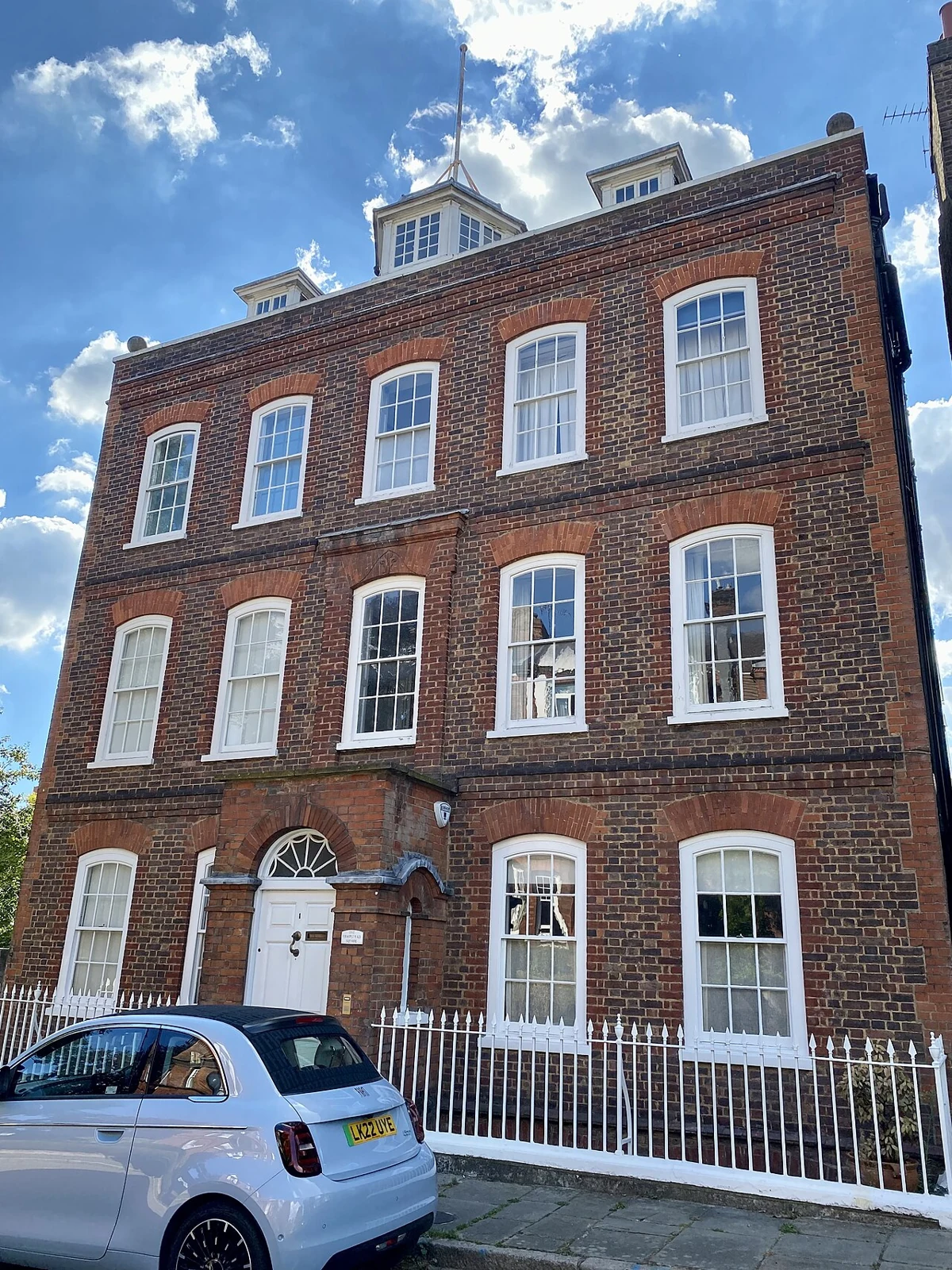
Property reference photograph; not a company job. Photo: No Swan So Fine · CC BY-SA 4.0 (resized WebP).
An older feature needs a careful reading
Describe whether the breast is in use, closed off or merely retained as a feature. Mention a removed fireplace, changed flue opening or recent covering if known. The visible finish might be much newer than the structure behind it. The enquiry is about what the present marks mean, not a judgement that age itself makes a home damp.
Camden’s Hampstead statement records historic residential buildings, including villas and terraces. That background is relevant to retaining and altering older features, but it cannot tell us the construction or condition of a particular chimney. Check the actual property information rather than assume every home in the area has the same fabric.
Local building context: Camden: Hampstead conservation-area statement.
Distinguish a stain from an active surface concern
Photograph the whole breast, its sides and the adjoining ceiling before repainting. Say whether the mark has texture, whether it spreads and if the finish flakes or feels persistently damp. Appearance can guide questions, but it cannot reliably establish what lies within several coats of paint or wallpaper.
A check of the affected finish can consider moisture evidence in context. Material variation and historic contamination can influence instrument responses, so a single reading should not be treated as a complete diagnosis. Comparison with nearby surfaces and the history of the mark matter when interpreting the result.
Look for the weather connection without climbing
Keep a note if the mark changes after rain, especially when the indoor room use has not changed. A roof-level detail may then warrant examination by somebody with suitable access. A stain on a chimney breast does not, by itself, establish that the stack is admitting water.
Our external moisture enquiries can help frame that next question. Show any earlier roof or flashing report already available. Roof access, flue examination and repair are separate arrangements; they should not be assumed to be included in an ordinary room appointment.
Consider how the room now uses the feature
A breast once warmed during fireplace use may now sit in a differently heated room. Furniture, fitted shelving and sealed openings also change the immediate arrangement. Tell us when those alterations happened and where growth appears relative to them. Their presence provides context, rather than proof of the cause. If other room surfaces show overnight moisture, condensation checks may be part of the enquiry as well. We do not have to choose one influence before visiting: indoor moisture and a building defect can coexist. Report the separate observations so neither is hidden behind a general description of an old-house problem.
Preserve the feature while deciding what work is needed
Leave accessible existing records and photographs available for the appointment. Explain any stain-blocking primer, wallpaper or replastering which preceded the latest mark. Do not scrape an unfamiliar old coating simply to make the inspection easier; proposed opening or removal needs an agreed purpose and suitable preparation.
The accessible checks can establish a basis for recommendations, although concealed layers may remain uncertain. Ask what additional examination would distinguish the remaining possibilities. If a specialist needs to consider the chimney or its finishes, the recommendation should say why, rather than make wholesale removal the default response.
Where visible growth is confirmed, discuss appropriate surface treatment alongside the condition of the material. A staining problem may also require a different finishing decision. Cleaning, repairing a water route and redecorating are distinct actions; calling all three mould removal can obscure what each is expected to achieve.
Monitor the original position after any work, noting weather and room use. A mark reappearing through paint is useful evidence to report, not a reason to keep adding coats. Follow-up should consider the work actually undertaken and the unresolved question, preserving the feature where possible without overlooking ongoing dampness.
Nearby areas we cover
Questions before checking the property
Does every dark chimney stain count as mould?
Colour alone cannot establish that. Soot-related marks, old contamination and current surface growth can look confusing through a painted finish. Describe changes and surface condition, and arrange an assessment before treating the whole breast as one confirmed material problem.
Can a closed fireplace be reopened to solve it?
Reopening a fireplace is a building alteration, not a diagnosis. The closure history is useful, but the reason for the present mark still needs investigation. A chimney specialist or other contractor may be required for any change to the feature after the moisture question is clearer.
Will a handheld meter identify chimney salts?
A response from one instrument does not identify every substance or establish the water route. The finish, location and comparison readings affect interpretation. If a material question remains important, further specialist examination may be recommended with its purpose explained.
Should I have the roof repaired before arranging a room inspection?
Bring any known defect or existing roofer’s report when calling. The right sequence depends on the evidence and any active water entry. A room visit and an external examination can complement each other; neither should be commissioned solely because the mark happens to follow a chimney.
Can I cover the breast with new panelling?
A covering can conceal the surface and limit future access. Understand the present moisture and material condition before adding it. Discuss the intended work and any conservation implications with the appropriate professional rather than assume that hiding the mark resolves the underlying concern.
Bring the chimney’s recent history.
Tell us about fireplace closure, previous decoration and whether rain changes the mark. We can discuss a Hampstead visit centred on the affected feature and the checks that are genuinely accessible.