
WHEN THE MARK SITS BESIDE A SHARED RISER
Mould Inspection Belsize Park
A stain beside a boxed service route can leave a flat owner unsure what lies behind it or who can arrange access. A Belsize Park inspection looks at the affected room first, then defines any remaining question about communal pipework rather than assume a leak in an unseen riser.
- Identify the service enclosure beside the affected finish
- Compare the timing with water use and past maintenance
- Give the managing agent a specific access question
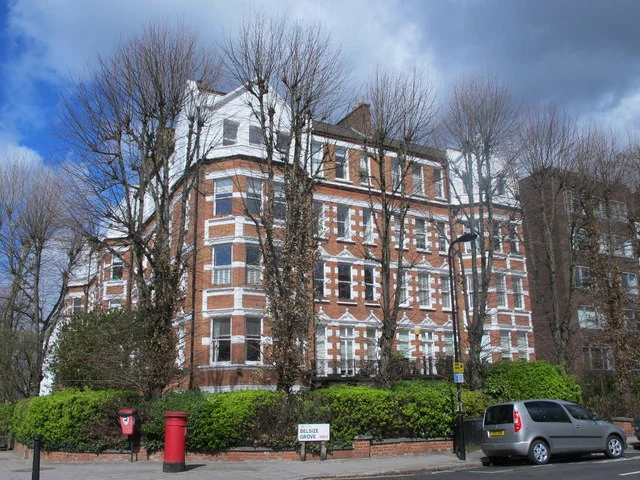
Property reference photograph; not a company job. Photo: Mike Quinn · CC BY-SA 2.0 (resized WebP).
Locate the enclosure in the actual flat
Point out whether the mark follows a boxed column, a ceiling edge or a wall behind a cupboard. Say which pipes are known to be present and which are only suspected. An enclosure can contain several services or none relevant to water, so the label riser should not become an untested diagnosis.
Camden’s Belsize statement distinguishes the purpose-built flats at Manor Mansions from surrounding stucco villas, and records later residential blocks nearby. For an apartment concern beside a shared enclosure, establish the actual building type and service plan rather than assume a route from a neighbouring property. A converted room and a purpose-built apartment may have different access arrangements. Identify who holds the relevant panel key and which communal connection remains unexamined before requesting another contractor’s attendance.
Local building context: Camden: Belsize statement, purpose-built flats and villa context.
Compare the present mark with the maintenance history
Bring an earlier leak report, plumbing attendance note or photograph if one exists. State which part was repaired and whether the current mark occupies the same position. A previous problem in the building is useful chronology, but it does not confirm that the present source is identical.
Our hidden water source checks can be discussed where the evidence supports them. Tell us about any relationship with water use or persistent wetting. An accessible room assessment should explain what it can indicate without suggesting that all communal connections have been tested.
Do not ignore the apartment’s room conditions
A service enclosure may stand beside a cooler external corner or inside a poorly ventilated cupboard. Record morning glass moisture or other visible growth separately from the stain beside the box. More than one influence can affect the room, even if the communal service route attracts the most attention.
A review of the room arrangement helps keep that alternative in view. We consider accessible surfaces, extraction and normal use rather than treat either a leak or condensation as the predetermined answer. Report observations in their own locations so the account remains clear.
Arrange shared access and keep responsibility distinct
Find out whether an agent holds the key to an existing access panel and whether opening it needs authorisation. Do not remove a shared enclosure or interfere with pipework to prepare for the appointment. Explain those restrictions during booking so the accessible scope is understood before attendance.
For an apartment moisture enquiry, the useful next recommendation may concern a specific shared connection rather than treatment of every room. It should identify the uncertainty, the access required and any specialist scope. That is more actionable than an unsupported instruction to inspect all the building’s plumbing.
Where a managing agent will receive the information, tell us who needs the location and scope explained. Describe earlier requests for access and any examination already completed. That helps avoid repeating a check that answered a different question or assuming an unexamined route was excluded.
Repair obligations and allocation of costs depend on relevant property documents and circumstances. Physical evidence can inform the discussion, but an inspection is not a determination of legal responsibility. The recommendation should remain useful to the person arranging practical access without overstating what the observed mark proves.
Treat the surface with the concealed question recorded
Discuss mould treatment for accessible affected material within an appropriate scope. If a suspected shared water route remains unresolved, retain that limitation in the plan. A freshly decorated wall cannot certify the condition of plumbing behind an unopened box. After an agreed repair, record its date and the exact component attended. Compare the original wall position over the follow-up period discussed. New wetting should be reported with those details, allowing the agent or relevant contractor to revisit the specific question rather than begin another disconnected round of cosmetic work.
Nearby areas we cover
Questions before checking the property
Does a stain beside the riser confirm communal pipe failure?
It identifies a location worth examining, not a confirmed failed component. The enclosure contents, moisture timing and accessible room evidence matter. A concealed connection may need a separately agreed check before a repair is specified.
Can an agent unlock the service panel during the visit?
Tell us about the panel and proposed access beforehand. Entry must be safe and authorised, with the agreed inspection scope clear. A locked enclosure should not be opened unexpectedly on the assumption that every communal service is included in a room booking.
Will removing the boxing help the mould dry?
Removing a finish is not a substitute for establishing the water or room-moisture question. It can also involve shared services and reinstatement. If opening is recommended, ask what evidence it should reveal and who will arrange safe work and making good.
Can I send the earlier plumber’s report?
Yes, explain what it covers and whether it relates to the same location. It can help place repairs and observations in sequence. An earlier attendance does not exclude every possible present source, particularly if the report’s scope was limited to one fitting.
Will cleaning the wall settle the dispute with the managing agent?
Cleaning concerns the visible affected surface; it does not determine a concealed route or contractual responsibility. Keep findings, repair records and access limitations clear. Any ownership or payment dispute needs the relevant documents and advice alongside the practical moisture evidence.
Can the bedroom be checked while the riser remains locked?
Accessible room checks can still provide useful evidence, with the concealed route explicitly unconfirmed. Explain the restriction before booking. If the route remains relevant, the next access request should identify the particular question instead of implying the locked space was inspected.
Start with the enclosure and the records.
Tell us where the mark sits, what maintenance has already happened and who can authorise communal access. We can discuss a Belsize Park inspection with a clearly defined next question.