
FOLLOW THE ROOF ROOM BEFORE THE STAIN
Mould Inspection Wimbledon
Mould on a sloping bedroom ceiling deserves a look at the roof-room layout, not just the painted surface. Our Wimbledon inspection considers where the room sits, how it is ventilated and whether the pattern changes with indoor use or wet weather.
- Identify which roof slope or ceiling junction is affected
- Distinguish an occupied room from an unheated roof void
- Plan access before assuming the concealed roof can be checked
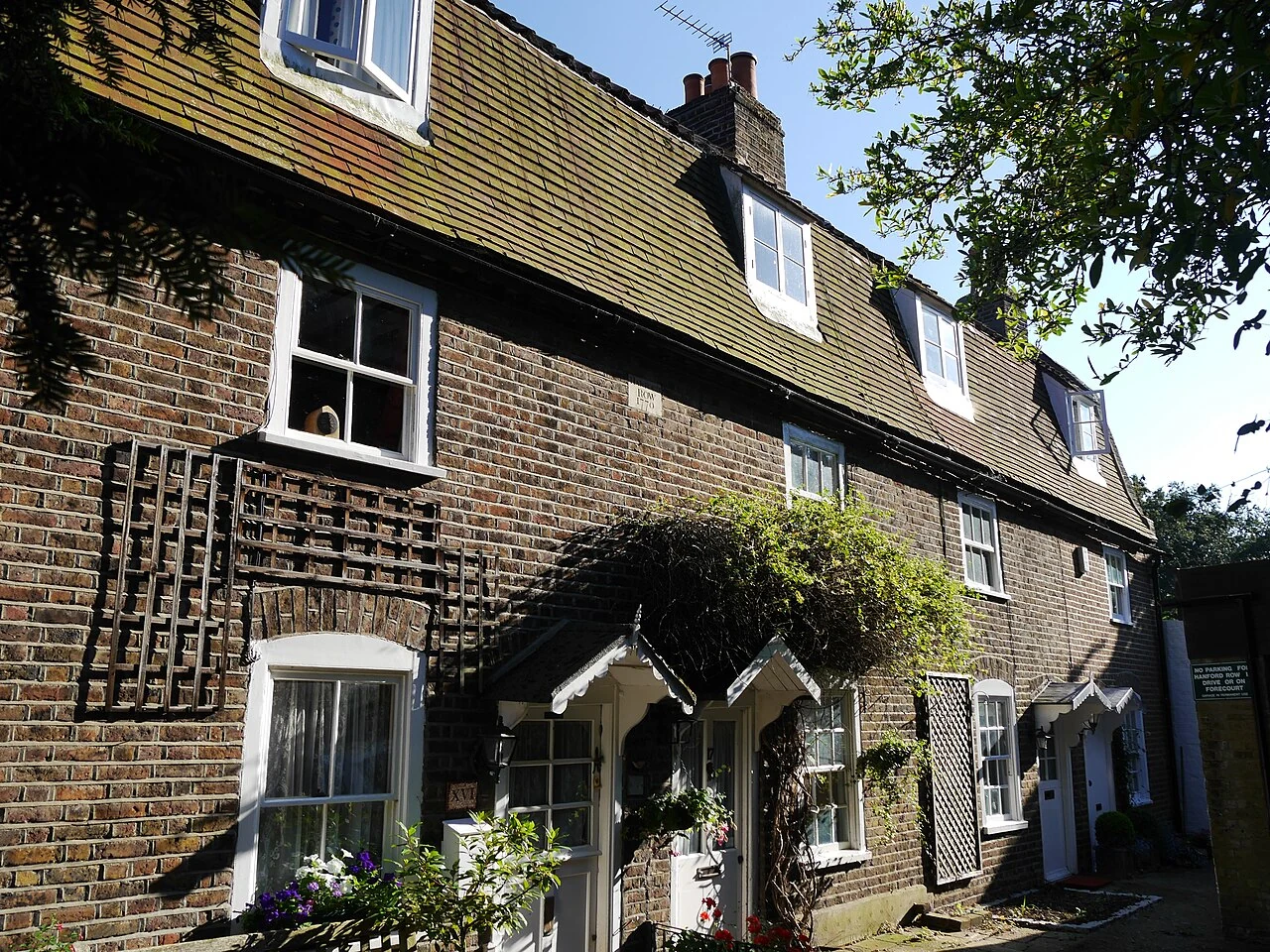
Property reference photograph; not a company job. Photo: Edwardx · CC BY-SA 4.0 (resized WebP).
A roof room is part of the whole property
Merton’s Wimbledon North assessment describes differing roofed house groups, including ridged, gable-ended detached houses at Rectory Orchard and slate-roofed semi-detached examples at Somerset Road. For an affected upper room in that part of Wimbledon, identify the roof section actually above it rather than infer a construction from a nearby house. Explain any later conversion, eaves enclosure or added bathroom. That helps distinguish accessible room checks from the concealed roof or ventilation detail requiring further access.
A bedroom beneath a roof has different access and use from an empty loft. Note the location of the stairs, any shower room and the doors into eaves storage. If the room was converted, available drawings can help explain which areas are habitable and which parts remain concealed behind finishes.
Local building context: Merton: Wimbledon North historic-core character assessment.
Compare the slope, the corner and the window
A rooflight wet on cold mornings provides one observation. Growth along the junction between the sloping ceiling and a vertical wall provides another. A stain below a particular roof detail that changes after rain needs its own enquiry. Explain all three separately if they occur together; a single photograph can merge distinct patterns into one apparent problem.
The inspector can compare accessible affected and unaffected surfaces and discuss the conditions in the room. For a concern concentrated around glazing, the window detail guide explains why the glass, frame and reveal should not be treated as one interchangeable surface.
What the room’s use can explain
A roof bedroom used occasionally may be heated differently from the rest of the house. A shower room added nearby can also change the moisture conditions that reach it. Record what happens during normal use: when the fan runs, whether doors stay open and where condensation is noticed. These observations are more helpful than a promise to change everything before the appointment.
Our condensation investigation looks at indoor moisture in relation to surfaces and ventilation. It cannot establish the construction behind a ceiling merely from room humidity. Building fabric and room conditions need to be considered together, especially when the visible pattern spans several details.
A hatch does not provide access to every roof detail
Explain which loft or eaves openings exist and whether they are accessible. A hatch into one void may leave the opposite slope or a boxed-in junction out of reach. We agree what can be assessed safely rather than imply that all insulation, timber and roofing have been examined during a room inspection.
If external water is suspected, roof-water and gutter checks may require separate access arrangements. Do not climb through a rooflight or use an unstable ladder to obtain photographs. Describe what is visible from an ordinary accessible position and bring any previous roofer’s findings.
Make the previous work part of the evidence
Repainting, replacing a rooflight and adding insulation answer different problems. Tell us which work was done, where it was done and whether the affected surface ever appeared to dry afterwards. An invoice describing a roof repair is useful, but does not prove that a different ceiling mark has the same origin.
Where the history remains unclear, a check of the damp pattern can help identify what is presently measurable and what still requires confirmation. The findings should distinguish evidence available during the visit from assumptions about an inaccessible part of the roof.
From inspection to a practical next job
The next step might concern extraction, a building detail, incoming water or the damaged finish itself. Ask why that work has been recommended and what would confirm that it addresses the suspected route. Visible growth and affected finishes can then be considered in the same plan rather than simply decorated again.
Use the original observation for follow-up. If the ceiling changed after a shower, monitor that room under ordinary use. If rainfall prompted the enquiry, keep a dated record of relevant weather and any change in the mark after repairs. Avoid declaring success solely because fresh paint has hidden the previous outline.
Nearby areas we cover
Questions before checking the property
Can you inspect an occupied loft bedroom?
Describe it as a bedroom when booking, including any adjoining shower room and accessible eaves doors. We can discuss checks relevant to that space. An occupied room appointment does not automatically include a structural roof survey or inspection of every concealed void.
Is mould around a rooflight necessarily a roofing defect?
No. Wet glass, a cold reveal and water entering around a rooflight can look similar in a close-up picture. Describe when the moisture appears and which surface is affected. The position directs the investigation but does not establish the defect by itself.
Should I heat the spare roof room differently before the visit?
Give an honest account of its normal heating and use instead of creating an unusual set of conditions just for the appointment. If the inspector needs particular conditions or monitoring to answer the enquiry, that should be discussed rather than assumed in advance.
Will a thermal camera show missing roof insulation?
It records surface temperature patterns, which may identify an area worth investigating. It does not show the hidden construction as a direct photograph. Any interpretation needs suitable conditions, other observations and recognition of the accessible scope; further confirmation may require another arrangement.
What if a roofer has already repaired the flashing?
Bring the date, location and description of that repair. Explain whether the ceiling improved, stayed marked or changed somewhere else. A room can have more than one moisture influence, so previous roof work should guide the enquiry without closing off other explanations.
Describe the room under the roof.
Tell us which slope, window or ceiling junction is affected and what changed after earlier work. We will discuss a Wimbledon appointment and the access available to investigate that particular concern.