
RELATE THE ROOM TO THE BALCONY OR OUTSIDE EDGE
Mould Inspection Surbiton
If a Surbiton flat has a damp mark beside a balcony opening or beneath an external projection, describe that building relationship before choosing treatment. The inspection can compare rainfall history, the internal finish and room moisture. A balcony nearby is a detail to investigate, not proof of the route into the wall.
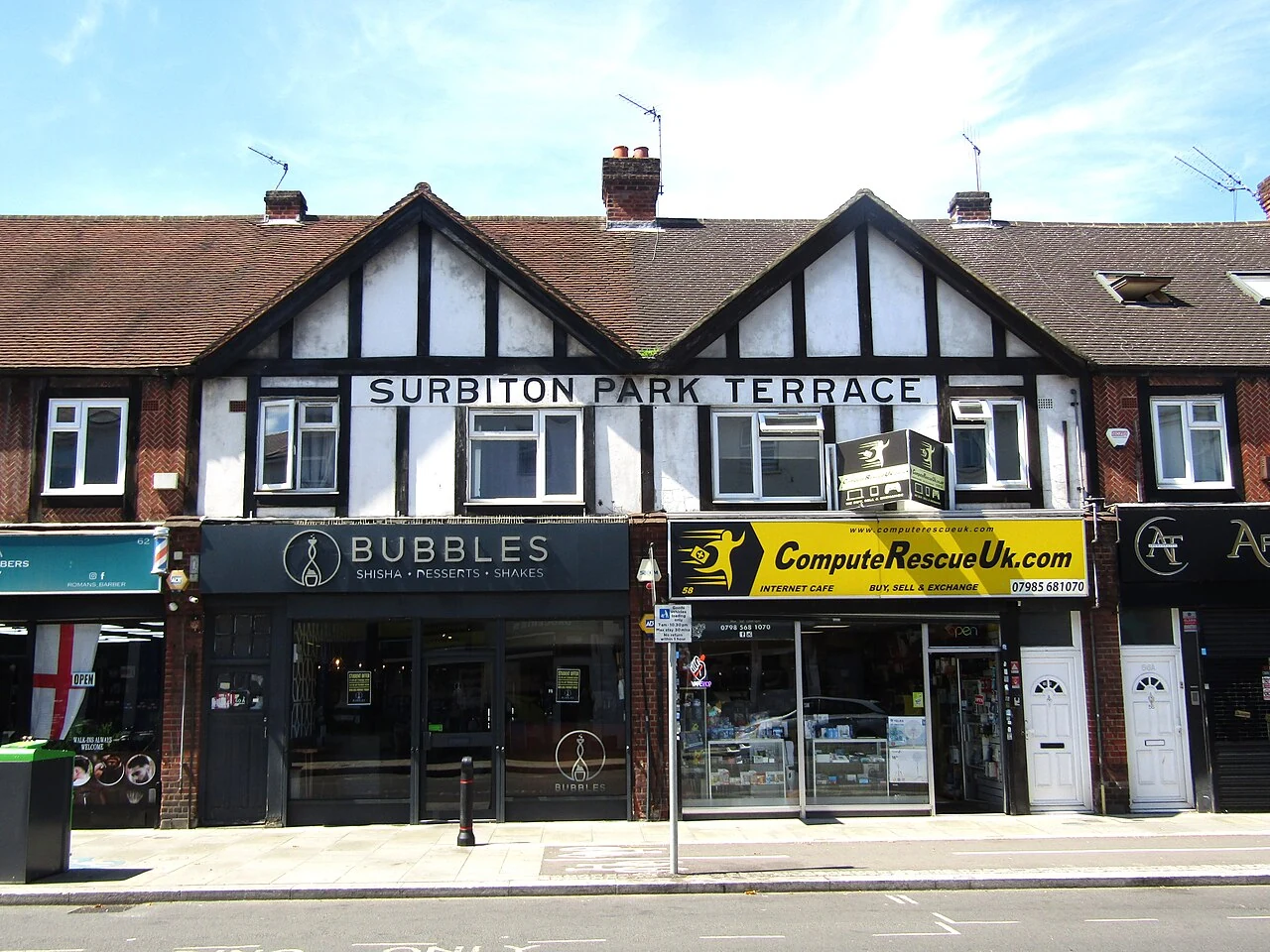
Property reference photograph; not a company job. Photo: Colin Smith · CC BY-SA 2.0 (resized WebP).
- Locate the mark against the balcony or projection
- Record changes after normal weather events
- Coordinate external access where the building detail is shared
Use the local flat context without assuming a defect
Kingston’s Riverside South appraisal records blocks of flats replacing some earlier houses within its defined area. That provides a local flatted-building context, not evidence of balcony failures across Surbiton. Where your dwelling has a balcony or outside projection, identify how the affected room actually relates to it. Show the opening, adjacent wall and ceiling in a wider photograph. Say whether the projection belongs to your flat or sits above it, and identify the floor. A close image of mould cannot show that relationship. The first enquiry should place the surface accurately without assuming the water comes from the nearest visible outside feature.
Local building context: Kingston Council: Riverside South conservation-area appraisal.
Describe the weather pattern carefully
Record whether the mark changes after rain and whether particular ordinary weather seems relevant. Give the internal location and any safely visible outside observation, such as water remaining on an accessible surface. Timing can guide a check but cannot confirm concealed drainage, waterproofing or a joint.
Investigation of an external water detail may require a building specialist and suitable access. Do not climb, lean beyond a balcony or apply water to reproduce the concern. A deliberate test should have a properly agreed method and purpose rather than be improvised by the occupier.
Separate opening moisture from wall dampness
Describe droplets on the room-side glass and whether the wall changes independently. A frame can be affected during ordinary indoor use while another part of the opening raises a water-entry question. The inspection should allow those observations to coexist rather than use a wet window as a universal explanation. Our window and opening-area assessment can consider the accessible surrounding finishes. Reviewing condensation conditions may remain useful alongside a rain-related enquiry. A stained finish alone cannot establish current wetness, so its material condition and chronology also matter.
Identify who can arrange the external examination
The agent or freeholder may control the balcony structure, elevation or records of prior work. Explain the actual arrangement when booking rather than assume the inside-flat visit includes the whole exterior. Ask for repair descriptions tied to the affected opening, with dates where available.
For investigation of a flat moisture concern, the scope should distinguish accessible room evidence from a shared detail needing permission. If that detail cannot be checked initially, the finding should state what remains unverified and which access would help answer it.
Use the visit to narrow the practical decisions
We review the development of the mark, examine agreed accessible surfaces and consider appropriate checks. Tell us about fixed coverings or furniture at the opening and any damaged material. Assessment of persistent local damp can help frame the finish question without claiming to establish every exterior route from inside.
A recommendation should explain the evidence for repair, further enquiry or treatment of visible growth. They may be separate actions carried out by different people. Replacement of a stained internal panel is not proof that a balcony detail has been corrected, while an external repair does not necessarily include surface treatment indoors.
If several contractors are involved, keep the internal affected position in each work description. That shared reference helps distinguish a completed external action from a separate finish or treatment task still outstanding.
Judge the change at the original opening
After action, compare the same internal position during ordinary use and relevant wet weather. Keep the external work description with those observations. If window moisture improves but the wall still changes after rain, report the difference so the continuing source question is not hidden behind the general statement that the flat looks better.
A useful prevention recommendation should fit the evidence and actual openings. It should not ask residents to compensate indefinitely for an unresolved building detail. Local flat context helps organise the appointment; the property’s own weather and room history guide the next decision.
Nearby areas we cover
Questions about indoor and external moisture
Does a balcony beside the patch establish a leak?
No. It is a building relationship worth describing. The wall, opening and weather history need examination before a route is identified. Room-side condensation or another source may also be relevant.
Should rain be recreated with a hose?
Do not improvise a water test. Describe ordinary observations and accessible evidence. Deliberate testing needs an agreed purpose, method and responsible person, especially where another flat or shared structure could be affected.
Why identify which balcony belongs to which flat?
It helps place the affected room against the relevant outside detail and access arrangement. Ownership or repair responsibility must be established separately. The relationship guides coordination without proving the moisture source.
Can the internal wall be assessed before external access is agreed?
An accessible internal visit may still provide useful evidence and a focused next question. It cannot confirm every concealed exterior detail. The findings should state the limit and explain what further access would answer.
Will external repair include internal mould treatment?
Those are separate scopes unless explicitly agreed together. Ask what material and work each proposal covers. A source repair may need drying and later reinstatement, while visible growth requires its own appropriate treatment decision.
Show the opening and the outside detail it meets.
Tell us where the mark sits, when rain changes it and who controls external access. Call about a Surbiton inspection with the relevant building relationship included.