
THE TIMING IS EVIDENCE; THE NEIGHBOURING USE IS NOT A DIAGNOSIS
Mould Inspection Soho
A mark in a Soho home may change across occupied, quiet or overnight periods in a mixed-use building. Keep the time and location clear before linking it to another unit’s activity. A useful investigation compares the dwelling’s own conditions with reliable building observations, rather than assume the nearest business supplies the moisture.
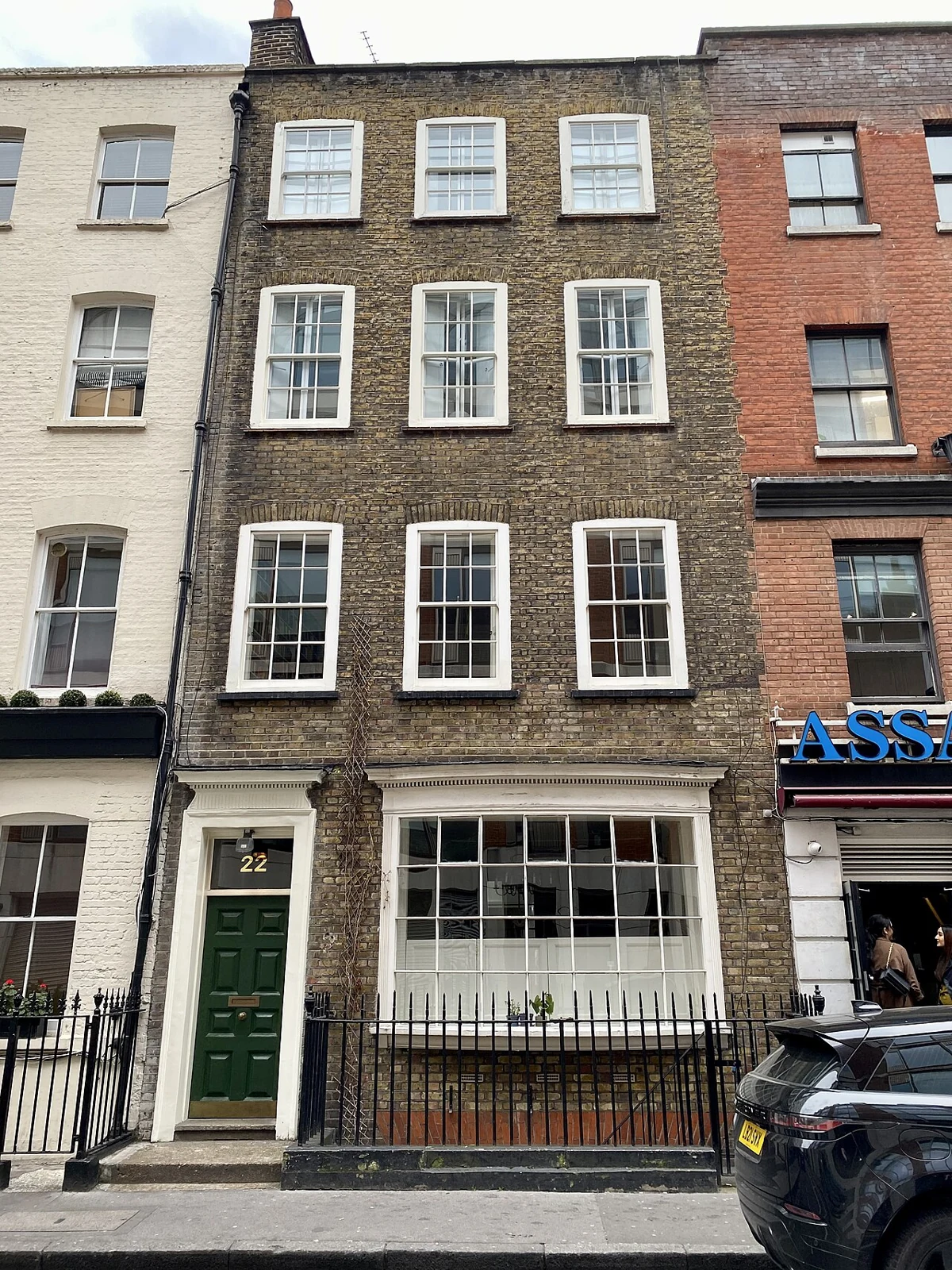
Property reference photograph; not a company job. Photo: No Swan So Fine · CC BY-SA 4.0 (resized WebP).
- Keep day, night and quiet-period observations at the same surface
- Distinguish known building events from assumed commercial activity
- Compare the interface with the dwelling’s own water and ventilation history
Local mixed use makes the building interface relevant
Westminster’s City Plan describes Soho’s mix of residential and commercial uses. That context is relevant when a home adjoins another occupied unit, but it does not establish any shared duct, pipe or moisture source. The actual interface and available building information need to be located at your address.
Describe the affected surface relative to adjoining space: beside it, above it or separated by another room. Label which use and opening hours are reliably known. A building contact may hold that information; guesses about what happens behind another door should not become facts in the inspection account.
Local building context: Westminster Council: City Plan, Soho mixed residential and commercial context.
Build a timing comparison around one location
Record when the surface changes, not just when you first notice it. Daytime discovery can follow an overnight condition. A wet-looking patch found after a business opens may have appeared earlier, and a clear surface during a quiet period may reflect different weather or household use. Keep those alternatives identifiable.
A brief account can compare ordinary daytime, evening and idle periods where observations already exist. Use the same room position and describe what changed: droplets, boundary, material condition or fresh growth. There is no need to watch a neighbour or collect every event across the building. The question is whether a repeatable timing pattern informs this surface enquiry.
Do not arrange unusual equipment operation, steam or water use elsewhere to create a test. Any controlled investigation needs a defined purpose and suitable specialist arrangements. Naturally observed timing is history to interpret, not a diagnostic experiment that an occupier must run.
The dwelling’s own cycle belongs beside the building cycle
Include ordinary cooking, bathing, heating and ventilation in your home. Those activities may coincide with neighbouring hours, making a simple time correlation hard to interpret. A cooler overnight surface or a local fitting can remain relevant even when another unit’s schedule seems to match the complaint.
Our assessment of room conditions and ventilation can contribute to that comparison. Describe installed equipment and any known fault without assuming a commercial system serves the dwelling. The enquiry should test the proposed relationship rather than make another occupier responsible for every moisture event.
Locate the physical route that would need confirmation
Timing becomes more useful when there is a relevant building relationship to examine. Existing drawings, maintenance notes or accessible details may identify a particular service or junction. If none does, the hypothesised route remains unconfirmed. The visible interface and an operating-hours pattern do not reveal every concealed component.
For investigation of a suspected water connection, explain what evidence supports the route and which observation a further check would answer. An apartment moisture enquiry should keep room-side findings separate from unexamined services in another unit. Entry and specialist testing require appropriate scope and authorisation.
Keep rainfall and retained material effects in the comparison
A wet week, an earlier water incident or a covering added to the wall can complicate the timing account. A change may relate to outside conditions or moisture retained within material rather than an event that happened at the same hour. Describe any such history alongside the building-use observations.
The assessment of the affected material can consider suitable accessible comparisons and finish condition. Where an external detail matters, its examination may be another task. Do not infer a source from clock time alone, or dismiss a persistent local patch because general room moisture improves during an idle period.
Make the next enquiry capable of changing the decision
We discuss the available timing record and inspect the agreed accessible areas with appropriate checks. Findings should state what supports the proposed connection, what challenges it and what remains uncertain. If another visit or specialist check is recommended, ask which question it is intended to settle.
A useful next step is specific enough to review: verify a named route, examine a relevant material or assess particular room conditions. It should not simply repeat the same observation under a different label. The inspection concerns physical evidence and practical actions, not a determination of legal responsibility based on another unit’s opening hours.
Follow the original cycle after the supported action
Treatment of affected growth needs a material target and a scope that reflects the moisture findings. A repair or equipment change may be a separate action. Retain which part was addressed so the next comparison does not assume that every interface in the building was cleared.
After work, return to the same surface and relevant ordinary periods. Record the dwelling’s conditions as well as reliably known building changes. If one pattern improves while another remains, preserve that distinction. The objective is an evidence-led local building investigation, not a story about a neighbouring business attached to another cleaning cycle.
Nearby areas we cover
Questions about indoor and external moisture
Does a mark appearing during business hours establish a commercial source?
No. Household use, weather and the time you notice the mark may coincide with those hours. Record the actual surface change and known circumstances. A physical route and suitable evidence are needed before linking another unit’s activity to the dwelling’s moisture.
Why compare a quiet period with an occupied one?
It can help describe whether the pattern changes across ordinary cycles. Conditions may differ in more than one way, so the comparison is useful history rather than proof of a cause. Keep the same position and note relevant room use and weather.
Should I ask the business to operate equipment for a test?
Do not arrange unusual operation merely to reproduce the complaint. Specialist testing needs appropriate agreement, purpose and safe arrangements. Describe naturally observed timing and available records first so the next enquiry can identify what would actually need confirmation.
What if I do not know another unit’s schedule?
State that limitation and rely on your own observations. A building contact may hold relevant information where it matters to the proposed enquiry. Do not replace missing facts with guesses about hidden activity or assume that every adjoining use shares the dwelling’s services.
Can overnight condensation remain relevant in a mixed-use building?
Yes. The home’s own conditions may influence a surface independently of another unit. Describe the overnight and daytime observations separately. The investigation can consider those accounts alongside a possible building route without requiring one explanation to cover every mark.
Will the inspection determine who is responsible for the source?
The agreed visit concerns physical findings and further diagnostic questions. Responsibility or contractual matters need relevant records and appropriate separate advice. A timing pattern should not be presented as a legal finding about an adjoining occupier.
How should a change after work be recorded?
Use the original surface and ordinary periods that informed the enquiry, noting the work completed and relevant room conditions. A new schedule elsewhere is background rather than proof of improvement. Record persistent local material change separately from any broader moisture pattern.
Describe when the surface changes, and what is known then.
Call about the Soho home with a consistent surface reference, ordinary timing observations and reliable building information. We can discuss the comparison and physical route a further investigation would need to test.