
CONNECT THE REAR ROOM WITH THE ROOF AND OUTLET
Mould Inspection Shepherd’s Bush
A mould concern at the back of a Shepherd’s Bush property needs the rear building arrangement described clearly. Where an enclosed yard, small roof or later rear addition adjoins the room, note what changes after rain and what happens during ordinary indoor use. The visit can then focus on the detail that actually relates to the mark.
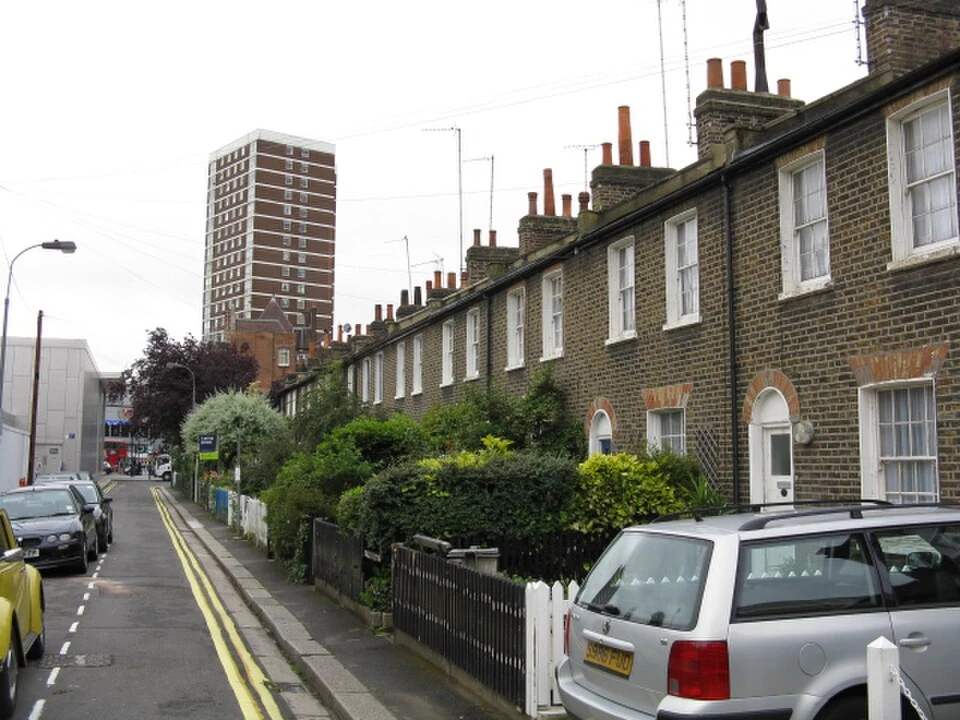
Property reference photograph; not a company job. Photo: Whatlep · CC BY-SA 2.0 (resized WebP).
- Sketch the rear room, roof edge and accessible outside space
- Record rain timing without testing or climbing
- Distinguish a room-moisture measure from an outlet or junction repair
Establish what has been built behind the room
Hammersmith & Fulham’s Shepherds Bush conservation guidance specifically discusses rear roof extensions. That supports checking the alteration history of a property within its defined context; it does not prove every home has a rear extension or drainage defect. Your actual roof, yard and room relationship remain the basis for the enquiry. Sketch where the affected surface sits beside any small roof, outside passage or enclosed yard. Describe additions or changes you know about, with records if available. A front-of-building photograph may tell us little about this rear detail, while an ordinary internal view can locate the wall that needs attention.
Local building context: Hammersmith & Fulham Council: Shepherds Bush conservation guidance on rear roof alterations.
Record what the outside space does after rain
From a safe accessible position, note visible water remaining near an outlet or a change at a roof edge. Include the timing relative to the internal mark. A yard that stays wet does not establish how water enters the wall, and a hidden drain cannot be assessed from surface appearance alone.
For enquiries about external water details, the relevant roof or outlet may need another access arrangement. Do not climb onto a rear addition, reach over a boundary or run water deliberately to reproduce the concern. The next check should be tied to evidence and a clear scope.
The back room may have a separate indoor pattern
Explain its use and connection to the kitchen, bathroom or passage. Window droplets or surface growth during ordinary activities bring ventilation and local conditions into view. A cooler enclosed room can warrant a condensation enquiry without proving that condensation explains a persistent rain-related wall patch. Our review of room and extraction evidence can consider those observations. Include any opening or outlet changed by later work. Practical advice should fit the available room arrangement, rather than assume a window or ventilation path that the rear addition has removed or altered.
Access around the rear detail needs planning
Explain who controls the yard, passage or roof and whether a neighbouring property must be involved. A private flat, shared building and single house can have different practical access arrangements. A flat-related assessment may need management coordination even when the mark is inside one room.
At the agreed visit we examine accessible surfaces, review the chronology and consider suitable moisture checks. If a rear detail cannot be seen or reached, the finding should identify the limitation. A recommendation for further access should say what uncertainty it would resolve, not simply request a general inspection of everything outside.
Keep the repair and treatment decisions separate
Assessment of a continuing damp finish can help clarify the material condition while another specialist examines an outlet or roof junction. Each action should relate to the observed concern. A roof repair does not automatically treat growth indoors, and removing growth does not prove the rear water route has been resolved.
Surface treatment can then be discussed with drying and reinstatement where appropriate. Record what was repaired and where, rather than retain only the invoice total. That description makes it possible to compare the original concern after work instead of start another enquiry without its building history.
For follow-up, compare ordinary room use and a relevant wet-weather event at the same wall position. If one pattern improves while another remains, report them separately. The useful outcome is a focused response to the rear building and room evidence, not a generic claim that all back rooms need the same repair.
Nearby areas we cover
Questions about indoor and external moisture
Does a wet rear yard explain mould inside?
It is relevant outside evidence, but does not identify a route into the room. The wall detail, timing and other sources need consideration. Keep the yard observation separate from the internal material condition.
Should water be run into the outlet before the visit?
Do not create a test or reproduce a possible leak yourself. Describe normal wet-weather observations and accessible visible details. Any deliberate testing needs a suitable agreed scope and responsible person.
Can the rear roof be checked during the first appointment?
Explain its height, construction and access in advance. Safe roof examination may require another arrangement. The internal finding should state what outside detail remains unverified if it cannot be reached.
Why mention a later rear addition?
It may change roof junctions, room connections or ventilation routes. Describe reliable alterations without assuming they caused the concern. The present evidence determines which detail deserves further enquiry.
What if the yard is shared with another flat?
Establish who can authorise access and provide records. A booking inside one dwelling does not imply access to all shared areas. Relevant coordination should be planned around the specific affected wall or outlet question.
Will clearing an outlet also treat the mould?
It may address an identified water issue, but treatment of affected internal material is a separate decision. Ask which work addresses the source and which addresses growth or damaged finishes. Follow-up should compare the original room location.
Describe what sits behind the affected room.
Tell us about the rear roof or yard, accessible outlets and the timing of the indoor change. Call to discuss a Shepherd’s Bush enquiry with the building relationship made clear.