
ONE HOME ACROSS DIFFERENT LEVELS
Mould Inspection Notting Hill
A split-level flat can place a bedroom below another room’s pipework and its bathroom far from an external outlet. For mould inspection in Notting Hill, start with the arrangement of the conversion: where the rooms sit, which parts are shared and what can be accessed.
- Map the affected room against the rooms above and beside it
- Identify who controls shared ducts and concealed services
- Keep the moisture findings separate from ownership assumptions
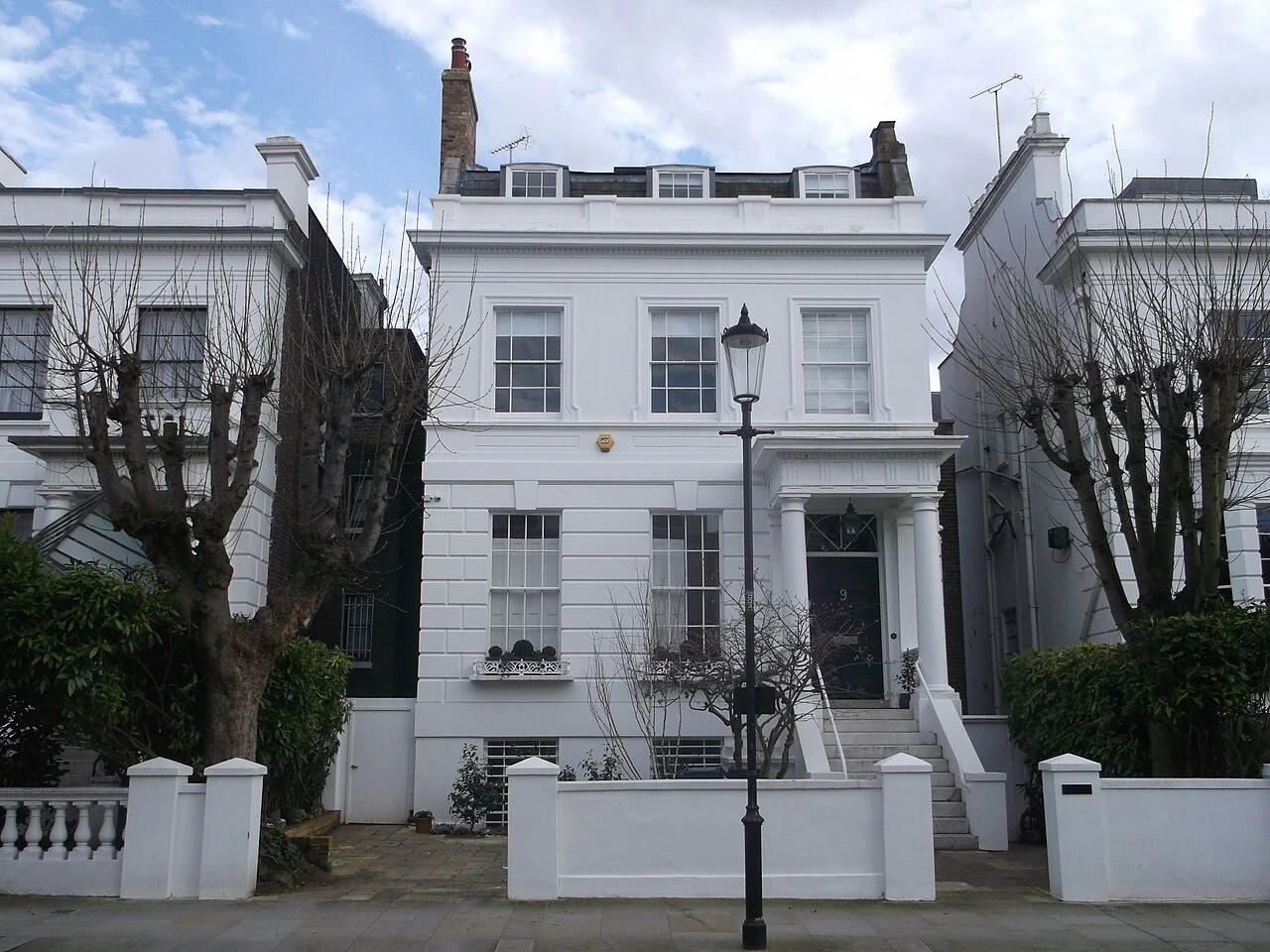
Property reference photograph; not a company job. Photo: David Anstiss · CC BY-SA 2.0 (resized WebP).
Describe the conversion, not only the postcode
For the moisture enquiry, explain which floor contains each affected room and where the internal stairs lead. Include bathrooms or kitchens directly above, even if they belong to another flat. A simple sketch helps distinguish the floor level inside your home from the level of the building outside. This is particularly useful when photographs make a lower room look like an ordinary ground-floor bedroom.
Historic England’s Ladbroke Estate entry describes terraces and villa groups with gardens reached either behind the houses or through gated street entrances. If your Notting Hill conversion shares that arrangement, locate the affected room against the original house and identify who controls the relevant rear access. A key to your flat may not reach an outside wall or shared route. The current split-level layout and conversion records remain necessary to interpret what lies above and beside the mark.
Local building context: Historic England: Ladbroke Estate houses and garden-access arrangements.
A ceiling patch may cross a property boundary
Describe the outline and whether it changes after a fixture is used. An adjacent wall can conceal a route from another level, so the visible patch is not necessarily the point where water entered. Neighbouring plumbing remains a possibility to investigate, not an accusation to make on the basis of a stain. If the history points towards concealed pipework, discuss a hidden water source enquiry. Checks within your flat and access to an upstairs service are different tasks. Explain what consent is already available; inspecting one room cannot confirm every fitting in an inaccessible neighbouring home.
Follow the bathroom duct before changing the fan
A bathroom set within the building may depend on ducted extraction rather than an opening window. Find any accessible information about the outlet and shared route. Mention whether the fan serves only your room, whether it continues running and whether maintenance has been recorded. Avoid disconnecting shared equipment to see what happens.
Our extraction and room assessment can help decide which observations need further checking. A motor running in the bathroom does not prove that humid air reaches outdoors. Where the route cannot be seen, the findings should explain that limitation instead of presenting an untested system as satisfactory.
The lower room needs its own context
If mould is concentrated downstairs, tell us about window openings, heating and the position of the external ground. The fact that another level looks dry does not make the lower room’s problem less real. Different wall exposures and uses can produce different observations within the same flat.
A damp-focused examination may be appropriate for a persistently wet finish. Compare a mark remaining through the day with moisture that appears briefly on glass. We consider both building and indoor influences rather than make the floor level a shortcut to a diagnosis.
Mark the outside ground level on the sketch if the lower room has a lightwell or raised planting outside. That simple addition helps explain why two walls within the same level may need different lines of enquiry.
Ask for findings that somebody can act on
When a managing agent needs to arrange further access, a recommendation should describe the affected location, the unresolved question and the evidence sought. A vague instruction to investigate the building may leave everyone waiting. Bring previous maintenance correspondence so a repeated concern can be placed in its proper sequence.
Physical findings and the ownership question
Responsibility is not determined solely by where mould is visible. Lease interpretation and repair obligations are separate from the physical inspection. We can discuss the accessible moisture evidence, while the relevant owner or adviser considers the documents governing the building. Make clear who needs the findings when arranging the appointment.
Plan treatment around the route that remains unresolved
For mould in a converted apartment, removing visible growth is one practical part of the response. If water from a shared service is still suspected, cleaning cannot demonstrate that the concealed route is sound. Any recommendation should distinguish an immediate surface concern from checks which still require another person’s involvement.
After an agreed repair or ventilation change, record the same room positions and any change following normal use upstairs. Keep the repair date with those observations. That record gives a future visit something specific to assess, without assuming that a fresh decorative finish proves the whole conversion is now dry.
Nearby areas we cover
Questions before checking the property
Can you inspect my room without entering the flat above?
An appointment can examine the agreed accessible areas in your home. A possible source above may remain unresolved if entry is unavailable. Tell us about that restriction early so the findings can distinguish what was checked from the additional access needed to follow the suspected route.
Will the inspection decide whether the freeholder must pay?
Physical findings may inform a discussion about repairs, but payment and legal responsibility depend on the relevant documents and circumstances. The inspection does not replace lease or legal advice. Ask for a clearly described moisture question that the responsible party can take forward.
Is a bathroom without a window necessarily unsuitable?
The installed ventilation arrangement is the relevant question. Ducted extraction can serve an internal room, but its route, operation and maintenance need consideration. The absence of an opening window alone does not tell us how effectively the existing arrangement removes humid air.
Should I ask the agent for the conversion drawings?
If drawings are readily available, they can clarify room levels and service routes. A sketch and your account remain useful if no plans exist. We do not require an owner to reconstruct the entire building history before reporting an accessible mould problem.
Can a dry upstairs room exclude a plumbing leak?
It does not establish the condition of every concealed connection. Water can travel before becoming visible, and a leak can be intermittent. The timing of changes in the affected room and any accessible plumbing evidence are more useful than a general description of the neighbouring room as dry.
Can two levels need different remedial actions?
Yes, the accessible evidence may point to distinct issues in different rooms. A ventilation change upstairs and a wall or plumbing enquiry below should each have a stated purpose. A single flat does not require one uniform treatment specification for every surface.
What if the agent has no conversion plans?
Explain the current room arrangement and known service positions. Existing photographs, maintenance notes and a simple sketch can still help. A missing plan should be recorded as a limitation where relevant, rather than treated as a reason to dismiss the visible concern.
Start with the levels and the access available.
Explain the conversion layout and any involvement already agreed with a neighbour or agent. Call to discuss an inspection in Notting Hill with a clear boundary between the accessible checks and the outstanding building questions.