
A LOWER-GROUND ROOM NEEDS ITS OWN QUESTIONS
Mould Inspection Kensington
A damp mark beside a lightwell is different from condensation on a lower-ground bedroom window. For a Kensington mould inspection, start with the room’s position relative to outside ground, drainage and the rooms above. The first useful decision is what needs checking, not which finish to repaint.
- Locate the affected surface against the outside ground level
- Include lightwell drainage and access in the enquiry
- Understand the limits of a room inspection before opening finishes
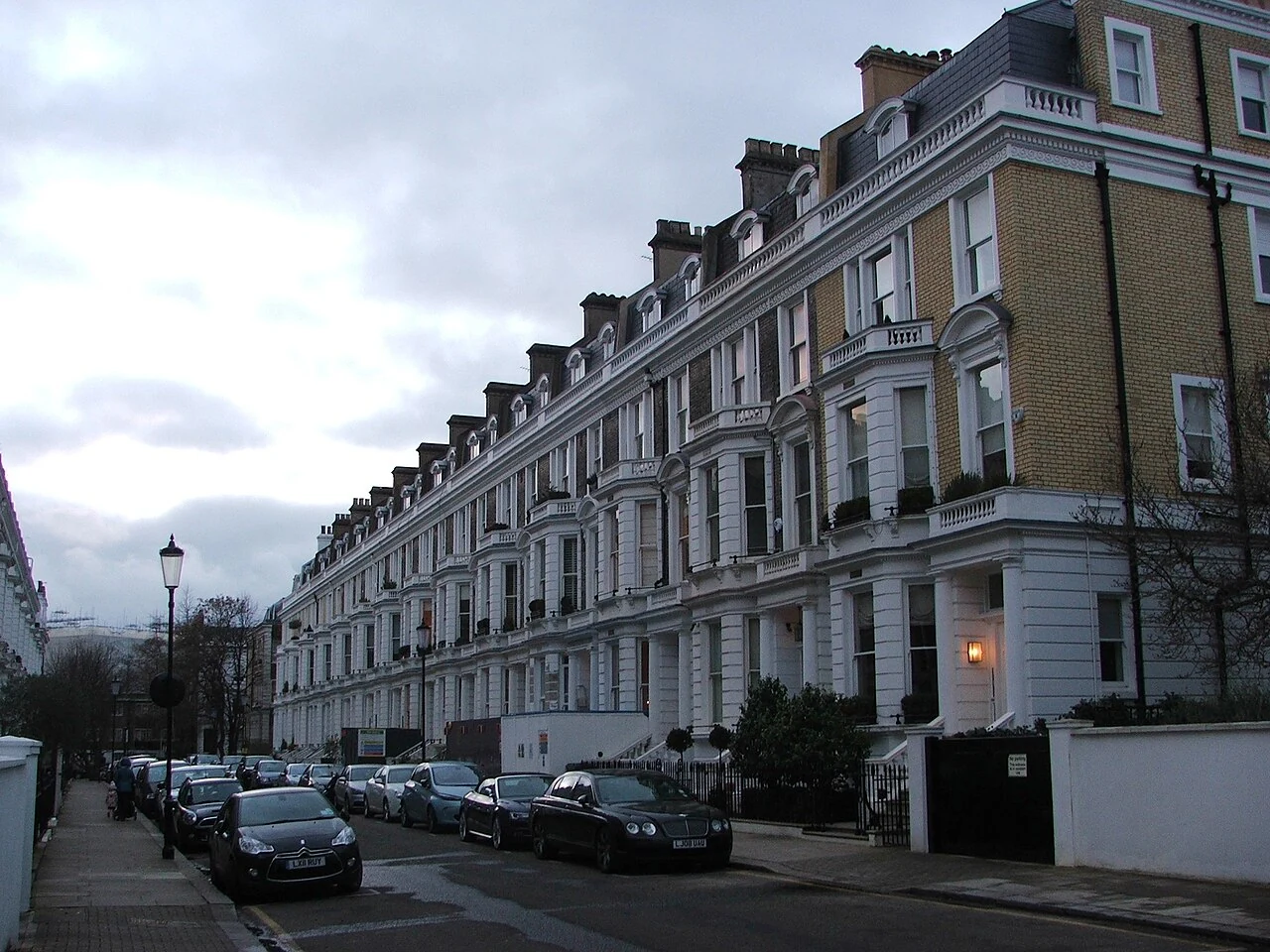
Property reference photograph; not a company job. Photo: Chris Whippet · CC BY-SA 2.0 (resized WebP).
Establish where the room meets the building outside
The Kensington Palace appraisal identifies lower-ground lightwells or front areas, with basement doors often positioned below the steps to the main entrance. If your affected room has that arrangement, show the window, outside level and accessible lightwell outlet together. The important inspection question is which wall faces the open area and which remains beside the surrounding ground. Establish who can provide outside access before treating an interior appointment as examination of every drain or concealed boundary detail.
Explain whether the room sits wholly or partly below the outside ground and whether a lightwell provides its window opening. Point out any external drain you can see from a normal accessible position. A room described simply as a basement can have several wall conditions, and the affected side is important.
Local building context: RBKC: Kensington Palace appraisal, lower-ground lightwells and access.
A wet lightwell and a damp wall are separate observations
Tell us if water remains in the lightwell after rain, whether debris is visible around the outlet and whether the indoor mark changes at the same time. Those observations can guide an investigation of external water. They do not confirm the condition of concealed drainage or waterproofing.
The inside face also needs attention. A cool surface can receive indoor moisture while another detail admits water, so choosing between condensation and water entry too early can miss part of the problem. We look at the accessible evidence together and explain what cannot be confirmed without additional access or a different specialist scope.
Do not diagnose the wall from a single meter number
Wall finishes can conceal previous repairs, salts or different materials. A reading needs its location and context, with comparison to surrounding surfaces where appropriate. A high response on one patch does not automatically justify replacing all plaster or a waterproofing system throughout the room.
For a predominantly damp-wall concern, assessment of the affected fabric helps frame the questions. Bring details of any earlier tanking, replastering or drainage work. The purpose is to understand what was intended to change and where, not to assume that the earlier contractor’s description proves the present cause.
The bedroom may still have an indoor moisture problem
Describe how the room is heated and ventilated, especially if it is used for sleeping but has limited opening windows. Include any adjoining bathroom and the route taken by its extraction. A window that can open is relevant, but does not explain whether the installed ventilation arrangement is adequate for the room’s normal use.
Our room and ventilation checks can be discussed alongside the damp enquiry. We distinguish what happens on the glass, the reveal and the wall beyond it. Changing daily routines should not be used as a substitute for investigating a reported building or plumbing issue.
Agree access with the person responsible for it
A lightwell, external drain or wall beyond the flat may be a shared part of the property. Explain who controls access and what permission is available before the appointment. In a leasehold setting, a recommendation for further examination may need to be passed to the managing agent rather than carried out immediately.
We examine the accessible areas covered by the agreed visit. Opening finishes, investigating below a floor or testing a concealed drainage route are not implied by the phrase mould inspection. Where more work is proposed, ask what particular uncertainty it is intended to resolve and how making good will be handled.
Treat the room after separating the moisture routes
The condition of the material matters when discussing mould treatment. A surface affected by growth is not necessarily the same problem as a finish damaged by persistent water. Repair, drying, treatment and reinstatement may need a sequence rather than a single promise to repaint everything.
Keep a record tied to the original concern: the lightwell after rain, the window during normal room use or the same wall position after an agreed repair. That gives any follow-up a consistent reference. A dry spell alone should not be mistaken for proof that intermittent water entry has been resolved.
Nearby areas we cover
Questions before checking the property
Does a lower-ground address automatically need tanking?
No. The position of the room is a reason to examine its wall and external conditions, not a specification for a particular waterproofing product. Existing finishes, drainage observations and indoor moisture need to be understood before recommending further investigation or remedial work.
Can you check a lightwell that belongs to the whole building?
Explain the ownership and available access when arranging the visit. We can discuss observations relevant to the indoor problem, but entry to shared or restricted areas must be agreed. A separate access arrangement may be needed to confirm an external route.
Should I remove the wallpaper before the appointment?
Do not strip a finish solely on the assumption that an inspection requires it. Describe the covering and any peeling or staining. If opening the surface would answer a particular question, the purpose, permission and later reinstatement should be discussed first.
Can condensation and outside water affect the same room?
Yes, more than one moisture influence can be present. Tell us about both morning window moisture and any rainfall-related change. Considering the observations together is more useful than deciding beforehand that every mark in a lower-ground home must have one cause.
Will the visit establish whether past waterproofing is guaranteed?
A property inspection concerns present findings and its agreed scope. Questions about warranties, contractual performance or responsibility require the relevant documents and may need separate professional advice. Bring the earlier work details so their physical location can still inform the assessment.
Start with the room level and the affected wall.
Mention the lightwell, visible drainage, earlier damp work and who can arrange access outside the flat. Call to discuss a Kensington moisture inspection focused on the evidence available at your property.