
THE GARDEN WALL AND THE INDOOR FINISH
Mould Inspection Highbury
A garden flat’s outside paving, wall base and indoor skirting need to be described together. For mould inspection in Highbury, we compare the affected finish with the actual ground-wall arrangement and room conditions, without treating every low mark as rising damp.
- Show the outside level against the affected wall
- Record whether rain changes the indoor mark
- Distinguish low-level dampness from surface growth
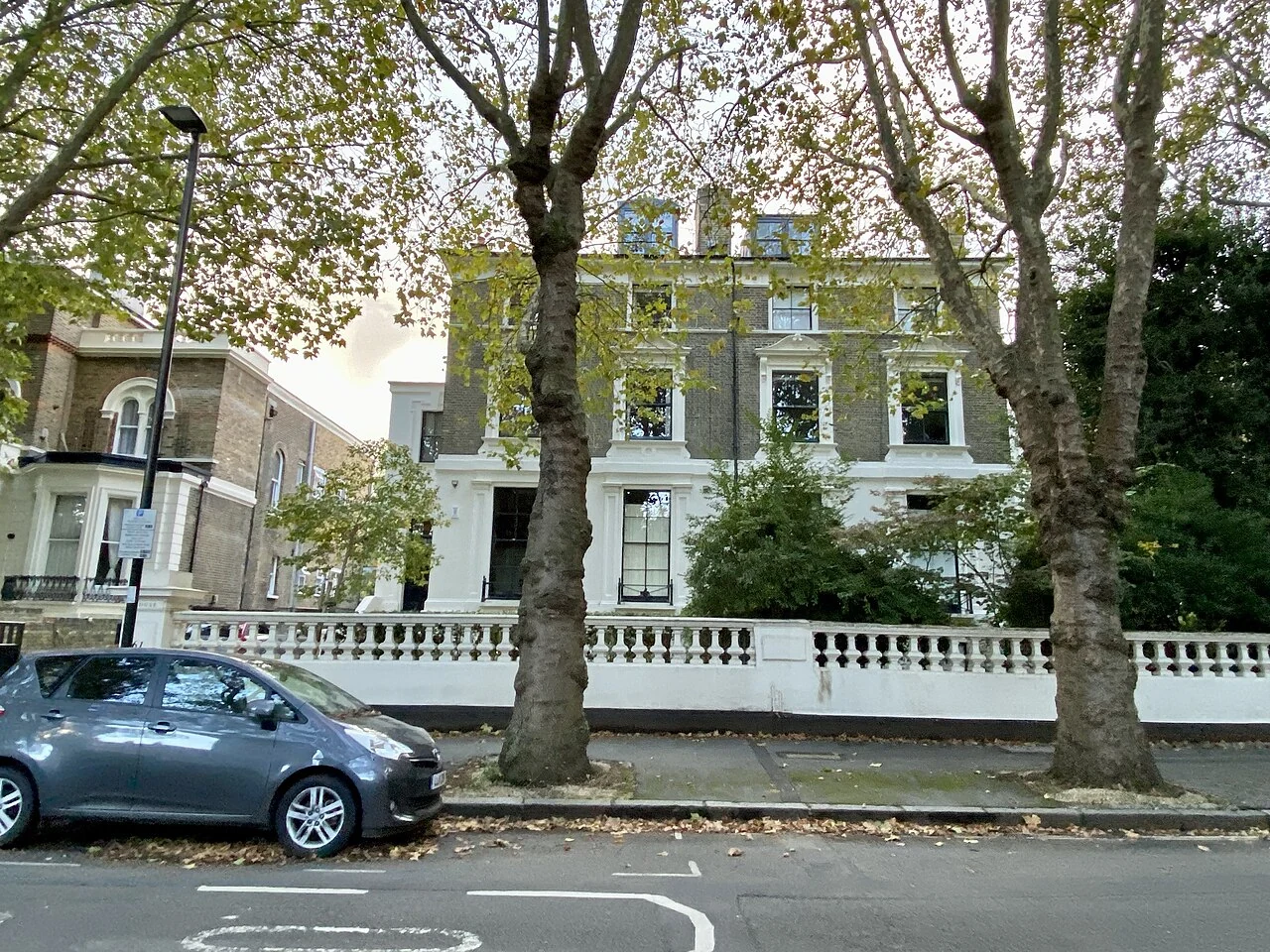
Property reference photograph; not a company job. Photo: No Swan So Fine · CC BY-SA 4.0 (resized WebP).
Start at the wall’s actual outside level
Explain where paving, soil or a step meets the outside of the affected room. Include a later patio alteration if known. A photograph taken from an ordinary accessible position can show details missing from an interior close-up. We need the relationship at that wall, rather than a general statement that the flat has garden access.
Islington’s Highbury New Park guidance describes detached and semi-detached villas with gaps leading towards rear gardens, alongside later flat buildings. For a garden-level room in that area, identify its own external wall, side passage and outside ground arrangement rather than borrow a terrace assumption from elsewhere. A later side addition or paving change belongs in the history. Establish which route provides access to the affected wall before specifying further checks at its base.
Local building context: Islington: Highbury New Park guidance, villa and garden arrangements.
The lowest mark is not automatically the source
Describe whether the finish is dark, flaking, stained or covered in visible growth. Point out the height and any variation along the wall. Different symptoms may coexist, and the presence of a mark beside skirting does not identify where the water entered or specify a treatment system.
A wall-base damp assessment considers accessible material and moisture evidence together. Instrument responses need the finish and location in context. A single number at the lowest point should not be used to prescribe chemical treatment or replacement of all plaster without a reasoned investigation.
Indicate an area which has already been replastered and one where the original finish remains. Keeping those positions clear helps explain a comparison, instead of treating every meter response along the wall as equivalent evidence.
Follow rain observations beyond the patio
Keep a note if an indoor patch becomes wetter after rainfall. Mention visible standing water, an outside outlet or debris where safely observable. These may guide further checks, but neither standing water nor a low wall mark proves the condition of a concealed drainage route. Discuss external water investigation where relevant. Access to a shared garden or drain may need permission. We separate details visible during a room appointment from a drainage or building examination requiring another contractor and a clearly agreed scope.
Include the garden room’s everyday conditions
A bedroom with a door to the garden can still have a room ventilation concern. Tell us how it is heated, whether the door is normally closed and if furniture covers the affected wall. An opening door does not establish the condition of every surface behind a wardrobe.
Our room and ventilation checks can consider these observations alongside persistent damp. We do not require a choice between indoor moisture and building water before the visit. Reporting both patterns helps prevent one explanation from hiding a second issue at the same wall.
Plan access without excavating the garden first
We examine the agreed accessible affected areas and discuss suitable checks. Existing photographs from paving or landscaping work may help identify changes, but there is no need to commission excavation solely to prepare for a mould appointment. Tell us what records exist and which outside areas can be reached.
If a concealed construction or drainage question remains, the proposed next step should explain what it would establish. Permissions, reinstatement and specialist involvement need consideration. A recommendation can be useful without claiming that inaccessible wall details have already been confirmed during a room visit.
Separate removal, repair and redecoration
Treatment of visible growth needs to reflect the material condition, while an identified water route requires its own response. Removing a skirting or adding a decorative covering does not by itself repair a wall. Ask which action deals with the moisture and which reinstates the surface afterwards.
Keep observations tied to the original wall position after any agreed work. Record rainfall-related change as well as ordinary room use. A dry interval may be encouraging, but it is not sufficient proof that intermittent wetting has stopped. A follow-up should compare the same evidence rather than rely only on how a newly painted room looks.
Nearby areas we cover
Questions before checking the property
Is mould above the skirting always rising damp?
Its height alone does not identify the mechanism. Surface growth, finish damage and a water route can involve different questions. The accessible wall, material context and relevant outside arrangement need examination before specifying a damp treatment.
Should I lower the patio before booking?
Do not undertake excavation solely on the basis of the visible indoor mark. Describe the levels and any known alterations first. If work outside is supported by the findings, its design, permission and reinstatement should be handled as a specific repair rather than an experiment.
Can you assess a wall facing a shared garden?
Explain the available access and who controls it when arranging the appointment. Interior checks may still be possible, while some external details remain unverified. The inspection findings should make that distinction clear and identify any further permission needed.
Does an opening garden door provide enough ventilation?
The existence of an opening is only part of the room arrangement. Normal use, installed extraction, heating and affected surfaces need consideration. A door alone does not establish that a closed bedroom or the space behind furniture has suitable moisture conditions.
Will replastering prevent the mark returning?
A replacement finish does not automatically address continuing water or room moisture. Understand the reason for damage and the purpose of any proposed repair first. Reinstatement may be needed after appropriate work, with monitoring tied to the original affected position.
What if the wall was previously given a damp-proofing treatment?
Bring its location, date and scope if known. That helps interpret later finish changes and the present concern. A previous treatment does not establish the cause of new marks or prove that every external and indoor moisture influence has been addressed.
Describe the wall from both sides.
Tell us about the garden level, visible finish and changes after rain. Call to discuss a Highbury inspection before choosing a wall treatment from the height of the mark alone.