
WHEN THE BACK OF THE HOUSE HAS CHANGED
Mould Inspection Fulham
A rear extension can change where cooking moisture goes, which surfaces stay cool and how the original rooms connect. For mould inspection in Fulham, tell us about the house before and after the work, especially if the marks appeared only after the kitchen was moved or enlarged.
- Bring the original house and extension into the same assessment
- Check what the extractor actually discharges through
- Separate a wet junction from a poorly ventilated room
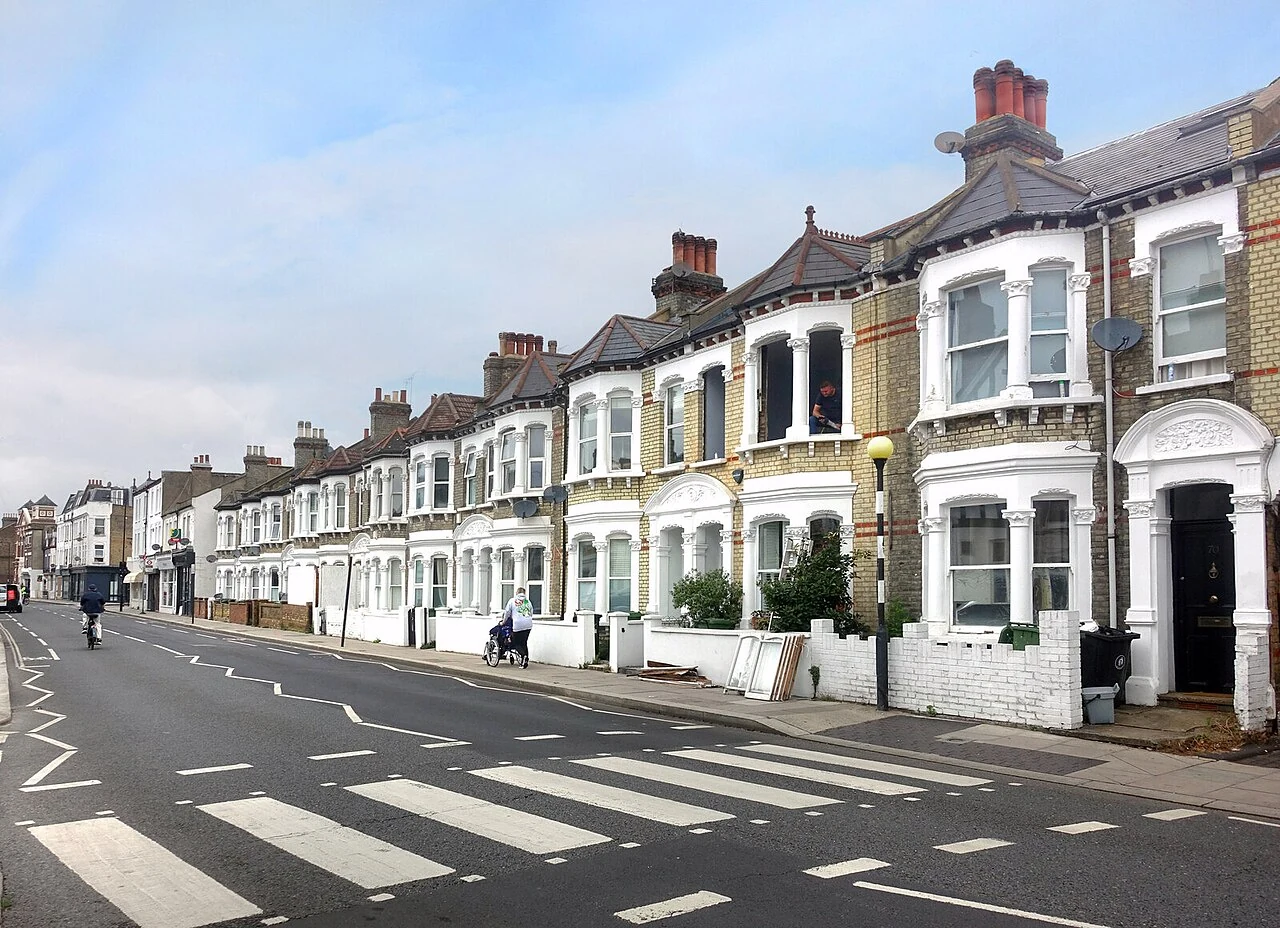
Property reference photograph; not a company job. Photo: Des Blenkinsopp · CC BY-SA 2.0 (resized WebP).
Start with the original house and the newer space
The Parsons Green appraisal describes terraced properties built in different phases around the designated area, rather than one uniform house design. If your Fulham home belongs to that setting, explain which part is original and which rear room was added or enlarged. A matching frontage does not show the construction of a later kitchen roof. Keep plans or photographs of that junction available so the inspection can relate cooking moisture and any wet patch to the actual connection.
Sketch where the kitchen used to be and where it is now. Show any doors that have been removed, a new opening into the garden and the room directly above the affected patch. You do not need a professional drawing. The purpose is to explain connections that are difficult to see in a close-up photograph of mould.
Local building context: Hammersmith & Fulham: Parsons Green appraisal, varied terrace development.
An extractor running is not the whole answer
First find out whether the cooker hood vents outdoors or recirculates air through a filter. Those arrangements do different jobs. A recirculating hood may remove some cooking odours without taking water vapour outside. An externally vented unit also needs an appropriate route and a functioning outlet; hearing its motor does not establish that moisture is being removed effectively.
Tell us whether the room becomes steamy while cooking and how long the glass stays wet afterwards. Our assessment of extraction and room conditions can help connect those observations with the affected surfaces. Avoid sealing a vent because it feels draughty before its function is understood.
The junction matters more than the size of the patch
Where a new roof meets an existing wall, the surface can be influenced by the construction detail as well as indoor moisture. A strip of growth following that junction should be described differently from a damp patch that expands after rainfall. Both may need examination; neither can be diagnosed from its outline alone.
Check the chronology. Did the first mark follow building work, a blocked outlet or a period of wet weather? If rain appears relevant, the external water investigation page explains why an accessible gutter or discharge point may be part of the enquiry. Roof access and repair work need an agreed arrangement.
Include the room beyond the kitchen
An open doorway can connect the new space with a cooler dining room or passage. The inspection should consider the position of the marks in that connected layout rather than assume that the room containing the cooking appliance must also contain every affected surface.
Describe ordinary use: doors left open or closed, heating patterns and any clothes drying indoors. These details help interpret the building; they are not a reason to assign blame. Where the same marks keep returning, a moisture-focused inspection is more useful than choosing a cleaning product from a photograph.
Arrange useful access without starting demolition
We discuss the affected rooms, examine accessible surfaces and consider suitable moisture checks within the booked scope. Have any extension drawings, extractor instructions or repair invoices available if they exist. Tell us about fitted cabinets concealing a suspect wall and who can authorise access to them.
Do not remove units simply to prepare for the appointment. If the accessible evidence leaves a concealed route unresolved, the next recommendation should explain what further access would answer. A check behind a finish and the later reinstatement are separate practical questions, particularly where more than one contractor is involved.
Choose treatment after the building question is clearer
A sound finish with surface growth may need a different response from plaster damaged by continuing water entry. Mould removal can be discussed alongside the findings, but it should not stand in for repair of an identified defect. Ask which part of the proposed work deals with visible growth and which part deals with moisture.
Afterwards, monitor the junction or room behaviour that prompted the visit. A dated photograph after cooking or rainfall is more informative than checking a random wall every day. Keep the agreed ventilation measures in use and report a change in the same location so any follow-up addresses the original question.
Nearby areas we cover
Questions before checking the property
Should I bring plans for the kitchen extension?
Yes, if you already have them. A simple explanation of the previous room arrangement is still helpful without plans. Tell us which wall, roof or opening changed and whether the mould appeared before or after that work; the date of construction alone does not identify the cause.
Can a cooker hood remove odours but leave moisture behind?
A recirculating arrangement does not discharge room air outside. Check the model and installed duct route rather than relying on the sound of the fan. The inspection can discuss the room evidence, while alteration or replacement of the system may require a separately agreed contractor.
The patch follows a beam. Does that mean the roof leaks?
It identifies a detail worth examining, not a confirmed leak. Surface temperature, the surrounding finish and the timing of wetting may all be relevant. Photographs after cooking and after rainfall can help distinguish the circumstances without assuming that one explanation applies.
Must the kitchen cupboards be emptied before you visit?
Explain which cupboards cover the affected wall when booking. We can discuss the access needed for the agreed checks. Removing fixed cabinetry or opening building fabric is not automatically included, and should have a clear purpose and authorisation before work begins.
Can the original dining room be checked as well?
Mention it when describing the problem, particularly if it connects to the kitchen or has related marks. The appointment scope should reflect the affected layout. That does not mean every room in the property or every concealed part will be assessed during the same visit.
Tell us what changed at the back of the house.
Describe the altered rooms, the first appearance of the mould and whether cooking or rainfall changes it. Call to discuss a Fulham inspection and the access that would make the visit useful.