
TEST THE ROOM CONNECTION BEFORE NAMING THE ORIGIN
Mould Inspection Ealing
Mould in a bedroom does not establish whether moisture began there or arrived from another space. For an Ealing inspection, we compare the affected location with connected rooms and ordinary timing, asking which observations support a remote source and which suggest a separate local concern.
- Keep source-room observations separate from the affected surface
- Use ordinary timing to examine a proposed room connection
- Check local wall evidence even when another room becomes humid
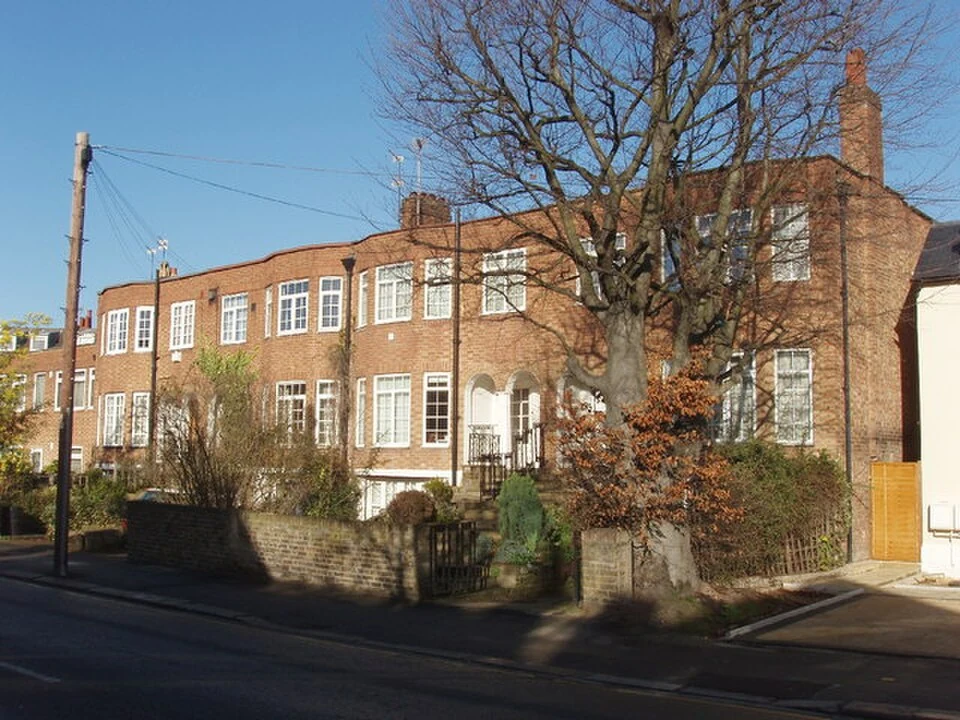
Property reference photograph; not a company job. Photo: David Hawgood · CC BY-SA 2.0 (resized WebP).
State the proposed connection as a question
Explain why you believe the bathroom, kitchen or another space is relevant. Perhaps droplets appear in the bedroom after ordinary bathing, or a mark was noticed after a change in how rooms connect. That account provides a hypothesis to examine, not a cause already established. The room with visible growth need not be the room where water vapour originates.
Our enquiry into the reported moisture route begins by locating both the suggested origin and the affected surface. A simple sketch can show intervening doors and spaces. Avoid making every nearby wet room part of the explanation merely because it produces moisture in normal use.
Choose observations that could support or weaken the account
Keep the original surface as a reference and describe what happens before and after an ordinary activity elsewhere. If the bedroom stays affected during periods without that activity, say so. If the wet room clears while the remote corner remains damp, preserve the distinction. Different responses can change which question deserves the next check.
You do not need to create unusual steam or leave doors open against normal practice to demonstrate a route. Existing observations of door positions, heating and room use can be useful. A brief record should have a purpose: deciding whether the proposed connection fits the behaviour, not accumulating measurements with no effect on the decision.
A single coincidence is weaker evidence than a recognisable recurring pattern. At the same time, a one-day absence of droplets does not exclude an intermittent influence. We interpret the history with accessible checks, keeping the limits of both observation and measurement clear.
Compare the route with the surface that receives moisture
Connected spaces may have different wall exposure, heating and local air movement. Moisture moving through a home can meet a cooler surface elsewhere, but that mechanism should not be accepted just because a bedroom corner has growth. We consider why that location differs from other accessible surfaces along the suggested route.
The assessment of connected-room conditions can examine relevant ventilation and normal operation within scope. This enquiry concerns the relationship between rooms; specialist verification of equipment performance or concealed ducting is a separate matter if needed. The presence of a fan is background information, not the central diagnosis.
Keep a local source capable of explaining the pattern
A bedroom wall can have its own water route beside services or an exterior junction. A rainfall-responsive patch or a change after nearby fixture use may therefore challenge the remote-room account. Room humidity and local wetting can coexist; improvement in one does not clear the other.
For a persistent local area, examination of the affected material can provide another line of evidence. A focused hidden-water check may be discussed where the layout and timing support it. The findings should distinguish an accessible pattern from an unseen component that has not been tested.
Agree comparisons across the actual Ealing layout
Ealing Council’s Ealing Green appraisal records substantial villas converted into flats and bedsits in the Mattock Lane sub-area. In an Ealing dwelling with an altered plan, use the present room connections to examine a proposed moisture route; original house form cannot show where later wet rooms or partitions sit. Describe intervening doors and spaces alongside the affected bedroom. This defined local conversion context supports checking the actual layout, without proving that a remote room supplies the moisture.
At booking, identify the rooms that need comparison and any access restrictions. A bedroom appointment does not automatically include every connected space or neighbouring dwelling. Changed room layouts, extensions and doors matter only where they relate to this enquiry; we do not infer a particular home arrangement from its Ealing address.
Local building context: Ealing Council: Ealing Green appraisal, residential conversions in a defined sub-area.
Make the next action test the supported reasoning
A recommendation should say which observations support the chosen route and which remain unresolved. That can distinguish a measure in the suggested source room from a repair or further check at the receiving wall. Treatment of the affected bedroom surface addresses visible growth rather than proving that the remote room was responsible.
After action, retain the comparison that led to it. If the wet-room observations improve but the bedroom mark does not, report that difference. If both change during different weather or use, keep those circumstances identifiable. The review should test the original reasoning rather than repeat a generic statement that moisture can travel between rooms.
Before another round of treatment
Does bedroom mould prove moisture came from the bathroom?
No. The bathroom may be relevant where timing and layout support that enquiry, but the bedroom can also have a local influence. Keep observations in each room separate so the inspection can consider a proposed connection without treating it as established before checking the property.
What if the bedroom stays damp when nobody showers?
That is useful information to include. It may warrant attention to retained moisture, the room’s own conditions or a local source. It does not independently identify the cause, but can help test whether recent shower activity accounts for the reported pattern.
Should I create extra steam to demonstrate the route?
No. Describe ordinary use and observations you already have. Deliberately changing room conditions can produce an unrepresentative pattern. Any monitoring or further test should have an agreed question, scope and interpretation rather than be improvised by the occupier.
Why compare an unaffected connecting room?
It can help describe conditions along the suggested route, provided the material and use differences are considered. A clear surface does not automatically disprove a connection. The comparison is one part of the evidence, not a standalone test of where all moisture originated.
Can a ventilation change and a local repair both be needed?
Different influences can affect the same home. Findings should link each proposed action to its evidence and location. A room-condition change should not be presented as repairing a local water source, just as a pipe repair does not certify every ventilation arrangement.
Will all rooms be examined in one appointment?
Discuss the relevant connections before booking so the scope and access are realistic. The useful comparison may include more than the first affected room, but concealed services and neighbouring accommodation require separate arrangements. Findings should identify which parts were accessible and which remain unexamined.
How should improvement be judged afterwards?
Return to the original receiving surface and the observations in the suggested source room. Note the action and relevant conditions. Different improvement between the two can guide a review; a change somewhere else in the home is a less useful comparison for the original question.
Nearby areas we cover
Which observation connects the two rooms?
Call about the Ealing home with the affected surface, proposed source room and timing that made you link them. We can discuss a comparison that tests that account and keeps local wall evidence in view.