
FOLLOW THE DISCHARGE, NOT JUST THE GUTTER
Mould Inspection Hanwell
A gutter can be cleared while the wall below continues to become wet. For a Hanwell mould inspection, we connect indoor changes with the accessible rainwater route, earlier maintenance and the way water leaves the building before treating the room as a condensation problem.
- Link the indoor mark with observed rainwater behaviour
- Look at joints, discharge and accessible wall details
- Separate wet-weather evidence from ordinary room moisture
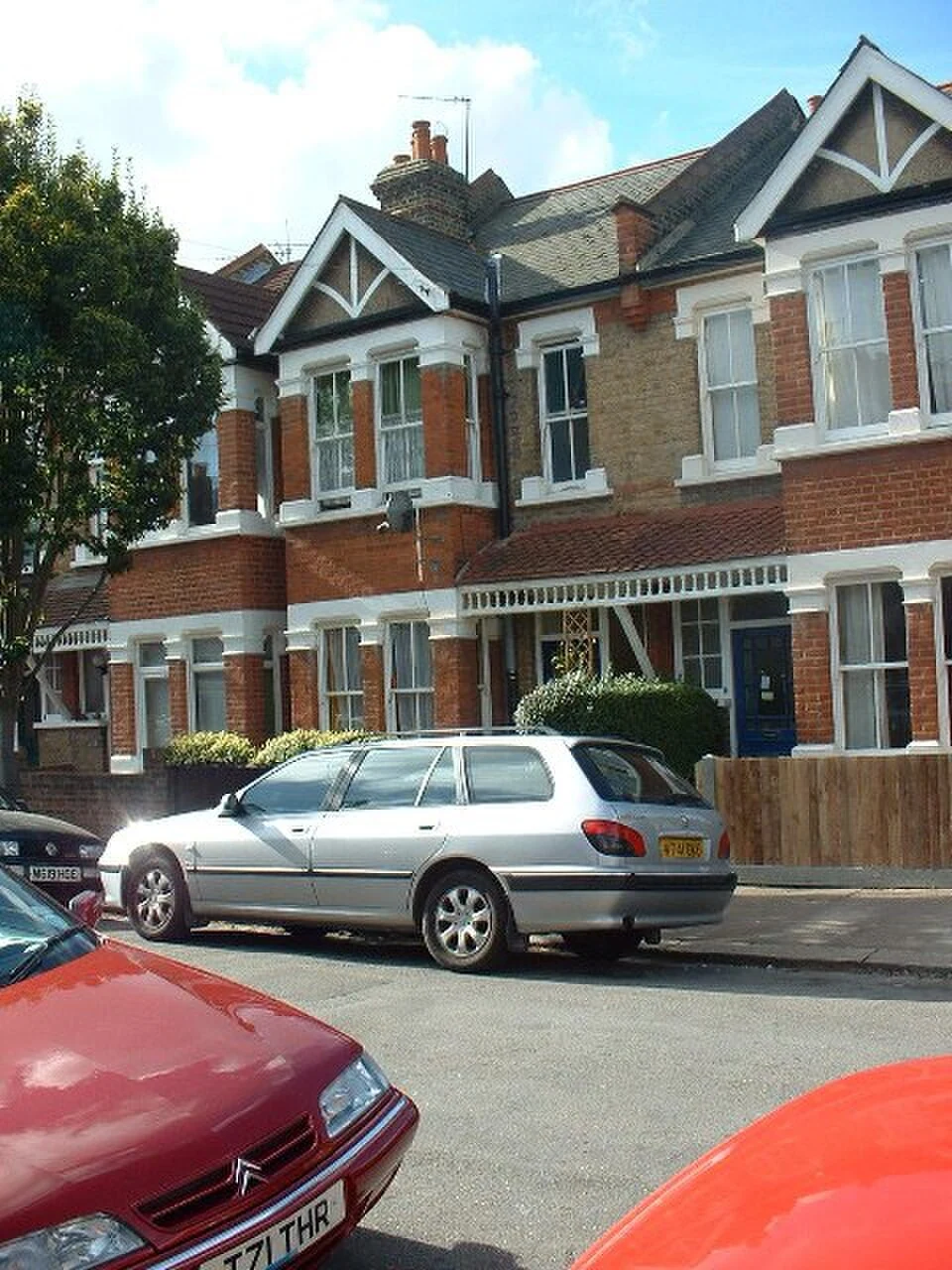
Property reference photograph; not a company job. Photo: David Medcalf · CC BY-SA 2.0 (resized WebP).
What changed after the gutter was cleared?
Tell us why the gutter work was commissioned and what happened afterwards. Was overflow observed, was a joint repaired, or were leaves simply removed? If the indoor wall still changes after rain, identify the same location and whether the pattern is smaller, slower or unaffected. These distinctions help establish what the maintenance did and did not address. Photographs taken safely from ground level can show an accessible discharge point or obvious overflow. Do not use ladders or lean from an upstairs opening to collect evidence. Investigation of rainwater-related moisture needs an appropriate access arrangement; a routine interior visit cannot confirm unseen roof-level details.
Water collection is only part of the route
The route includes collection, joints, downpipes and the point where water is discharged. A cleared gutter does not establish the condition of every connection or drainage detail. An indoor mark beside a downpipe can be relevant, but it is not proof that the pipe is responsible. The exterior observation needs to be related to the room and its accessible construction.
Explain any wall coating, later extension or ground-level change beside the affected area. Those details may help interpret where water can travel or where access is restricted. We do not assume that every Hanwell terrace has the same rainwater arrangement, or that a particular property style establishes the cause of interior mould.
Do the indoor observations follow the weather?
Record whether the patch expands after prolonged rain, during short heavy showers or mainly in cold mornings. A wet-weather relationship can focus the enquiry, but conditions may overlap: colder weather can also change surface condensation. More than one moisture influence can be present on an external wall.
Our assessment of wall dampness can consider suitable accessible comparisons, finish condition and history. Room-condition checks remain useful where the indoor pattern warrants them. The question is which evidence supports each possibility, not whether the wall can be assigned one label before the visit.
Coordinate access with the building owner
A gutter or downpipe may be shared, and repairs may involve a landlord, neighbour or managing agent. Have the previous work record available and identify who can arrange inspection outside your own room. If communal or roof-level areas are unavailable, we state that limitation rather than treating the accessible indoor assessment as a full exterior survey.
Do not remove interior finishes simply because outside water is suspected. The next investigation should explain what access is needed and which uncertainty it addresses. A contractor examining rainwater discharge and a contractor restoring plaster may need different information; one should not assume the other has already resolved the source.
Use the local report alongside the inspection
Hanwell Village Green’s appraisal describes detached and semi-detached residential groups using materials including red brick, clay tiles and timber within its boundary. For a wall affected after gutter work, identify the actual roof edge, pipe and discharge relationship rather than assume clearing one part proves the whole route functions. Different building details need their own accessible observations. The local house context guides that description without establishing a rainwater defect or the construction of every Hanwell property.
When calling, say which wall is affected and whether the relevant gutter, pipe or discharge point can be seen safely. A full room photograph and a simple sketch of the outside relationship can be enough to start the discussion. Precise postcode and access information help arrange coverage; they do not establish a local mould diagnosis.
Local building context: Ealing Council: Hanwell Village Green appraisal, residential forms and roof materials.
Review the result under relevant conditions
Once a supported defect is addressed, wet materials may require time and suitable assessment before finishing. Treatment of the affected wall should fit its condition and the remaining moisture question. Cleaning visible growth does not establish that the discharge route is functioning.
Wet weather is part of the follow-up
Keep the repair description and compare the original patch during the conditions that previously changed it. An extended dry spell gives limited evidence about a wet-weather concern. If droplets or growth remain during ordinary room use after the rain-linked problem has improved, that may warrant a separate indoor-moisture enquiry rather than another round of gutter clearing.
Before another round of treatment
Can a clean gutter still be related to wall dampness?
Clearing debris addresses one possible obstruction. Joints, the downpipe and discharge arrangement may still need attention. The continuing indoor pattern should be related to accessible exterior evidence, rather than assuming that all rainwater questions were settled because a cleaning visit took place.
Do I need to photograph the roof before calling?
No. Share any existing photographs and observations that can be obtained safely. Do not climb or lean out to create a record. Explain which parts are visible from ground level and who can arrange suitable exterior access if a further check is needed.
Why is the inside mark away from the downpipe?
The internal appearance can be influenced by the building assembly and route water takes. Its position need not precisely match an exterior component. A room plan and the wet-weather history help guide examination without assuming that distance alone confirms or excludes the downpipe.
Can condensation still be present after a gutter repair?
Yes. The repair may address one water route while room humidity and cooler surfaces remain relevant. Comparing the pattern before and after the work helps separate influences. Continued growth should be assessed on its present evidence rather than automatically labelled a failed gutter repair.
Will the inspection include drainage testing?
Not unless that work has been specifically discussed and arranged. An interior mould visit can identify a discharge question, but testing a concealed drainage route may require different equipment and access. Ask what is included so the diagnostic scope and any later specialist work remain clear.
What makes a follow-up photograph useful?
Use the same wall position, with a date and a note of recent rain or room conditions. Include enough of the room to locate the mark. A sequence showing its boundary and timing is more informative than isolated close-ups whose position or circumstances are uncertain.
Nearby areas we cover
Tell us where the collected water goes.
For Hanwell, bring the gutter work details and describe how the inside wall responds to rain. Call to discuss the available checks and any separate exterior access needed.