
START WITH WHAT YOU CAN SEE
Mould Inspection Balham
The window is wet each morning, but the bedroom corner stays marked after the glass dries. Or a musty smell returns without an obvious stain. Tell us what is happening in your Balham home; the symptoms help us decide where a closer moisture investigation is needed.
- Compare morning window moisture with persistent wall dampness
- Check the room behind recurring bedroom growth
- Use the timing of the problem to guide the visit
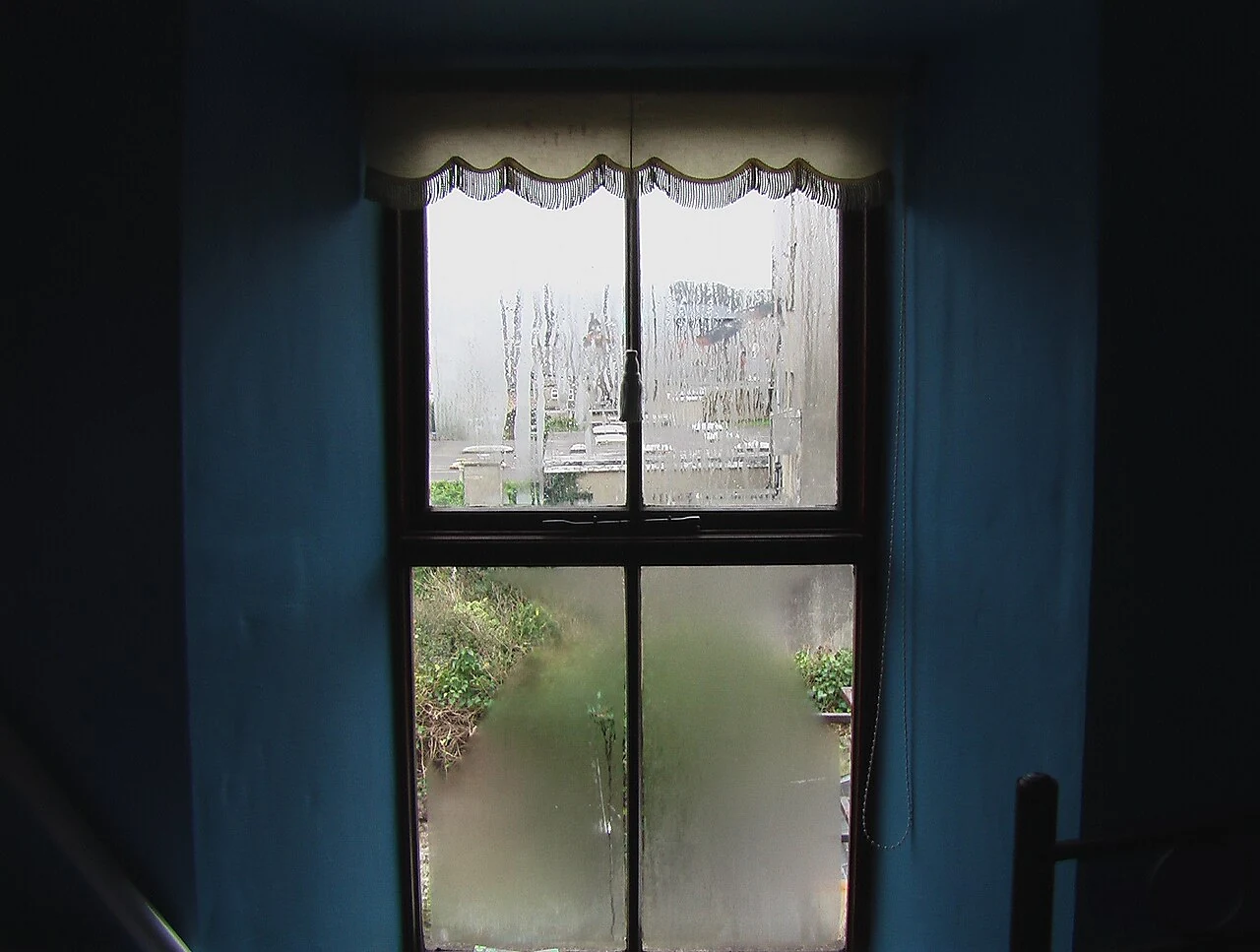
Reference photograph: Danielclauzier (CC BY 3.0); resized, converted to WebP and displayed with layout crops. Not evidence of a company job.
Which sign is bothering you most?
Start with a description rather than a label. “The sill is wet every morning” is more useful than deciding that the whole property has damp. “The corner feels wet after the window dries” adds a different question. Note whether the symptom is confined to one surface or appears elsewhere in the room. For recurring growth around glass or frames, looking into the condensation pattern may be relevant. Water forming on a cooler surface can explain some symptoms, but a local leak or water entering around the window may also require checks. A wipe of the glass cannot establish which explanation fits the wall.
A bedroom corner can behave differently from the rest of the room
A cold external corner may be partly enclosed by a bed, chest of drawers or wardrobe. During the visit, the arrangement matters because it helps explain where air can move and which surfaces are exposed. We also consider signs of other moisture rather than treating furniture position as the answer in every case.
Photographs taken before cleaning can preserve the shape of the growth. Show whether it follows a straight edge, spreads across a broad surface or sits only in small corners. Do not rely on its colour to identify a species or decide that ventilation alone is responsible.
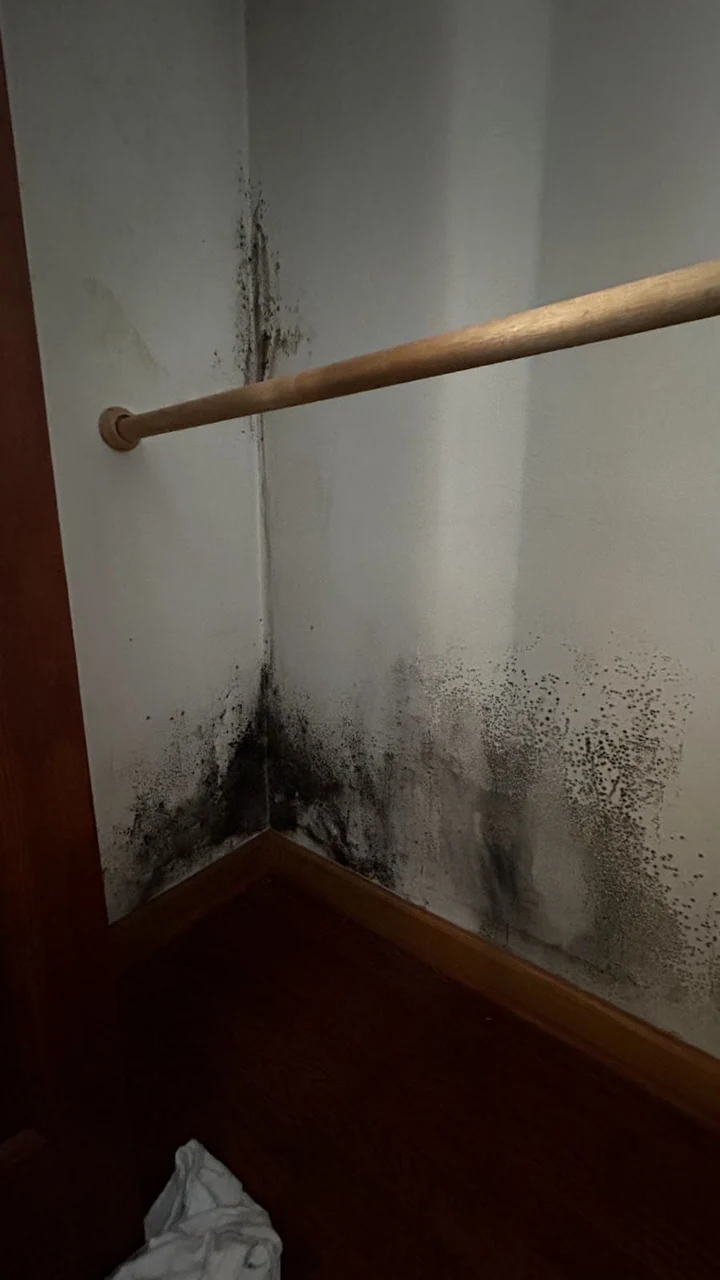
Reference photograph: iDry Columbus (CC BY 4.0); resized, converted to WebP and displayed with layout crops. Not evidence of a company job.
Property details that are useful in Balham
The council’s Heaver Estate appraisal records a residential estate of houses in Balham. That is a specific local example of property form, not a description of all homes here. In a house or conversion with projecting windows and more than one room depth, it is worth showing the inspector exactly which recess or wall is affected.
If you occupy a flat within a larger building, explain which surfaces are external and what rooms sit above yours if known. A moisture investigation should fit that layout. It should not assume that the issue begins and ends inside the room simply because that is where a mark is visible.
The local residential example above is described in the Heaver Estate conservation area appraisal.
Turn observations into sensible checks
We ask when the symptoms appear, look at accessible surfaces and consider the moisture conditions relevant to them. Details of heating changes, fan repairs and previous leaks help us interpret the present picture. They are background evidence, not a reason to make assumptions about the people living in the property.
Where moisture is lingering after cooking or bathing, an assessment of airflow and extraction may help. If the patch appears to respond to nearby plumbing instead, investigating a concealed water source may be the more useful next step. Different observations lead to different questions.
Choose what happens after the inspection
You do not need to commit to every possible service before the cause has been considered. We explain the findings, any gaps caused by limited access and the work that may follow. Ask which recommendation deals with the visible surface and which aims to change the moisture conditions.
A discussion about treating dark mould patches should include the material involved and whether it can be recovered. Damaged seals or finishes may need replacement. If a repair lies outside the agreed inspection or treatment, its role should still be clear so the problem is not simply covered over.
Questions about the signs you are seeing
Why does the wall stay marked after the glass has dried?
The wall and glass may be responding to different conditions, or the mark may remain after earlier wetting. Explain whether the wall is actually damp or only stained. The distinction helps determine what moisture checks are needed.
Does a musty bedroom always have hidden mould?
A smell is a reason to investigate, but it does not confirm hidden growth or its location. Accessible surfaces, stored items and possible moisture sources should be considered before deciding that a wall needs opening.
What should I note over a few days?
Record when water appears, how long it stays and whether the same area changes after rain or use of nearby plumbing. Keep the observations simple; a short sequence of dated photographs can be more useful than a guessed diagnosis.
Can you assess an extractor that seems to run normally?
Tell us what the room is doing despite the fan running. The presence of a working motor does not by itself explain how effectively moisture leaves the space. Agree the ventilation checks you need when arranging the visit.
Should I clean all the marks before you arrive?
If you have already cleaned them, earlier photos are helpful. Keeping a visible record of the original extent supports the discussion. Preparation and any proposed cleaning or treatment can be talked through when booking.
Can you help when changing daily routines has made no difference?
Yes, explain what changed and over what period. Persistent symptoms deserve consideration of the property and other water sources, rather than another assumption that the same routine advice will resolve them.
What if only one of several bedroom windows is affected?
Show the difference between them and explain whether the room use or furniture position differs. Comparing the affected detail with a nearby unaffected one may help identify what needs closer examination. It does not prove the cause without the wider room conditions.
Nearby areas we cover
Talk through the symptoms, not a guessed diagnosis.
Tell us what gets wet first, which marks return and whether the problem changes overnight. Those details help us discuss a useful visit in Balham.