
THE OCCUPIED FLAT ABOVE ANOTHER USE
Mould Inspection Angel
If your Angel flat sits above a shop or another occupied unit, an interior moisture concern can involve access beyond your own door. Start with what changes in your room and which parts of the building you can reach. The inspection follows that evidence without blaming activity below.
- Keep your room observations separate from assumptions about the unit below
- Identify shared routes that may need an access arrangement
- Plan a useful visit while the home remains occupied
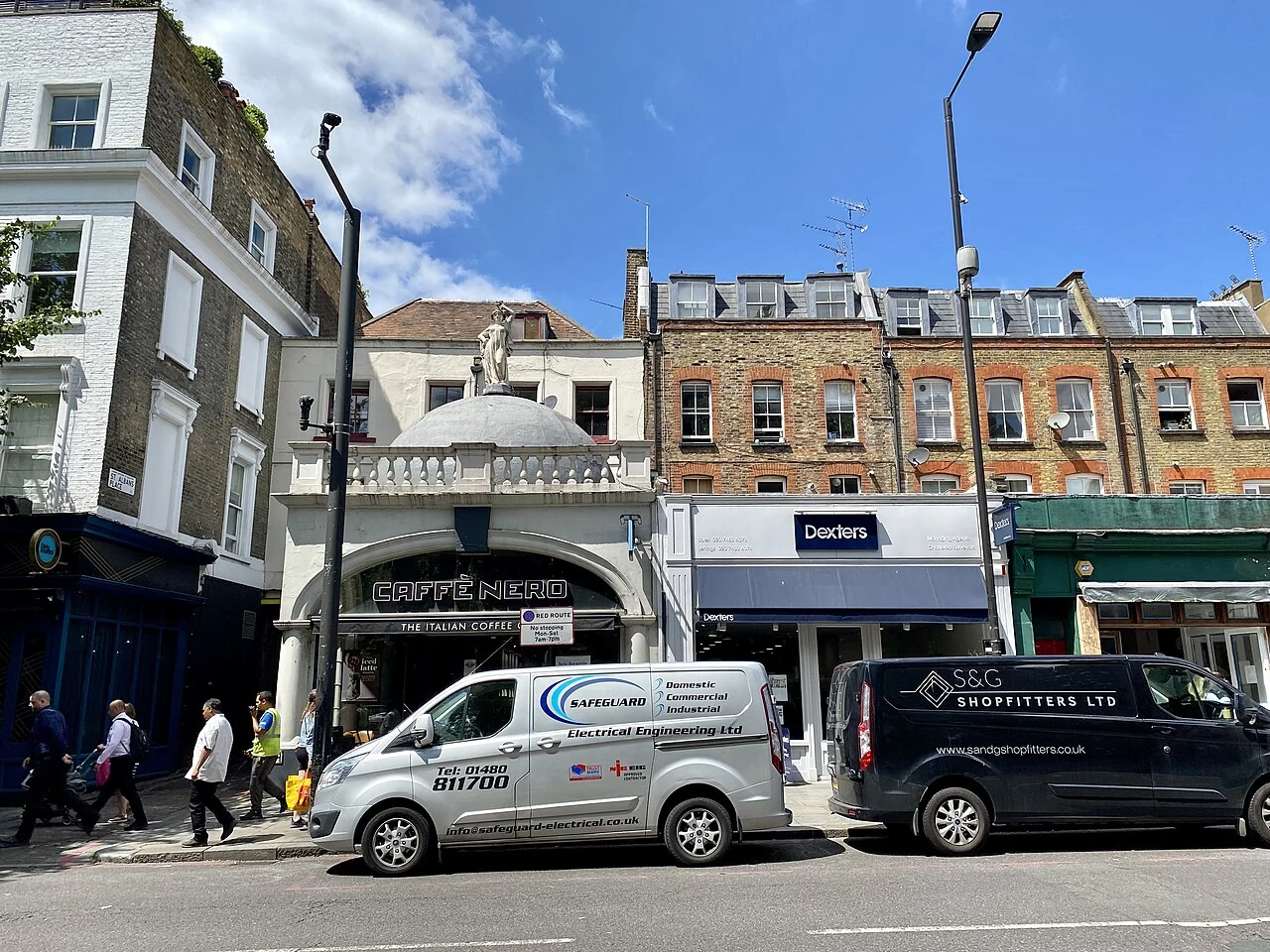
Property reference photograph; not a company job. Photo: No Swan So Fine · CC BY-SA 4.0 (resized WebP).

Describe the living room before the business below
Show where growth appears relative to the window, floor and any boxed service. Note whether it changes overnight, after rain or during a particular use of your own plumbing. A business occupying another part of the building is context, not proof of where moisture comes from.
Bring the home’s ordinary heating and ventilation into the account. If a downstairs unit is closed while you are present, that alone does not identify a change in the wall or floor construction. We ask for the visible pattern so a property enquiry does not begin as a dispute about somebody else’s activity.
Work out which route belongs to the inspection question
A bathroom duct, water pipe and drain can each pass through parts of a mixed-use building, but they are different enquiries. Identify any route you know from plans or maintenance records and label guesses as guesses. A sound from an enclosure does not establish what service is inside it.
For a specific water concern, discuss tracing a possible hidden source. Access to your affected wall and access to a connection elsewhere should be listed separately. That distinction helps avoid a visit where the visible room is available but the crucial shared panel remains unexpectedly locked.
Use existing duct information to identify the unknown part
If the question instead concerns a fan outlet, bring any model or duct information already held. You do not need to map the entire building yourself; identifying the unknown part helps define a sensible next check.
Arrange the visit around the occupied home
Explain who can admit the technician, which rooms remain in use and whether furniture restricts the affected area. Ask what preparation suits the agreed checks rather than clear every possession from the flat. A limited room appointment should not depend on unplanned dismantling or entry into another occupier’s space.
Our apartment moisture assessment considers these practical boundaries. If somebody from the other unit needs to attend, agree why their access matters and a suitable time beforehand. A shared attendance without a defined question can create inconvenience without improving the evidence.
External alterations need the address context
Islington’s Angel and Upper Street guidance describes retail uses below residential upper floors, with narrow plots and buildings commonly arranged over several storeys. If that describes your address, identify the entrance serving the flat and any service access passing through another occupier’s space. A photograph of the upstairs mark cannot show that route. Arrange permission and the relevant keyholder before a proposed shared check, rather than assume the shop entrance provides access to everything.
Local building context: Islington: Angel and Upper Street mixed-use building guidance.
Let the room evidence guide the service choice
Repeated overnight glass moisture may make ventilation and extraction checks useful, while a surface remaining wet through the day can prompt a different material or water enquiry. Report both if present. We need not decide that one cause excludes the other before examining the property.
Explain any previous fan alteration or plumbing attendance. The location and actual work matter more than a broad assurance that the building has been checked. Where a shared route cannot be confirmed, the findings should say what further access or specialist scope would resolve that particular uncertainty.
A plan the occupier and building contact can use
Discuss treatment of accessible growth with the outstanding moisture questions recorded. If further access is necessary, give the relevant building contact a location and a clear purpose. Avoid treating cleaning within your flat as evidence that an unseen shared service is sound.
After agreed work, keep the same room observations and repair dates. Only include activity elsewhere if a relevant connection has actually been identified, rather than monitor a neighbour’s routine in search of proof. A useful follow-up tests a defined building or room question with evidence you can reasonably obtain.
Booking and reporting for a rented home
Does the shop below automatically contribute to my mould?
No cause should be assigned merely from the building’s mixed use. Report the room pattern and any known physical connection. The accessible assessment can then identify whether a service or ventilation question beyond your flat is relevant, rather than assume another occupier is responsible.
Can you enter the commercial unit as part of my booking?
Entry requires an agreed reason, permission and practical arrangement. Describe any proposed shared access before the visit. An appointment in your home does not automatically include another unit, and any limitation should be kept clear in the findings.
What if a duct outlet is on a shared frontage?
Identify who manages that part of the property and provide existing records if available. An outlet may need external examination or an alteration permission separate from room checks. The inspection can explain the moisture question without granting consent to change the facade.
Must I leave the flat empty during inspection?
Discuss the booked checks and preparation rather than assume complete vacancy is needed. Ordinary occupation can provide useful history. Access to particular surfaces may need planning, with possessions protected and any movement arranged by the responsible person.
Can a shared pipe be excluded without opening its enclosure?
Accessible evidence can sometimes guide the next decision, but an unseen connection should not be presented as fully examined. If that route remains material, the recommendation should state what further check is needed and the access required to perform it.
Is this an inspection of the business’s ventilation system?
Not automatically. Your appointment concerns the agreed moisture issue and accessible scope. If the evidence raises a question about another system, a separate appropriately scoped examination may be necessary; do not assume a home visit audits all equipment across a mixed-use property.
Should I collect every neighbour’s mould report?
Information about the same known building route may help, but a collection of unrelated marks can confuse the enquiry. Focus on your room and identify any genuinely connected observation with permission. Avoid turning an unconfirmed concern into claims about conditions throughout the property.
Nearby areas we cover
Start with your room and the access available.
Tell us the Angel flat’s position, affected surface and any shared route already identified. We can discuss a practical occupied-home visit with the next access question kept specific.