
Morning Window Water: What to Record
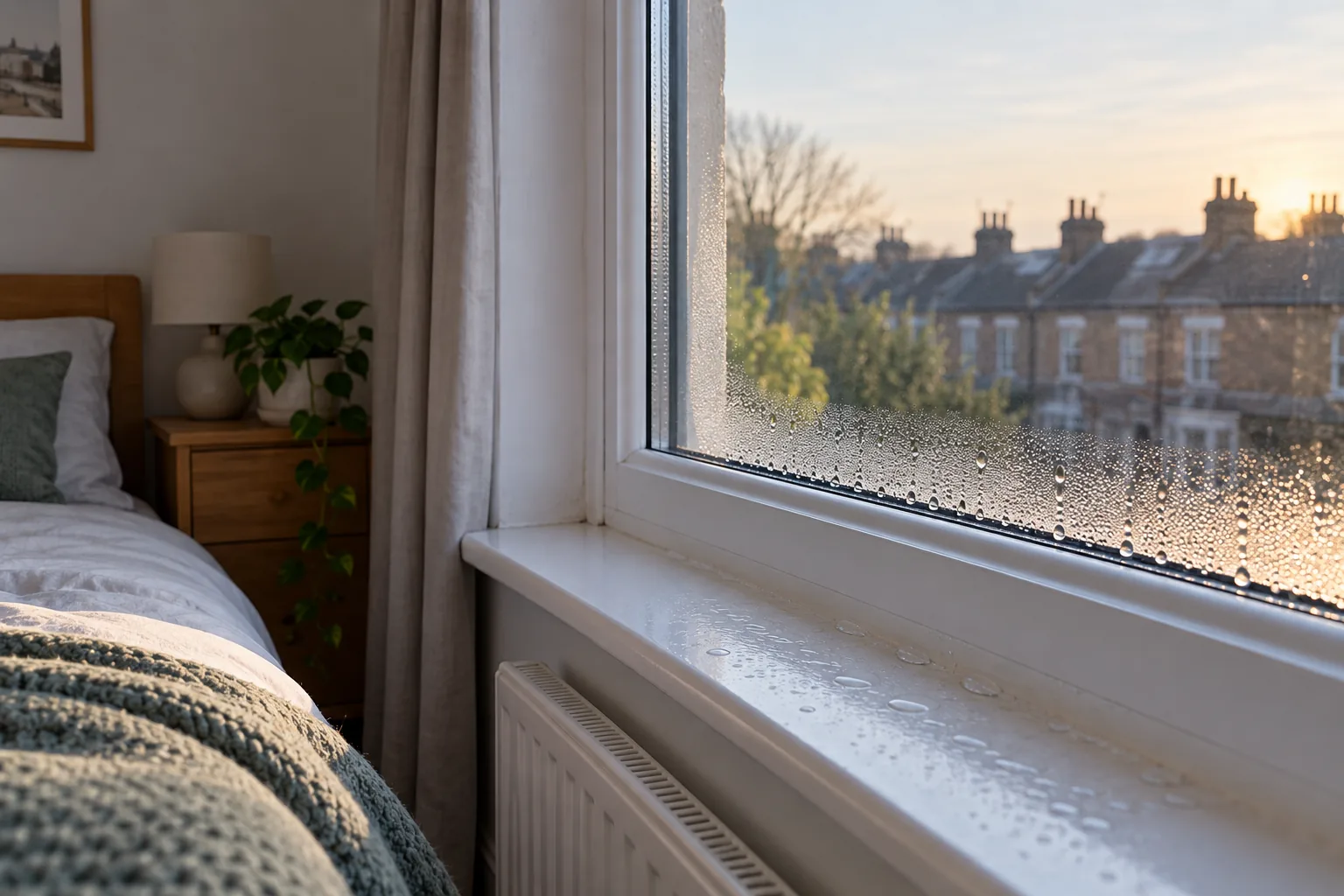
You wake to beads of water along the bottom of a bedroom window. By midday they have vanished, only to return the next morning. That pattern often reflects humid indoor air meeting a cool surface overnight. The window can be a useful indicator, but it is not a complete diagnosis of the room. The amount and location of water, the weather, ventilation and nearby mould all help decide whether this is a manageable surface condition or a sign of a wider moisture problem.
A short, consistent record is more informative than a single photograph. You do not need to calculate dew point or buy specialist equipment. Note which window is wet, where the droplets sit and what else is happening in the room. If water is running into the frame, soaking timber or collecting on the sill, deal with the damage promptly while you investigate.
First, identify which surface is wet
Look at the glass from the room side and, where safely accessible, the outside. Water on the inside lower edge has a different explanation from misting trapped between sealed panes. Moisture between panes may indicate a failed sealed unit and should be raised with the installer or owner. Outside condensation can appear with certain weather and glazing conditions. Do not describe all three as “condensation inside the window” when you request help.
Photograph the whole window, then the wet area, before wiping it. Include the frame, sill and reveal. Is the water confined to glass, or are the adjacent plaster and timber damp? Are there dark spots at the silicone, frame corner or nearby wall? A room-facing glass pattern may suggest indoor humidity and surface temperature; wet plaster after rain also raises questions about a weathering defect.
Note whether the wetness appears on one pane, several windows in the same room or throughout the home. A single window may have a local cold detail or unusual airflow. Several windows across rooms may point to broader indoor moisture and ventilation. That comparison is more useful than the number of droplets on one morning.
Record the conditions at the same time each day
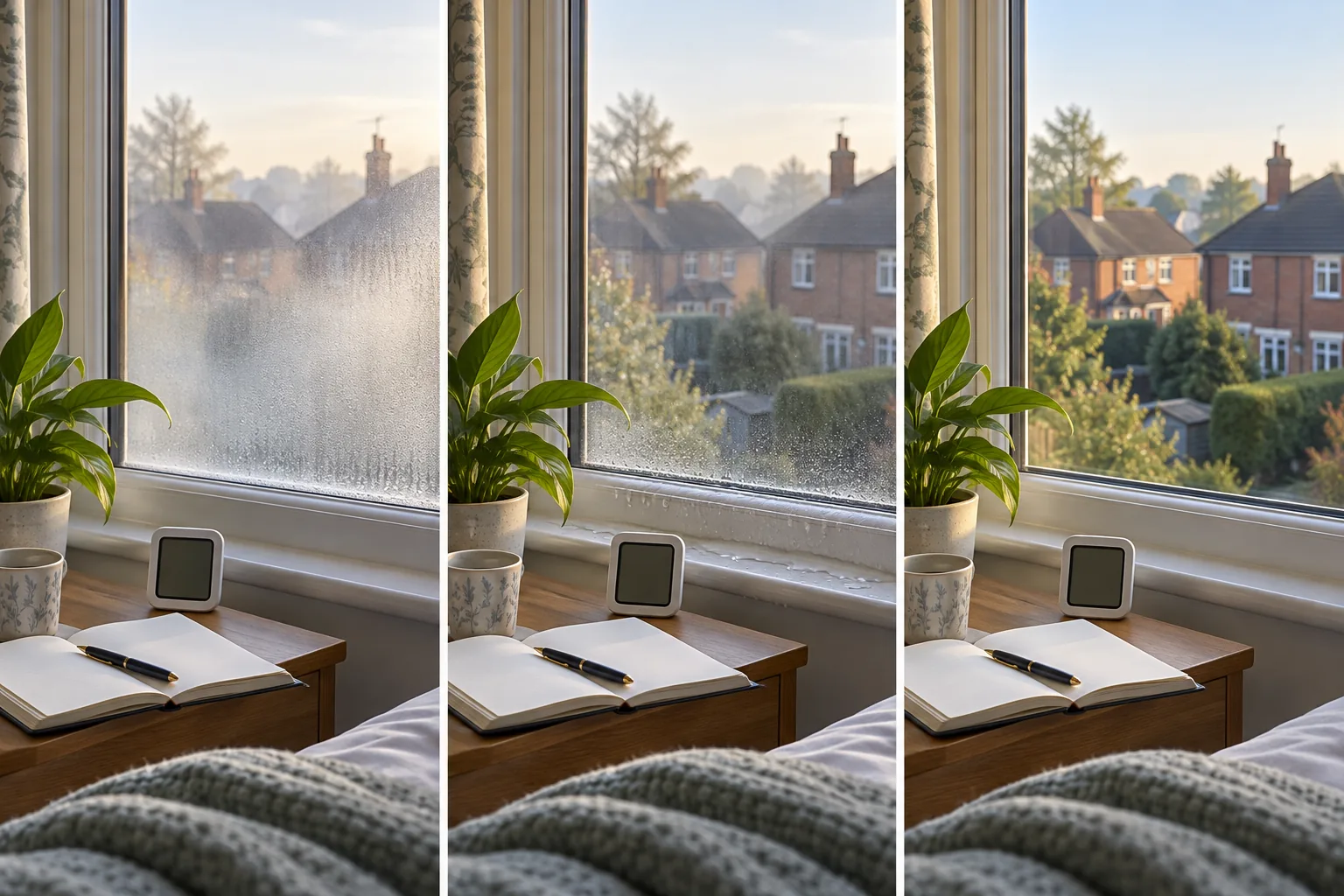
Choose a practical morning time, such as soon after waking, and record the condition for one or two weeks. Mark whether the glass was dry, lightly misted or carrying droplets that reached the sill. A small sketch of the window can show which edge is affected. Use similar photographs so a later comparison is meaningful.
Add a few contextual notes: how many people slept in the room, whether the door was closed, whether the heating ran overnight, whether a window or background vent was open and whether laundry dried indoors. Rain and outside temperature are also useful, but do not assume rainwater entry because the morning was wet. A cold, clear night can produce more room-facing condensation than a mild rainy one.
If you use a temperature and humidity monitor, place it consistently away from direct heat and the wet glass, and record the time. One reading cannot diagnose a defect. Trends paired with visible conditions can help an assessor see whether the room cools and becomes more humid overnight. Oxford City Council’s condensation guidance explains how cold surfaces, limited ventilation and everyday activities can contribute.
Look beyond the glass
Windows are often among the coolest visible surfaces, so they may show condensation before walls do. But the wall behind a wardrobe or a bedroom corner could be colder still. Check safely for mould or staining on nearby reveals, curtains, skirting and external corners. A wet window and hidden mould behind furniture can be parts of the same room pattern, yet a rainwater leak may also be present.
Do not move a heavy wardrobe alone or scrub mould simply to collect data. If you can inspect safely, take photographs of the layout and affected surfaces. Our guide to mould behind furniture on an external wall explains why a sheltered wall behaves differently from the open room.
Check whether paint is peeling, the sill is swollen or water has reached electrical fittings. Deal with active damage and hazards promptly. Wiping a small amount of window water can protect finishes, but it does not explain why it recurs. A useful record includes what you did to manage the water and whether that changed the pattern.
Compare rooms and ventilation paths
If the bedroom is wet but the living room is not, note differences in occupancy, heating and ventilation rather than assuming the window units are different. A bedroom may be occupied for many hours with the door shut, while a living room is heated and aired during the day. A small room can change conditions more quickly. Curtains and blinds can also create a colder pocket against the glass.
Consider where moisture from kitchens and bathrooms goes. Does the bathroom extractor actually remove steam, or does it stop when the light goes off? Is the kitchen hood recirculating rather than exhausting outside? The air path through the home affects where vapour eventually condenses. Our bathroom extractor guide gives practical observations for a fan that runs but leaves the room wet.
Ventilation should be considered alongside the building’s heating and insulation. Leaving a window open all night may be uncomfortable or impractical, and it does not repair a cold bridge or leak. A professional assessment can examine background ventilation, extract performance and surface temperatures together.
When the frame or reveal changes the question
Water on the sill can be simple run-off from room-facing glass, but a wet reveal may have another cause. Note whether staining starts at the head, jamb or lower corner, whether it worsens after wind-driven rain and whether the outside frame or sill is damaged. A photograph during a storm from a safe position can be useful. Do not lean out or dismantle a window to confirm a theory.
If the windows were recently replaced, record the installation date and whether background ventilators were included. New units can be tighter than old frames and change the airflow balance. Our article on condensation after new windows separates room-facing water from sealed-unit and rainwater issues. If misting is between panes, ask the installer about the unit warranty rather than treating it as room humidity.
Do not paint over mould on a reveal without addressing the moisture pattern. GOV.UK guidance on damp and mould stresses dealing with both visible mould and the cause of dampness.
Turn observations into a focused next step
If you test a small change, alter only one manageable factor at a time and note the date. For example, you might use an existing background vent as intended for a week while keeping the usual heating pattern, then compare mornings with similar outdoor conditions. A different week might involve clearing a curtain from the glass. These are observations, not controlled experiments: weather and occupancy still vary. Avoid shutting off ventilation or making the room cold to force the problem to appear. If the wall is mouldy or damage is continuing, arrange help while the record is being made.
Take care with advice that focuses only on wiping the glass. Wiping protects the sill and helps prevent water sitting on paint or timber, but it does not remove the vapour that will return the next night. If the sill is repeatedly soaked, note whether water is reaching a joint, running under a blind or dripping onto flooring. A damaged frame may need attention even when the original droplets come from ordinary indoor condensation. The repair plan should address both the moisture conditions and any material already affected.
At the end of the record, summarise the strongest patterns. “Water on the room-facing lower glass every cold morning, clearing by lunchtime, with no rain-related wall staining” suggests a different first check from “wet plaster at the frame after wind-driven rain”. Include what remained dry too. If two windows behave differently, describe how the rooms are used.
An assessment of condensation and ventilation can use the log to examine airflow, extraction, cold surfaces and any installation or weathering concern. It should explain which findings are observed and which are only possible. For repeated morning window water in a London home, contact our team with the photographs and a week of notes. That gives the next visit a clear question and helps judge whether any change works.