
Furniture Against External Walls and Hidden Mould
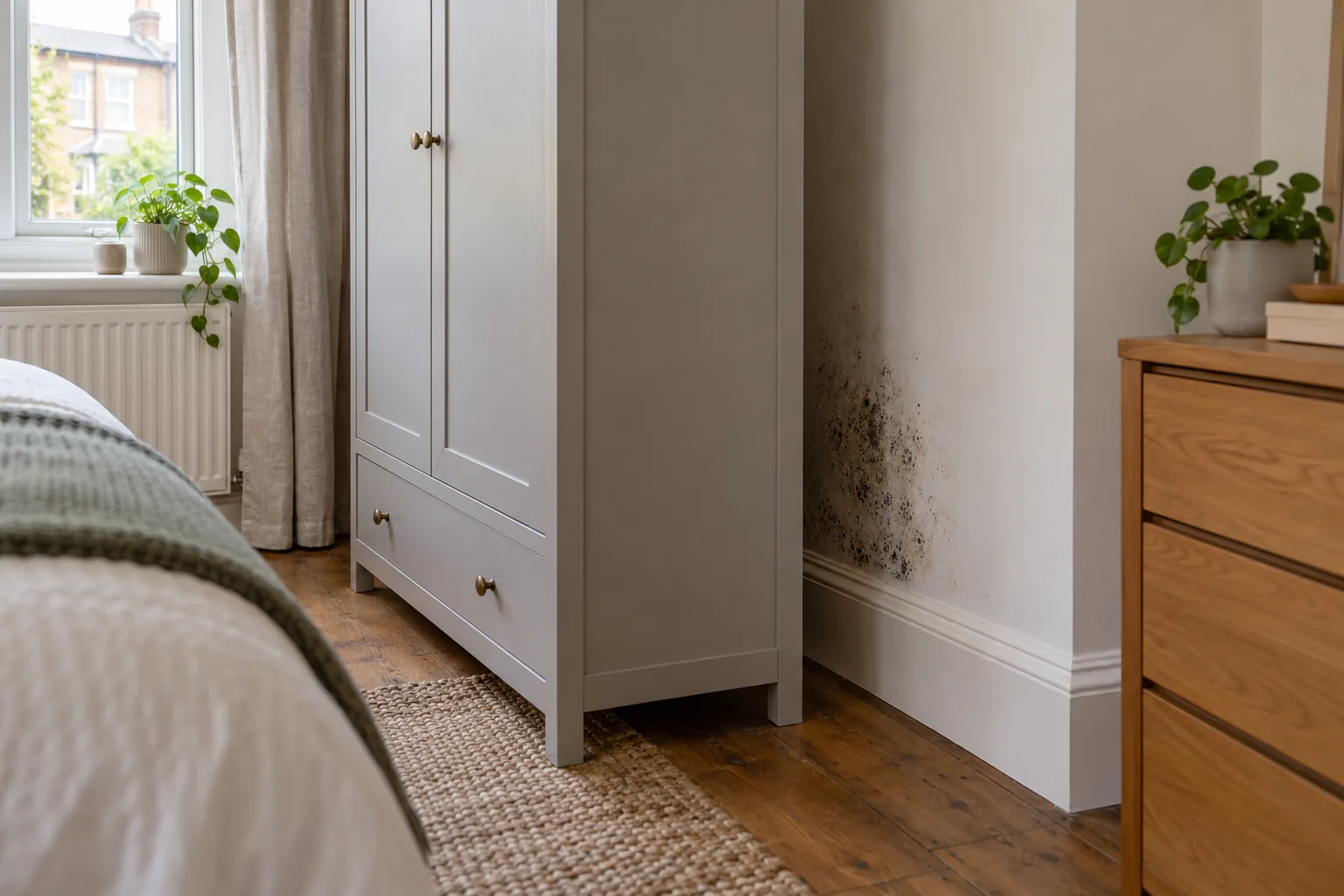
A wardrobe is moved for cleaning and a patch of mould appears on the wall behind it. The rest of the bedroom may look dry. Large furniture can block warm room air from reaching an external wall, leaving the surface colder and less able to dry. Moisture in the air may then condense locally. The cupboard and its contents can also hide the problem until an odour or stain becomes obvious.
That pattern is common enough to investigate, but it is not proof that furniture placement is the sole cause. Rainwater can enter through an outside defect, a pipe can run behind the wall, and a previous leak can leave damaged material. The right response begins with the position, extent and timing of the mould, plus a check of the wall and building beyond it.
Why the space behind furniture behaves differently
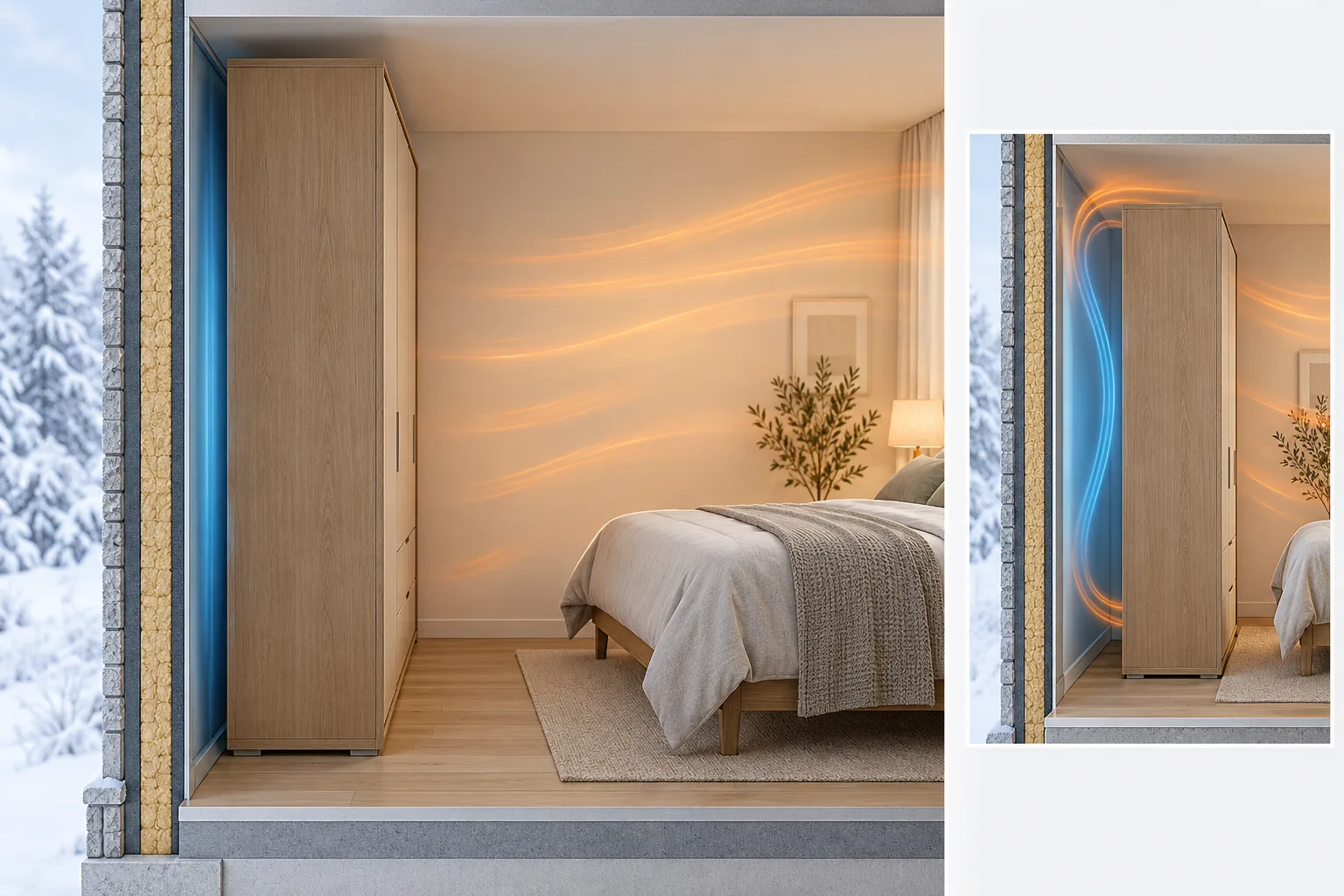
Warm air circulates across an open wall more readily than through a narrow gap behind a wardrobe or headboard. If the wall faces outdoors, its surface may already be cooler than an internal partition. Furniture adds a sheltered pocket of still air. The wall can stay cold, and moisture from normal occupancy may accumulate there even when the room’s centre feels comfortable.
The effect depends on the wall, room and furniture. A solid masonry wall, an external corner or a junction with a floor may be colder than a well-insulated flat section. A full-height wardrobe can block more air movement than a small bedside table. A heavy curtain can create a similar sheltered space around a window reveal. Oxford City Council’s condensation advice identifies cold surfaces and restricted airflow behind furniture as conditions where mould can form.
Do not infer that every gap needs a fixed width. The useful question is whether air can reach the surface and whether the wall remains cold or wet. A few centimetres may help in some layouts; a deep recess or blocked radiator may require a wider room assessment. Moving furniture is only one possible part of a remedy.
Inspect without spreading or hiding the evidence
If furniture can be moved safely without straining anyone or damaging the room, take a wide photograph before moving it and another showing the newly exposed wall. Record the distance from the wall, whether the cupboard back is mouldy and whether stored items smell musty or feel damp. Photograph the extent of mould or staining without touching it. Do not scrape, brush or sand an affected surface to “see how far it goes”.
Check the wall finish and skirting. Is wallpaper lifting, plaster soft, paint blistering or timber swollen? Are there water marks extending beyond the furniture outline? A pattern confined to the sheltered area can support a condensation explanation, while a stain following a pipe route or expanding after rain deserves another investigation. If the affected area is extensive, the wall is deteriorating or someone has health concerns, arrange prompt competent advice.
Clothes and books can absorb odour and moisture. Bag or move affected items carefully according to their condition and avoid storing clean items back against a still-damp wall. A professional mould-remediation scope may be needed for porous contents or substantial contamination. Do not apply paint over mould and push the wardrobe back before the source is understood.
Compare the hidden patch with the rest of the room
Look at the window on cold mornings. Is there water on glass or a frame? Are other external corners affected? Is mould appearing behind a bed or on the back of curtains? Several cold-surface locations suggest room humidity, temperature and ventilation should be reviewed. If only one small zone behind a wardrobe is affected, the local airflow and wall construction deserve close attention.
Record normal room use. How many people sleep there? Is laundry dried indoors? Is the room heated regularly, and is the door usually shut? Are background vents present and open? A low-cost temperature and humidity monitor can help compare days if used consistently, but a single number does not identify the cause. Our article on one bedroom corner getting condensation explains how cold junctions and restricted air movement can work together.
Do not respond by leaving the room unheated or sealing vents to see what happens. That can worsen condensation. If the room is hard to heat or ventilate, say so in the report or repair request. An effective plan should account for real constraints, not simply assign responsibility to furniture placement.
Check for water arriving through the wall
An external wall behind furniture may also have a rainwater route. From a safe position, note whether a gutter, downpipe, roof junction, window or crack is near the affected area outside. Compare the condition with rain, especially wind-driven rain on that face. A patch that darkens or spreads after storms may need external inspection. The cupboard may have concealed the mark rather than caused it.
If plumbing runs behind the wall or a bathroom adjoins it, compare the pattern with water use. A pipe leak can wet a concealed area while the room-facing wall seems only slightly marked. A moisture meter at the surface cannot confirm the condition of every layer behind it. Historic England’s guide to assessing damp stresses using building context and appropriate methods rather than selecting a diagnosis from the stain alone.
Condensation and a building defect can coexist. A wet wall can become colder and support more condensation behind furniture. The report should connect each proposed cause to evidence and state what remains untested. Treating the visible mould without fixing an active leak or a persistently cold, sheltered surface is unlikely to prevent return.
Decide what can change in the layout
Once the wall is assessed and any source repaired, review the furniture position. If possible, leave a clear airflow path around the item and avoid pressing a full-height back panel tightly against a cold external corner. Do not block a radiator or vent. If a wardrobe must remain in that location, an assessor can consider the wall’s thermal performance and the room’s ventilation rather than assuming the layout can simply be redesigned.
Photograph the new position and monitor the wall through relevant conditions, particularly cold mornings. Check whether the surface stays dry and whether mould returns. A clean-looking wall for a week is not conclusive if the problem usually appears only in winter. Keep the review period matched to the original pattern.
The inside of the furniture also matters. A mouldy backing board or damp contents can continue to smell after the wall is cleaned. The item may need separate cleaning, drying or replacement depending on its material and condition. Do not trap a damp item back against a freshly treated wall.
Plan treatment and follow-up together
Before an appointment, note whether the mould is on the wall surface, the furniture backing or both. A sealed wardrobe panel may show visible spotting while porous plaster behind it holds a different amount of moisture. If the back panel is removable, leave any disassembly to someone competent and authorised; fixings and heavy units can make this unsafe to do casually. Ask the assessor which materials can be cleaned and which have deteriorated enough to need replacement. A photographic record of the exposed wall helps if the unit must be moved back temporarily for practical reasons.
Also note any changes already tried. If the wardrobe was pulled forward for several weeks, record the dates and whether the wall dried or the smell eased. If an extractor was repaired or a window vent opened, include that change too. Such observations can support an airflow explanation, but they do not by themselves rule out a rainwater or plumbing route. The strongest conclusion is the one that fits the wall, the outside details and the room conditions together.
GOV.UK guidance on damp and mould emphasises finding the underlying moisture source as well as removing mould. For a small, local issue, the response may involve safe appropriate cleaning plus improvements to airflow and temperature. For widespread or recurrent growth, damaged plaster or hidden material, professional assessment may be needed. The work should be proportionate to the condition found.
In a rented property, report the problem with photographs, dates and the layout. Describe any constraints on moving heavy furniture or heating the room. Avoid framing the issue as a dispute about blame before the wall and ventilation have been assessed. A clear chronology helps everyone judge whether the chosen remedy worked.
An assessment of condensation and ventilation can compare the sheltered wall with open surfaces, inspect the air path and consider any external defects. For hidden mould behind furniture in a London home, contact our team with photographs of the room, the exposed wall and the timing. That lets the inspection address both the furniture gap and the building behind it.