
Condensation After New Windows

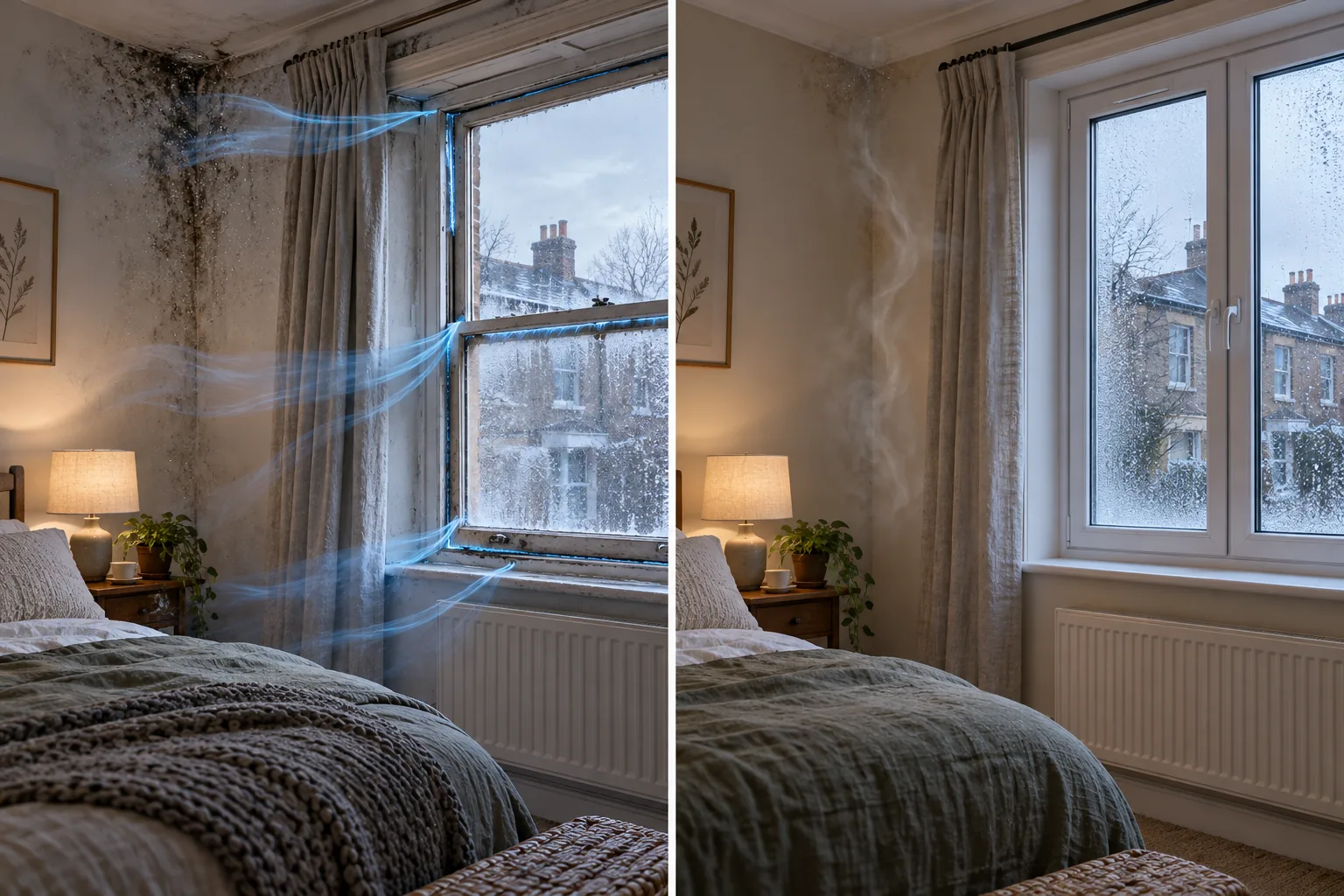
New double-glazed windows can make a room warmer and quieter, yet condensation may appear in places that were previously clear. Sometimes the glass itself stays drier while moisture moves to a cold wall corner or reveal. Sometimes water collects at the lower edge of the new frame. The timing can suggest that the replacement changed the room’s ventilation or temperature balance, but it does not prove the window was installed incorrectly.
Start with the pattern. Is the water on the room-facing glass, between the sealed panes or on the outside face? Does it collect on the frame, reveal, wall or ceiling? Does it occur in one room or throughout the home? Each location points to a different question. Record the first date after installation, the weather and normal room use before choosing a remedy.
The location of water matters
Condensation on the inside surface of glass forms when humid room air meets a cool surface. It often appears in the morning after a bedroom has been occupied overnight. Condensation on the outside of high-performing glazing can occur under some weather conditions and has a different meaning. Moisture trapped between the panes can indicate a problem with the sealed unit. The exact location should be photographed and described, because “the window is wet” does not distinguish these situations.
Water on the plaster reveal or adjoining wall deserves a wider investigation. The surface might be cold because of the geometry or insulation around the opening. Air may not move well behind a curtain or blind. Rainwater might enter at a sill, frame junction or external detail. The colour or shape of a mould patch alone cannot separate these causes. Compare it with rain, cold nights and room humidity.
Do not assume a new window has created all the moisture in the room. Cooking, bathing, laundry and occupancy still add water vapour. The window may have altered where that vapour becomes visible. Oxford City Council’s condensation guidance explains the role of cold surfaces, heating and ventilation in condensation.
A tighter window can change the airflow path
Older frames may have allowed uncontrolled draughts through gaps. New units often seal more tightly. That can improve comfort and energy performance, but the previous incidental airflow may have been part of how humid air left the room. If no suitable planned ventilation replaces it, moisture can accumulate. The result may be water on glass or mould on a colder surface elsewhere.
Look at whether the new units include background ventilators and whether they are open, accessible and functioning as intended. A trickle vent is a small part of a whole-home ventilation strategy, not a guarantee against condensation. Extract fans in kitchens and bathrooms also need to work, and air needs a path through the dwelling. GOV.UK Approved Document F sets out ventilation guidance for building work in England; the applicable edition and installation requirements depend on the project.
Do not permanently close vents because they feel draughty without reviewing the effect on indoor moisture. Equally, a new vent that whistles or admits rain deserves attention from the installer. Ask what ventilation was specified, what was installed and how the system was commissioned. The answer should refer to the actual property, not only the window product.
Improved glass can shift condensation elsewhere
Better insulated glazing may be warmer on its room-facing surface than the old pane. Vapour that previously condensed on the glass can reach a colder plaster corner or uninsulated reveal. That does not mean the new window caused the wall to become wet through. It means the coldest available surface and the room’s airflow deserve attention.
Compare the window reveal with other external corners. Is mould confined to a narrow strip at the frame, or also present behind furniture? Does a blind or heavy curtain cover the reveal overnight? Are nearby radiators blocked? A thermal bridge at a lintel or jamb may be relevant, but thermal imaging alone cannot prove damp or identify a construction defect. It can help decide where to inspect further.
An installation can also alter the reveal physically. Making good around a frame, adding trim or changing the sill may affect surface temperature or hide an external weathering detail. If staining appears after rain rather than cold nights, ask the installer and a surveyor to consider water entry as well as condensation. Do not seal every visible gap on the room side without understanding the drainage and ventilation details of the window system.
Separate installation defects from room conditions
Check the installation records: date, window specification, any background ventilators, making-good work and warranty details. Photograph where water appears and any frame or plaster damage. If rainwater enters during storms, note wind direction and whether the water appears at the top, side or sill. That pattern may support a weathering or installation check.
If the problem is mainly on the room-facing glass after sleeping, note how many people use the room, whether the door is closed and how the room is heated and ventilated. A bathroom or kitchen extractor that fails to clear moisture can affect other rooms. The bathroom extractor guide explains why hearing a fan run is not proof of adequate airflow.
Both issues may coexist. A cold reveal can collect condensation most mornings and admit rain through a separate defect during a storm. A professional report should avoid a single label if evidence points to more than one route.
Record before and after conditions
If possible, compare photographs from before replacement. Was mould present around the old frame or on nearby walls? Did the old unit have vents? Did the room receive other work at the same time, such as added insulation, a new bathroom or changed heating controls? More than one alteration may have changed the moisture balance.
Over two or three weeks, record the location and amount of visible water at a consistent time, especially first thing in the morning. Note room temperature and humidity if a monitor is available, along with rain, window position and ventilation use. A single humidity number does not diagnose a fault, but a consistent pattern helps an assessor. Do not switch off heating or block vents as a test.
If mould is spreading or finishes are deteriorating, report the concern promptly rather than waiting for a long log. GOV.UK damp and mould guidance stresses addressing both visible mould and its underlying moisture cause.
Choose a proportionate next step
Before the installer returns, make a short room-by-room comparison. Note which windows were replaced, which rooms now show water and which still behave normally. If one new window has moisture at its sill while an identical unit in a similarly used room stays clear, ask what differs: orientation, room heating, vent setting, curtains, installation detail or exterior exposure. A comparison cannot prove a defect, but it gives the installer a specific condition to check rather than a general complaint about condensation.
Ask for the handover information that describes the new units and their ventilation features. Identify which small openings are intended to admit background air and whether they can be operated as designed. Check visible drainage slots only from an accessible position; do not dismantle the frame or seal an opening that may be part of the system. If water appears between sealed panes, photograph the fogging at several times and ask about the unit warranty. If water appears at the frame during rain, record which side and height becomes wet. Keep these observations separate from room-facing droplets on cold mornings.
Where a room has both new glazing and a recently altered extractor, ask for the ventilation design and commissioning records for the whole work. A fan that makes noise but removes little air can leave vapour to condense at the new reveal. Comparing the installed system with its intended air path is more useful than changing the window again without testing extraction.
Where water is between panes or a frame leaks during rain, the installer should check the unit and installation. Where room-facing condensation is widespread, review ventilation, heating and moisture sources. Where one wall or reveal stays wet, investigate surface temperature and any external water route. A condensation and ventilation assessment can compare these factors without assuming the new window is either innocent or at fault.
Ask for a clear conclusion: what was observed, what remains uncertain, what action is recommended and how improvement will be checked. Replacing a vent, repairing a seal or improving extraction each addresses a different cause. If condensation appeared after new windows in a London property, contact our team with photographs, installation details and the pattern of water so we can suggest the right first inspection.