
Why an Unheated Spare Room Develops Mould
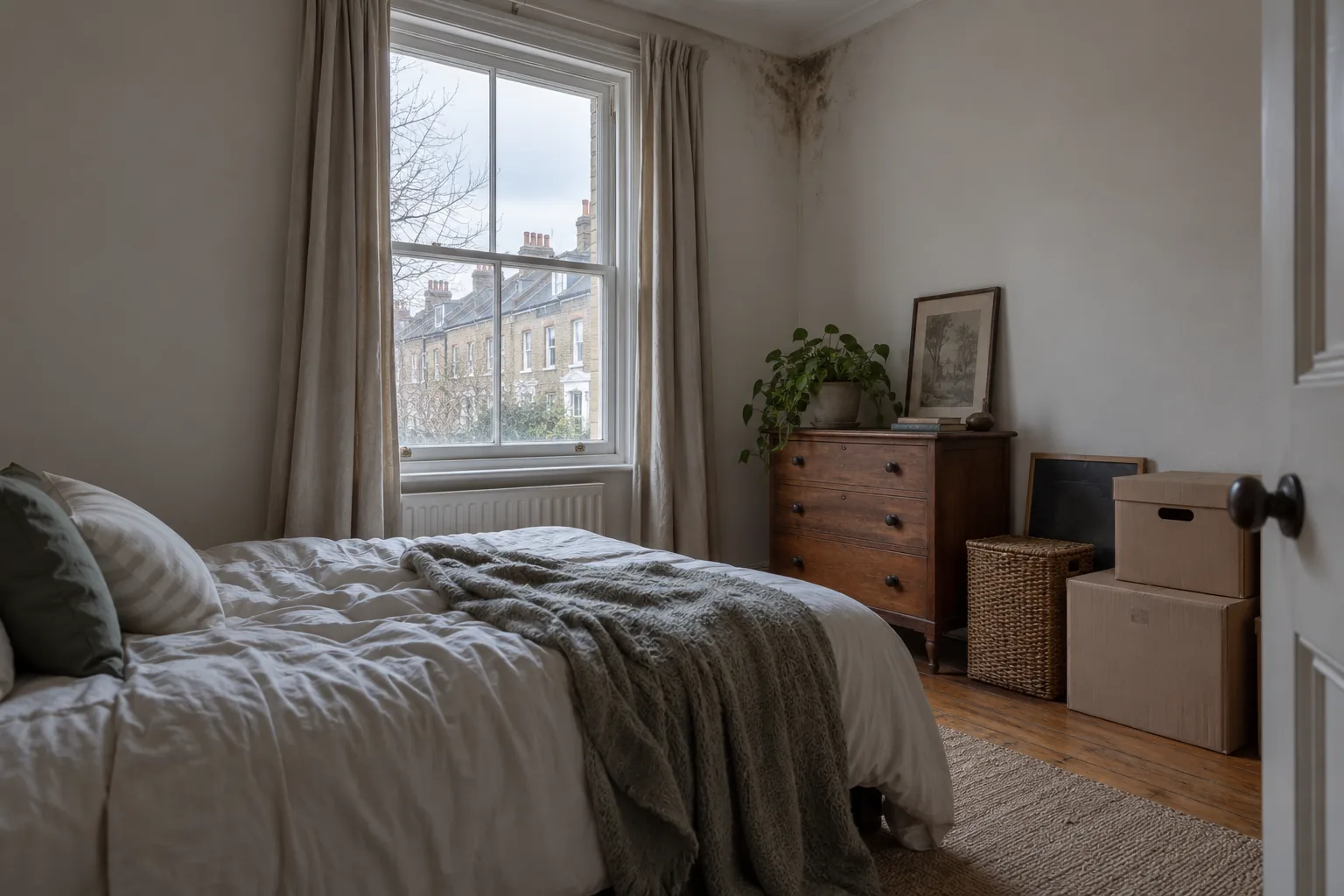
The spare bedroom is seldom used, so it seems as though it should produce little moisture. Yet mould appears at a cold corner or behind stored furniture. A room does not have to generate its own water vapour for condensation to occur. Moist air can move in from the rest of the home, while the unheated room’s walls and contents remain cold. A closed door, blocked vent or full cupboard can reduce the room’s ability to dry.
That explanation should be tested against the building. A roof defect, rainwater route or concealed pipe can also affect a little-used room, and its damage may go unnoticed for longer. Start with where the mould is, when it worsens and what lies beyond the affected surface. The goal is a practical plan for the room, not an assumption that the occupants simply failed to heat it.
A low room temperature changes the surface conditions
When heating is reduced, external walls, window reveals and ceiling corners can cool. Vapour in indoor air is more likely to condense on those surfaces than on warmer walls in occupied rooms. The air can feel dry to a person entering briefly, yet a surface behind a wardrobe may remain cold and slightly damp for many hours. Oxford City Council’s condensation guidance identifies cold homes, limited ventilation and everyday indoor moisture as factors in condensation.
Compare the spare room with an adjacent heated room. Are their external walls built the same way? Is one corner beside a roof junction or bay window? Is the spare room above an unheated entrance or garage? A thermal bridge or missing insulation can create a particularly cold patch. Touch can suggest a difference but cannot establish moisture content. An assessor may compare surface temperatures and visible patterns.
Do not heat the room for an hour immediately before an inspection and assume that recreates its usual conditions. Note normal heating periods and whether the room stays cold overnight. A consistent record is more useful than one comfortable reading when the inspector arrives.
Moisture can enter through the rest of the home
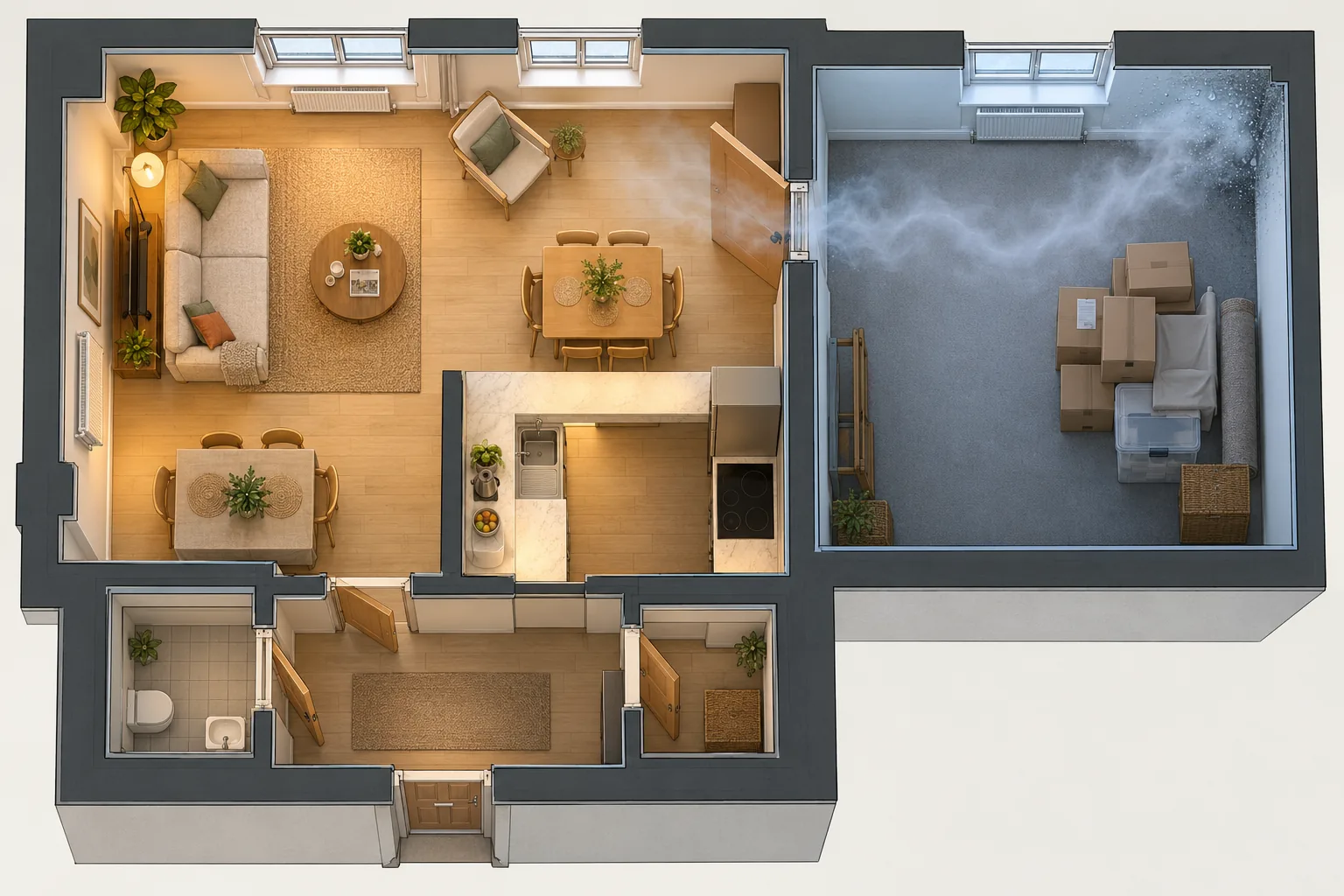
Cooking, bathing, laundry and occupancy add water vapour elsewhere. Air moves through door gaps, corridors and vents as pressure and temperature change. If the spare room is colder, its surfaces may become the place where that vapour condenses. The problem can appear even though nobody sleeps there.
Observe whether the door is normally open or closed, whether the kitchen and bathroom extractors work and whether laundry is dried nearby. A recirculating cooker hood returns air to the kitchen rather than removing steam outdoors; our guide to recirculating kitchen extraction explains the difference. A bathroom fan that runs but moves little air can also allow vapour to travel across a flat.
This is not a reason to seal the spare room off completely. A very cold closed room may become more vulnerable. The best air path depends on the dwelling’s ventilation design. GOV.UK Approved Document F provides the framework for ventilation of dwellings in England, but an individual room needs an assessment of its actual system and condition.
Storage can hide and intensify a local problem
Spare rooms often become storage rooms. Boxes, a wardrobe or a sofa pushed against an external wall can block air movement and hide early mould. Cardboard and fabrics may absorb moisture and smell musty before the wall is noticed. Photograph the layout and, where safe, move lightweight items to inspect the wall, skirting and floor. Do not pull a heavy unit alone or scrape mould to see its extent.
Check whether the mould follows the outline of furniture or sits on a particular building junction. A sheltered patch supports an airflow and temperature explanation, but it does not rule out water entering from outside. Our article on hidden mould behind furniture describes how to compare the wall and item condition.
Do not put clean clothes or bedding back into a damp cupboard. A musty item may need separate cleaning, drying or replacement according to its material. If a backing board or plaster is damaged, seek appropriate advice before treating and redecorating the surface. Surface cleaning without addressing the conditions that kept it damp may give only temporary improvement.
Check rain and plumbing clues separately
If the room is under a roof, beside a parapet or next to a bathroom, a hidden water route must remain on the list. Does staining darken after heavy rain or wind from one direction? Does a ceiling patch change after upstairs water use? Is skirting swollen near a radiator pipe? Those relationships call for focused investigation. A low temperature may be contributing but cannot explain every pattern.
From a safe position, look for visible external defects such as an overflowing gutter or damaged window detail. Do not climb onto a roof or open a wall to test a guess. A damp inspection can combine the room history with accessible building details and decide whether a roofer, plumber or controlled opening is appropriate.
A meter reading at the wall surface is not a substitute for that reasoning. Salts, metal and mixed materials can affect electrical readings, and concealed layers may differ from the room-facing finish. Historic England’s guide to assessing damp emphasises examining construction and defects alongside measurements.
Keep a short record of normal use
For two or three weeks, photograph the affected area at similar intervals and note whether mould or staining changes. Record room temperature if possible, heating use, door position, vent position and significant cooking, bathing or laundry events. A small humidity monitor can show a trend, but one number does not diagnose the room. Include dry days and rain events so an external route is not overlooked.
If you make a manageable change, such as moving boxes away from the wall or restoring a blocked vent to its intended position, note the date. See whether the surface dries under comparable conditions. Do not make several changes at once and then attribute improvement to one of them. Weather and occupancy vary, so the result should remain a clue rather than proof.
If mould is spreading or the room cannot be used for its intended purpose, report it promptly while keeping the record. GOV.UK damp and mould guidance stresses identifying and addressing the cause as well as removing visible mould.
Make the room usable again
Ask how the room is intended to be used in future. A guest room used once a month, a home office used every day and a storage room full of fabrics have different heating and airflow patterns. If the room will become a bedroom, monitor it under realistic overnight occupancy rather than judging it only when empty. If it will remain storage, protect the external wall from tightly packed boxes and keep access for periodic checks. A plan that cannot be followed in daily life is unlikely to prevent recurrence.
Check the neighbouring rooms as part of follow-up. If kitchen or bathroom extraction is repaired, does the spare room’s morning condensation change? If the door position changes, does odour or visible water improve? These observations can help refine a ventilation plan, but they should be compared with weather. Keep a separate note of any roof, gutter or plumbing repairs so their effect is not confused with a change in heating. A clear timeline is especially useful when several trades have visited the property.
A sustainable plan may involve consistent suitable heating, functioning ventilation, clearer airflow around storage and attention to cold building details. It should consider energy costs and the actual layout. Telling someone simply to heat an unused room more without examining ventilation or a building defect may miss the source. Conversely, repeated mould cleaning will not solve an unheated, sheltered surface that keeps condensing water.
If rain or plumbing is involved, repair that source first. If a cold junction is the main issue, an assessor can explain whether insulation, thermal detailing or room operation needs attention. If porous materials or stored contents have been affected, they may need separate assessment and treatment. The follow-up should match the original season and pattern; a dry summer week does not prove a winter problem is resolved.
An assessment of condensation and ventilation can compare the spare room with the rest of the home and identify why this surface is vulnerable. For a London property with recurring mould in a little-used room, contact our team with photographs, room layout and normal heating use. That gives the inspection a clear starting point without assuming the room is damp solely because it is unoccupied.