
A Kitchen Extractor That Recirculates Air
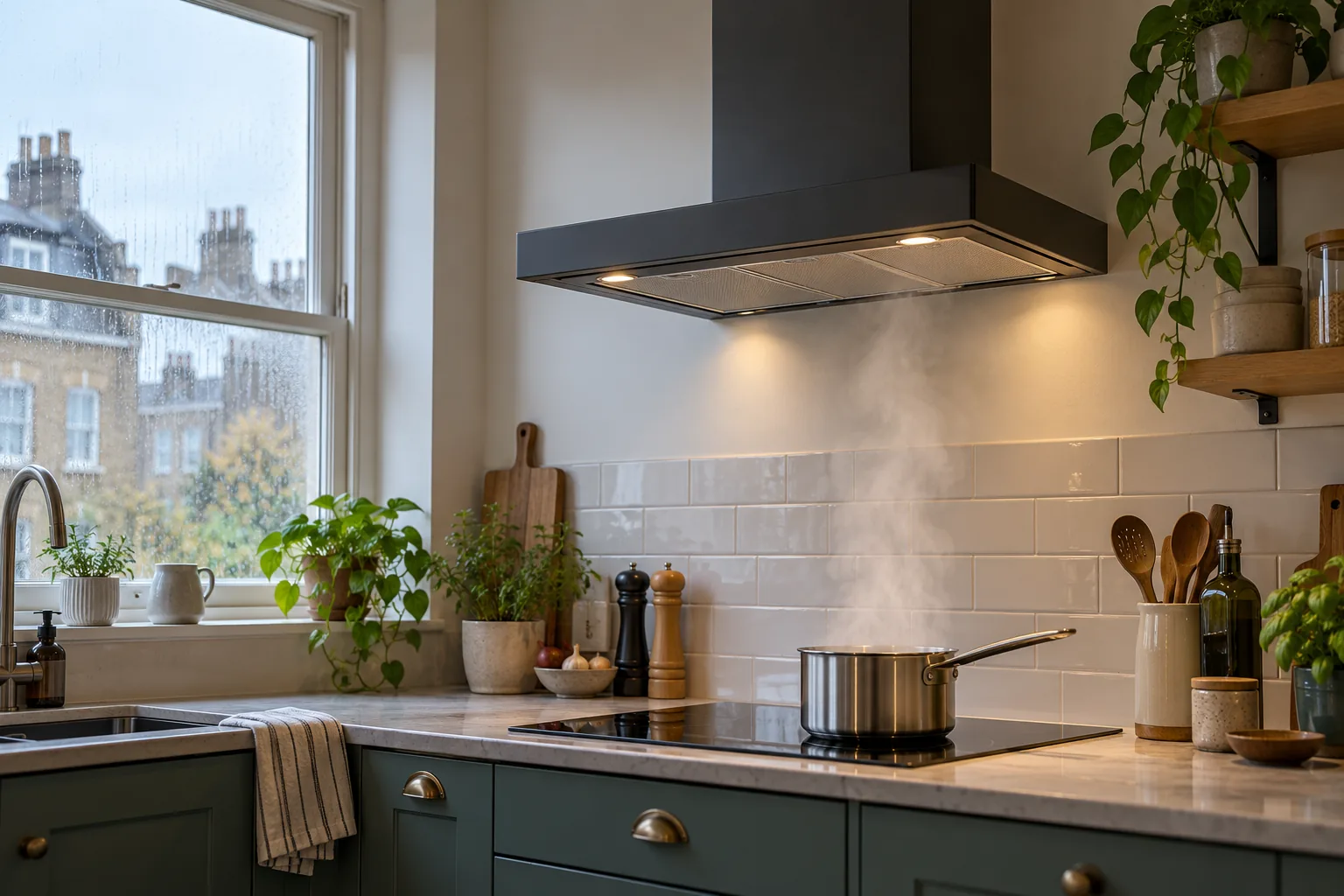
The cooker hood is loud enough to seem powerful, yet kitchen windows mist every time dinner is prepared. The hood may be recirculating: drawing air through filters and returning it to the kitchen rather than discharging it outside. That arrangement can capture grease and, depending on its filters, some odours. It does not remove the water vapour generated by cooking from the home in the way an externally vented extractor can.
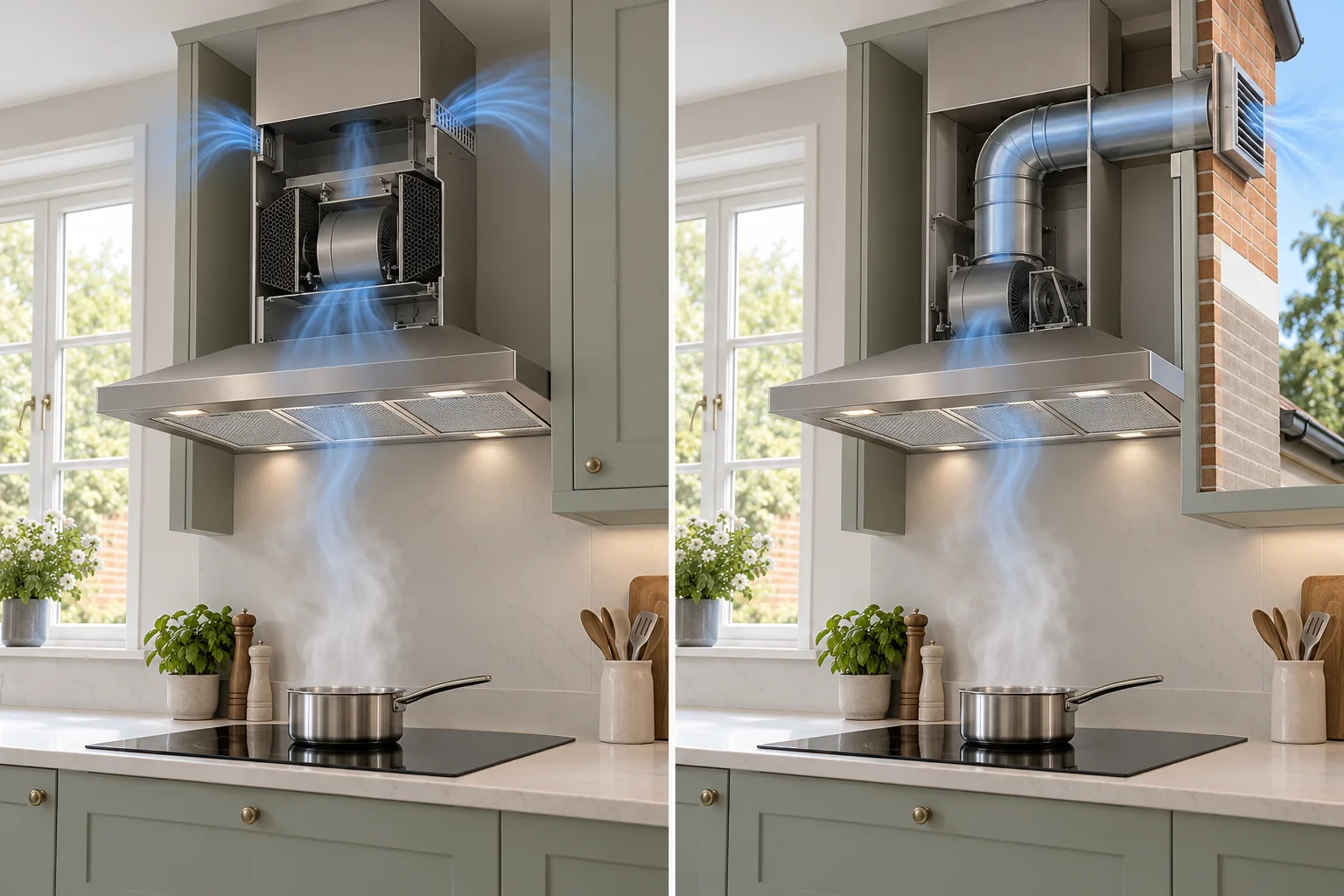
Before assuming a fault, establish which system is installed. A hood with a duct leading outdoors behaves differently from one with a grille that blows filtered air back into the room. Some hoods can be installed in either mode. Product appearance alone may not tell you how yours is configured. The practical question is whether moisture is being removed from the kitchen and where replacement air comes from.
Identify the actual airflow path
From a safe position, look for an accessible external terminal or a duct route from the hood. Check the appliance manual or installation paperwork if available. A recirculating hood often has an outlet on the top or front that returns air to the room; an externally vented installation needs a continuous duct to an appropriate outdoor discharge. Do not remove fitted panels, climb into a ceiling void or reach near electrical parts to prove the route.
If you live in a flat, the duct may be concealed or part of a building-wide system. Ask the owner, managing agent or installer what was specified and where the air goes. A grille near the kitchen is not necessarily an outside outlet for the hood. A qualified ventilation check can trace the route and measure performance.
Note whether there is a separate wall or ceiling extractor in addition to the hood. The hood may be intended primarily to collect grease and odours while another system provides room extraction. GOV.UK Approved Document F gives ventilation guidance for dwellings in England, but the applicable approach depends on the building work and system design. Do not use a hood label as evidence that the kitchen as a whole has adequate ventilation.
What the filters can and cannot do
Grease filters collect some cooking particles and need cleaning or replacement according to the manufacturer. Carbon filters in recirculating mode can reduce some odours and need periodic replacement. Neither type is a dehumidifier. Steam from boiling water can pass through and return to the kitchen. A strong airflow sensation at the hood outlet can therefore coexist with a rising indoor humidity level.
A clogged filter can also reduce capture and make the fan noisier. Check accessible filter maintenance instructions and note when filters were last serviced. Do not run the hood without required filters simply to increase the breeze. That can foul the appliance and duct or create a safety issue. If the fan seems weak or damaged, arrange the appropriate appliance service.
Cooking method affects the moisture load. An uncovered pan boiling hard or a long simmer produces more vapour than a covered pan on a lower setting. Oxford City Council’s condensation guidance recommends covering pans and using kitchen extraction or a window to help limit moisture. Those habits can reduce the load, but they do not turn a recirculating hood into an outdoor extract system.
Follow where steam travels
Watch the room during normal cooking. Does steam collect beneath the hood and return from its outlet? Does it drift into the corridor when the kitchen door is open? Which window mists first? Is moisture appearing on a cold wall or behind a cupboard? A few observations are more useful than a single humidity figure. Photograph any repeated condensation, mould or paint damage.
Air movement depends on room layout. A hood mounted far above the hob, a wide pan near the edge or a strong cross-draught can reduce how much plume it captures. A separate extract fan may need a suitable path for replacement air. Closing every vent because the kitchen feels draughty can reduce the performance of the wider ventilation system. A competent assessor can test airflow rather than infer it from noise.
In an open-plan flat, cooking vapour may reach a bedroom or cold window far from the hob. That is why the kitchen should be considered as part of the whole home. A wet bedroom window after evening cooking does not prove a window defect. It can indicate that moisture generated in the kitchen was not removed before it moved across the flat.
Decide whether another moisture source is involved
Not every kitchen damp patch comes from cooking. A waste fitting, dishwasher hose, roof defect or rainwater route can leave a local stain. If a wall changes after appliance use, note the timing and check accessible fittings for drips. If staining follows heavy rain, inspect safe visible outside details. A recirculating hood may raise room humidity, but it cannot explain a concealed pipe leak.
Look for the pattern of surface condensation: water on glass during cooking, droplets on tile or mould at cold corners. Compare that with local swelling at a cupboard base or a stain beside a pipe. The two issues may coexist. GOV.UK damp and mould guidance stresses identifying the underlying moisture source before relying on a surface treatment.
If moisture appears in a room far from the kitchen, record whether the kitchen door was open, whether another extractor ran and whether vents were available. The whole-home air path matters. A bathroom fan that fails to clear steam may add to the same problem, especially in a compact flat.
Check the practical options for your home
For a kitchen with a suitable external route, a qualified installer can advise whether ducted extraction is feasible and what building or lease permissions are needed. In a block, an outside terminal may affect shared fabric or a facade, so do not drill through an external wall without authorisation. In some kitchens, the planned ventilation strategy may rely on a separate extract system rather than a ducted cooker hood.
If the hood remains recirculating, maintain its filters, use it as designed and consider how cooking moisture will be removed by the kitchen’s other ventilation. Opening a window may help in some conditions, but a window alone is not an assessment of system performance. Avoid leaving a window open in a way that creates security or comfort problems. The correct option depends on the room layout, dwelling system and moisture pattern.
Ask any assessor to explain the route from kitchen air to outside and how it was checked. “The fan runs” does not answer that. A useful report should say whether extraction is present, whether it performs, whether replacement air is available and whether cold surfaces or leaks need separate attention.
Make a short record before seeking help
If a new kitchen or hood was fitted recently, keep the installer quote and handover documents. They may say whether the appliance was intended to recirculate or discharge outside, whether a separate room extractor was included and who carried out any commissioning. Compare that design with what is actually present. An unused duct opening, capped outlet or recirculation kit can be a clue, but avoid opening the casing to check it yourself. The aim is to give the installer a precise question about the installed air path.
For a tenant, report persistent condensation and any mould or damaged finishes with dates and photographs. Explain that the hood returns air to the kitchen if that has been confirmed, and describe what other extraction is present. A request to “replace the hood” may miss a blocked separate fan or a missing transfer-air route. For an owner, the same evidence helps avoid paying for a new appliance before the ventilation system is understood.
Record the hood model if visible, whether it has an external duct, filter maintenance dates, the cooking events that create condensation and how long the water remains. Include photographs of the hood, any accessible outlet and the affected windows or walls. If there is a separate kitchen fan, note how it is controlled. A simple humidity monitor can add a trend if used consistently, but a single number should not dictate the conclusion.
An assessment of condensation and ventilation can examine the kitchen system alongside the rest of the flat. If steam lingers despite a running hood in your London home, contact our team with the airflow route and visible pattern. The next step may be filter service, a duct check, a separate extraction repair or a wider room assessment, depending on what the evidence shows.