
Reading Damp Patterns After Heavy Rain
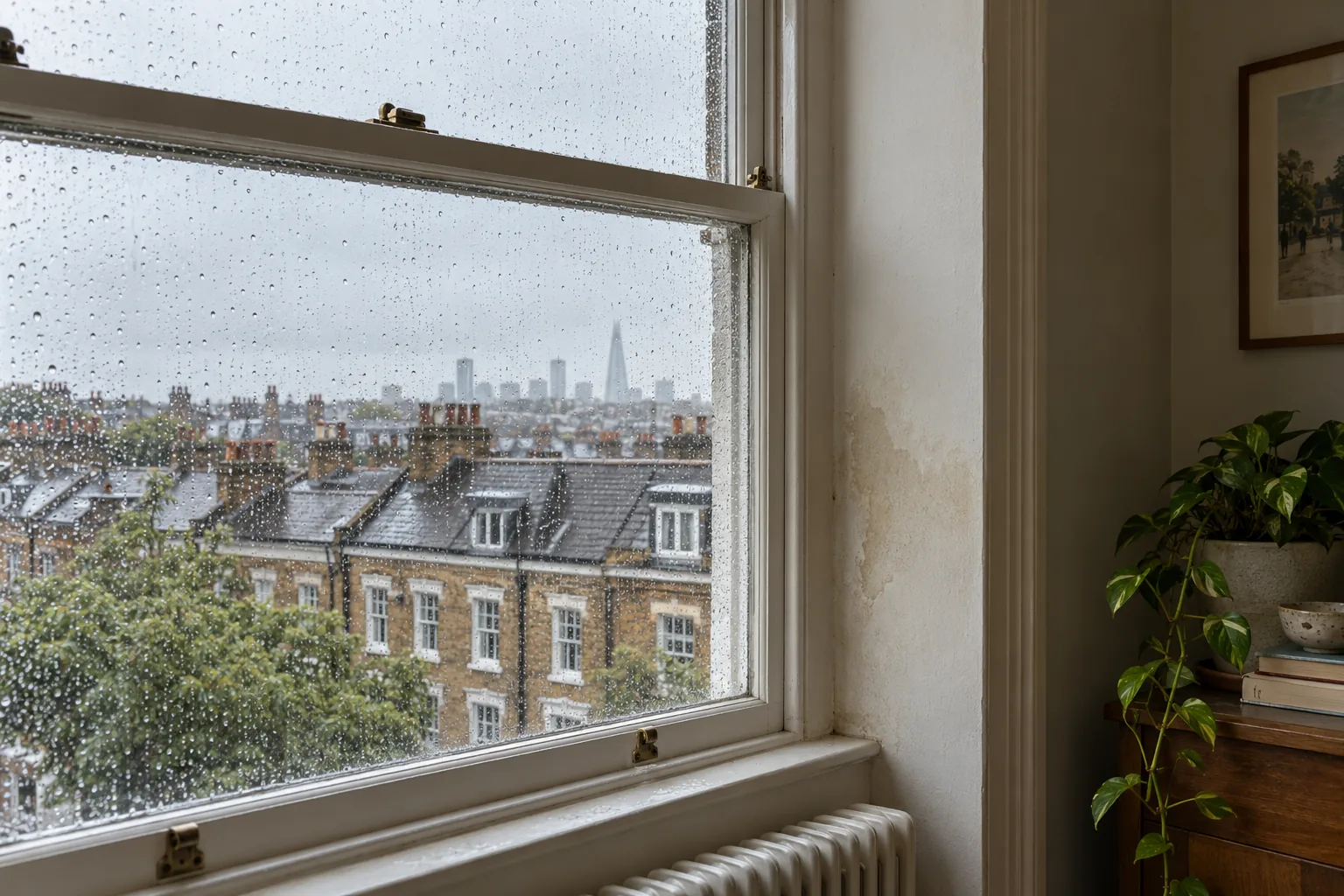
The wall looked dry yesterday. After a night of heavy rain, a darker patch appears near the window. That timing matters, but it is the beginning of the enquiry rather than the answer. Rain may have entered through a building detail; it may also have coincided with colder weather that encouraged condensation. A concealed pipe may have been used at the same time. The useful task is to compare the patch with the weather, the building layout and the changes in the room, then inspect the most plausible routes.
This is particularly important in London flats and conversions, where the outside face of the affected wall may be above a shop, behind a parapet or part of a shared roof. A visible stain can be far from the actual entry point. The fact that a mark follows rain is useful evidence, but a repair chosen only from that correlation may miss the defect.
Compare more than one rain event
One storm is a poor experiment. The patch may have been developing before you noticed it, and rain is often accompanied by lower temperatures and closed windows. Record the date when the mark first changed, whether the rain was brief and intense or lasted many hours, and how quickly the surface altered. Note if it continued to darken after the rain stopped. A wall with absorbent layers may show a delay, whereas water reaching a ceiling joint can become visible quickly.
The next event is valuable because it can test the apparent pattern. Did similar rainfall produce a similar change? Did a day of light rain leave the patch unchanged while wind-driven rain made it worse? Did it grow during a dry week? A repeatable relationship is stronger evidence than a single coincidence. It still does not identify the exact source; several external routes may respond to the same weather.
If you can access a reliable local weather record, note wind direction as well as rainfall. Rain driven against a south-facing wall can behave differently from rain falling vertically onto a roof. No homeowner needs to calculate exposure or carry out a hose test. Simply writing “patch enlarged after sustained rain with strong wind on the window side” gives a surveyor a better starting point than “rain caused it”. A structured log, as outlined in our guide to recording a recurring damp patch, can help you compare later events.
Position is a clue, not a route map
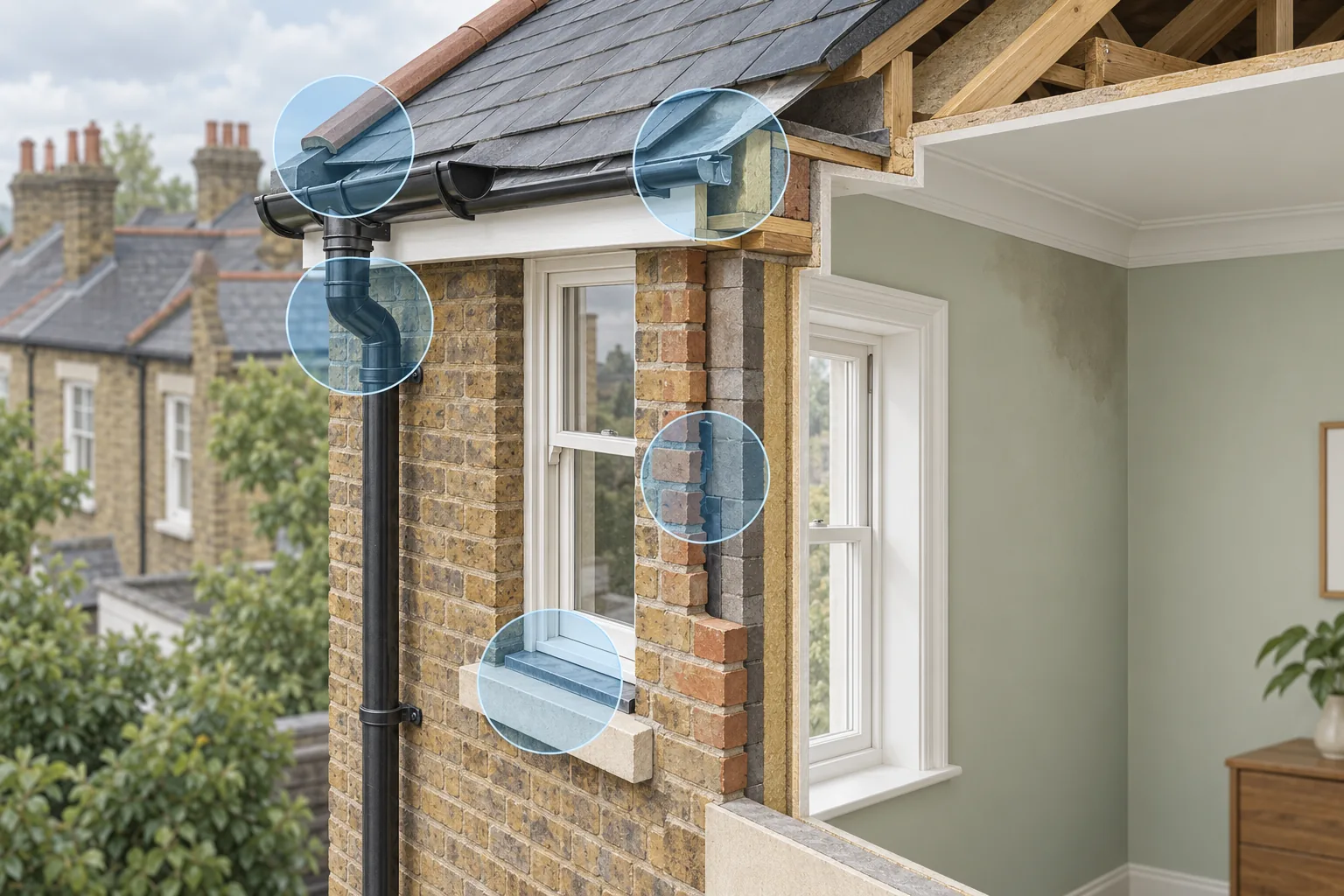
Plot the interior mark against features outside and inside. A stain below a window head raises questions about the frame, sill, render, pointing and any detail above it. A patch near the ceiling may warrant inspection of the roof edge, flashing, parapet, gutter or higher wall. Near floor level, external ground levels, drainage, adjacent paving, pipework and cold surfaces may all be relevant. None of those locations proves a type of damp from the shape of the stain alone.
It helps to distinguish the point where water may enter from the point where a finish shows damage. Water can follow a cavity, wall tie, timber, service penetration or joint before it becomes visible. A line of discolouration can also reflect an old stain or a material boundary. Our article on why a damp patch may appear away from a leak explains how the interior position can be displaced from its source.
Look for more than one affected surface. Is the window reveal wet while the adjacent wall remains dry? Does staining occur on both sides of a chimney breast? Is the ceiling mark linked to a wall junction? A series of observations can narrow a route, especially if they change together across weather events. A single close-up photograph cannot show those relationships.
Check visible external details from a safe position
The external inspection should begin with accessible observations. From ground level or a safe window, look for overflowing gutters, a downpipe joint that discharges onto a wall, displaced roof coverings, cracked render, open joints and damaged seals around openings. Note staining on brickwork, algae or a recurring wet strip beneath a gutter. A photograph taken during rain can be especially useful when an overflow is intermittent.
Do not climb onto a roof, lean out of a window or remove a cover to confirm a theory. A person on the ground often cannot see a flashing or the top of a parapet well enough to judge it. Make a record of what can and cannot be seen. A roof or drainage specialist can then decide whether safe access, a camera or a closer inspection is needed.
GOV.UK guidance on damp and mould lists roofs, gutters, downpipes, windows and facade defects among the external checks that may help identify a moisture source. That is a menu of possibilities, not an instruction to repair every nearby feature. The condition of the detail and the path to the patch need to make sense together.
Do not overlook indoor conditions that change with rain
Rainy weather often brings cooler surfaces, less ventilation and more indoor moisture from drying clothes or staying inside. Water vapour can condense on a cold window reveal, in a corner or behind furniture. The surface may feel damp even where rain has not crossed the wall. Check whether there are droplets on glass, widespread misting, mould at other cold spots or a clear rise in indoor humidity. These observations make condensation part of the investigation; they do not rule out a building defect.
A roof leak and condensation can also coexist. A wet roof assembly may cool a local area, while a poorly ventilated room produces condensation elsewhere. Treating the situation as a contest between two labels can hide that combination. Note whether the affected surface is visibly wet after rain, whether it stays damp through dry periods and whether similar surfaces elsewhere in the room change with indoor conditions.
Plumbing is another alternative. A bath or washing machine used during the storm may be the actual trigger. Where the patch is beneath a bathroom or beside a service void, compare the timing with water use. If you suspect a concealed route, the hidden leak checks service describes the type of investigation that may be appropriate. Avoid opening finishes simply because a stain appeared on a rainy day.
Understand the limits of meter readings after a storm
Moisture readings can help map a suspect area, but a high display does not identify the entry point or prove that the recent rain caused the current condition. Salts, mixed materials and metal components can affect electrical readings, particularly in older buildings. Comparing similar materials at recorded locations is more useful than showing one high number at the darkest point. Historic England’s guide to assessing damp discusses the interpretation of measurement methods in the context of building fabric.
If the stain is new, a surveyor may record its edge and return after a dry period or another weather event. A falling trend can support a drying explanation, but old discolouration may remain. If readings stay elevated or the mark spreads, the investigation may need external access, a plumbing check or controlled opening-up. The report should explain why a particular next step is proportionate.
Choose the repair only after the route is credible
It is tempting to seal the nearest crack or repaint the patch. Either action may hide useful evidence without stopping water. A repair proposal should identify the defect, explain how it could connect to the affected area and say what will be monitored afterwards. If there are two plausible routes, make clear whether both are being addressed or whether one needs further checking first.
In a conversion or apartment block, repairs may involve a freeholder, managing agent or neighbouring flat. Record who can provide access to the roof, facade, gutter or shared service. The person with the visible stain may not control the element that needs inspection. Share the chronology and photographs, not a definitive diagnosis made from the room alone.
If a ceiling is sagging, water is near electrics or an active leak is spreading, keep clear and arrange urgent appropriate help. Stable staining still deserves attention because prolonged wetting can damage finishes and support mould. A damp inspection can bring the weather history, internal pattern and accessible building details together. If you need help deciding what to check next in a London property, contact our team with the patch location, dated photographs and the rain events that seem linked.