
A Water-Stained Ceiling: When to Keep Clear
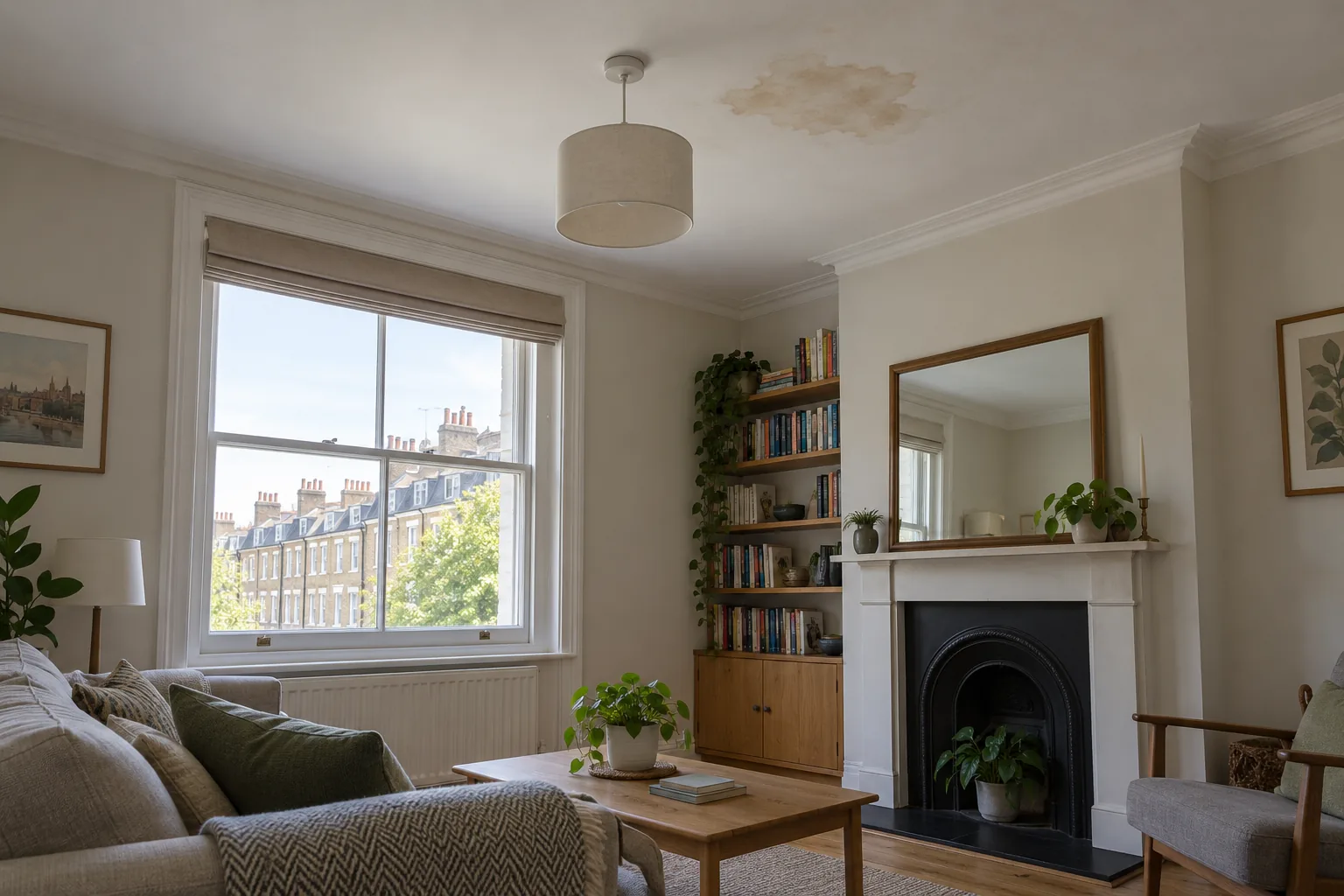
A small brown patch on a ceiling may be the trace of an old leak. A ceiling that is bulging, dripping or soft can present a very different risk. Before looking for a pipe or roof defect, decide whether the area is safe to occupy. Falling material and water reaching a light fitting or wiring are reasons to keep people away and arrange urgent appropriate help.
You do not need to identify the exact source before taking that first step. From a safe position, note whether the mark is changing, whether the ceiling has lost its shape and whether water is near any electrical point. Camden Council’s home safety guidance advises staying away from sagging ceilings and reporting water damage affecting electrics. The following checks are intended to help you communicate a problem clearly; they are not a substitute for an emergency repair or a competent safety assessment.
Recognise signs that call for distance
Keep clear of the area beneath a ceiling that sags, bulges, cracks around a wet patch or sheds material. Keep children and other occupants out of that space. Do not push the bulge, probe it with a tool or try to open it to see what is inside. The water load, condition of the plaster and state of fixings cannot be judged safely from a stain’s colour.
Treat water around a ceiling light, smoke alarm, cable, switch or socket as an electrical concern. Do not touch a wet fitting or use equipment in the affected area. If the electrical supply can be isolated safely from a dry, accessible board, follow the guidance of your emergency repair contact or a qualified electrician. Avoid reaching through water or entering the unsafe area to operate a switch. Oxford City Council’s leak advice treats fast-flowing water and leaks near electrics as emergencies and advises prompt reporting.
If a large amount of water is entering, a ceiling seems close to failure or you cannot keep people clear, seek emergency assistance appropriate to the situation. In a rented home, call the landlord’s or managing agent’s emergency repairs line. In a block of flats, the building manager may need to coordinate access to another unit or a shared roof. Keep the message factual: location, active flow, electrical involvement and visible ceiling movement.
Separate an old stain from a changing one
Once the area is safe, make a record from a position where you do not stand under suspect material. Take a wide photograph of the room and a closer image if safe. Note the date, mark size, edge and whether the surface is dry, damp or dripping. A stable stain after a known, repaired leak may remain discoloured long after the material dries. A new halo, softening, flaking or enlargement suggests that more assessment is needed.
Do not conclude that a stain is harmless because the surface looks dry today. Rainwater may appear intermittently, and a plumbing leak can change with use. Equally, an old mark can look alarming without current wetting. Compare it with any photographs or repair records. If the ceiling was repainted, note whether the same shape bled through immediately or whether a fresh boundary appeared later. Our guide to stains that return after repainting explains that distinction.
If you use a meter or thermometer, do so only after safety concerns have been dealt with. A handheld display cannot tell you whether hidden plasterboard, joists or wiring are sound. A qualified person may need to assess materials above the ceiling. A low reading at the room-side surface is not a clearance certificate.
Ask what lies above the affected point
The room above provides clues but does not identify a cause by itself. A bathroom, kitchen, heating pipe, loft tank, flat roof, terrace or pitched roof may be relevant. In a converted London building, the space above may belong to another flat. Write down what you know about the layout and what you cannot access.
For a ceiling below a bathroom, compare the change with normal use of the bath, shower, basin and toilet. Water can travel along a joist or service route before reaching the visible patch. The nearest fitting may not be the one at fault. Avoid running fixtures repeatedly to force a leak, and do not dismantle pipework yourself just to test a theory. An accessible drip or leak should be reported for repair.
For a ceiling beneath a roof, compare dates with rain and wind, including any delay before the stain darkens. A leak can enter at a roof junction, flashing, gutter or parapet and travel inside the structure. A storm coinciding with a stain is a clue, but room temperature and indoor moisture can also change with weather. Our article on damp patterns after heavy rain explains how to compare more than one event.

Record the leak without interfering with it
When there is no immediate safety issue, a short chronology helps the person attending. Note when the stain appeared, how quickly it changed, any active drips and what was happening above. If you know that a pipe was repaired or the roof was worked on, include the date and scope. Photograph changes at similar times and in similar light. Keep observations separate from guesses: “new brown edge after overnight rain” is more useful than “roof definitely failed”.
Do not cover the stain with fresh paint before an investigation. Decoration may remove an important reference point. Do not cut the ceiling to inspect a void unless an authorised competent person has assessed the risks and planned the opening. Electrical services, damaged material and other building hazards may be concealed.
If water is flowing from an accessible plumbing supply and you know how to isolate it safely, doing so may limit damage. Do not enter the area beneath an unstable ceiling or touch wet electrical equipment to reach a valve. If the source may be a neighbour’s fitting or shared service, contact the building manager or relevant resident promptly. The safest first action depends on access and conditions at that moment.
What an inspection should establish
Once the immediate hazard is controlled, a damp inspection can map the stain, review the timeline and examine accessible building details. A plumber, roofer or electrician may be needed for a specific test or repair. A surveyor should distinguish what was directly seen from a suspected concealed route. If the ceiling or space above is inaccessible, that limitation should be explicit.
An inspection may identify a visible defect, such as an overflowing gutter or leaking pipe. It may instead narrow the likely area and recommend safe access, monitoring or a focused opening. That is a useful outcome when the concealed source cannot be confirmed on the first visit. RICS and Historic England’s position statement on moisture supports proportionate investigation that relates measurements to the building and its defects.
After repair, ask what evidence would show that water has stopped. A stain can remain, so the test may be no new halo through relevant rain or normal plumbing use, together with a drying trend in comparable material. The ceiling material may still require assessment and replacement if weakened. Do not return a room to normal use solely because an active drip has stopped when structural or electrical safety remains uncertain.
Plan the return to normal use carefully
The sequence matters: make the area safe, identify and repair the source, assess affected materials, allow suitable drying, then decorate. If mould has developed, address it and the underlying moisture promptly. GOV.UK guidance on damp and mould stresses that a surface clean without a source repair does not solve the problem.
Keep copies of photographs, reports and repair dates. In a flat, note who controls the space above and who has access to roof or shared services. If a water-stained ceiling is stable but unexplained, contact our team with the location and timeline so we can advise on an appropriate inspection. If it is sagging, actively leaking or affecting electrics, keep clear and arrange urgent safety and repair help first.