
When a Dehumidifier Helps and When It Masks a Problem
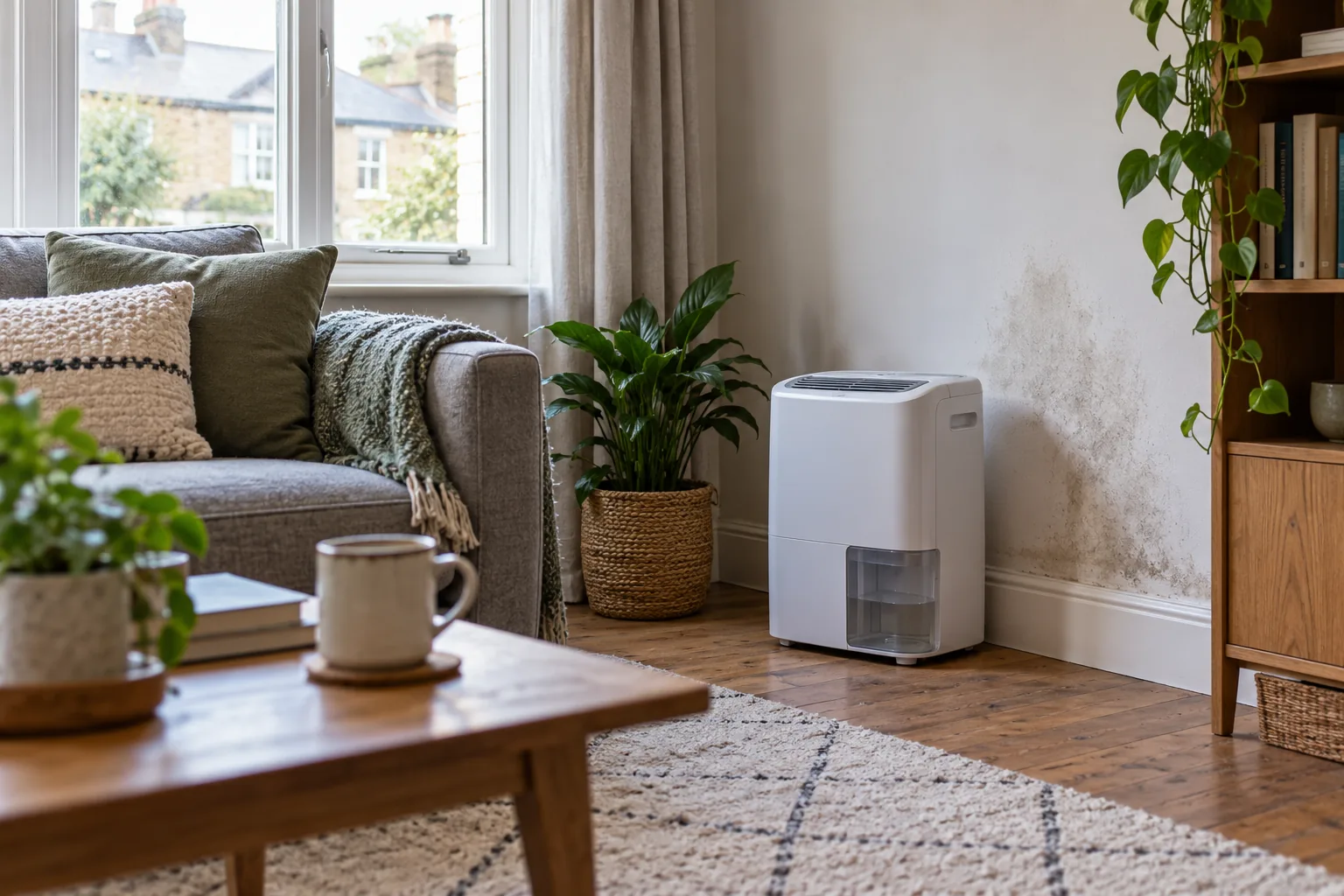
A dehumidifier fills its tank each day, and a musty room feels more comfortable. That can be useful: the machine removes water vapour from the room air and may help reduce condensation or support drying after a repaired leak. It does not reveal where the moisture came from. A full tank can reflect cooking, bathing, laundry, a damp building material or simply humid outside air entering during use.
The risk is treating the machine as proof that the underlying problem is solved. A leaking pipe, overflowing gutter or persistently cold wall can keep supplying moisture while the dehumidifier removes some from the air. If mould or staining continues, the source still needs investigation. The machine is best viewed as one part of a measured response, not a diagnosis or a permanent substitute for repair and ventilation.
What the machine changes
A domestic dehumidifier draws room air across a moisture-removal system and returns drier air. How much water it collects depends on air temperature, relative humidity, airflow, room size, settings and how often doors or windows are opened. A cold room can make some units less effective. A tank filled during one humid summer day cannot be compared directly with a tank filled on a cool winter day.
Lowering airborne moisture may reduce droplets on cold glass and give a wet surface a better chance to dry. It can also make a room feel more comfortable while a source repair is arranged. But it will not warm an uninsulated wall junction or stop rainwater crossing a defective roof. A dehumidifier may collect moisture released from wet plaster after a leak; it may also collect vapour generated by occupants. The volume alone cannot separate those sources.
Place and operate the unit according to the manufacturer’s instructions, including clearances, electrical safety and maintenance. Do not put it where water is actively leaking onto electrical equipment. If a ceiling is sagging or a leak is near wiring, keep clear and arrange urgent appropriate help rather than relying on a machine.
When it can be a useful temporary tool
After a plumbing or rainwater source has been repaired, controlled drying may be needed. A dehumidifier can help manage indoor air while affected materials release moisture, provided the repair is sound and the drying plan suits the construction. A professional may also use air movement, temperature control and targeted drying equipment. The goal is a demonstrable drying trend, not merely a full water tank.
In a room prone to surface condensation, a dehumidifier can reduce airborne moisture when ventilation or heating improvements are being arranged. It may be useful during unavoidable high-moisture periods, such as when laundry must be dried indoors. That does not mean blocked vents or a failed extractor can be ignored. Oxford City Council’s condensation guidance addresses moisture sources, ventilation and cold surfaces together.
Use it to support, not delay, action. If mould is spreading, finishes are deteriorating or the room cannot be used normally, report and assess the problem promptly. GOV.UK damp and mould guidance emphasises identifying and addressing underlying causes as well as removing visible mould.
Why tank water is not a moisture test
A tank reading is the amount collected under the machine’s operating conditions. It is not the water content of a wall, a measure of leakage rate or a verdict that the home has “rising damp”. A machine in a larger, warmer or more occupied room may collect more than one in a small cool room even if the second has a concealed defect. A door left open can add moisture from other rooms.
If you record tank volumes, keep the context: date, run time, setting, room temperature if available, whether doors and windows were open, laundry, cooking and recent rain. A repeated high collection rate after a source repair may justify a closer look, but it is only one clue. Low collection does not prove hidden insulation or timber is dry. Our guide to comparing moisture readings over time explains why consistent locations and conditions matter for material measurements; the same discipline applies to interpreting a dehumidifier log.
Avoid running a machine continuously and assuming “more collected” means “more effective”. The unit may be cycling because fresh humid air keeps entering, because the room has an unresolved source or because its setting is too low for comfort. Ask what change you expect to see in surfaces and material condition, then test that expectation.
Signs that the source is still active
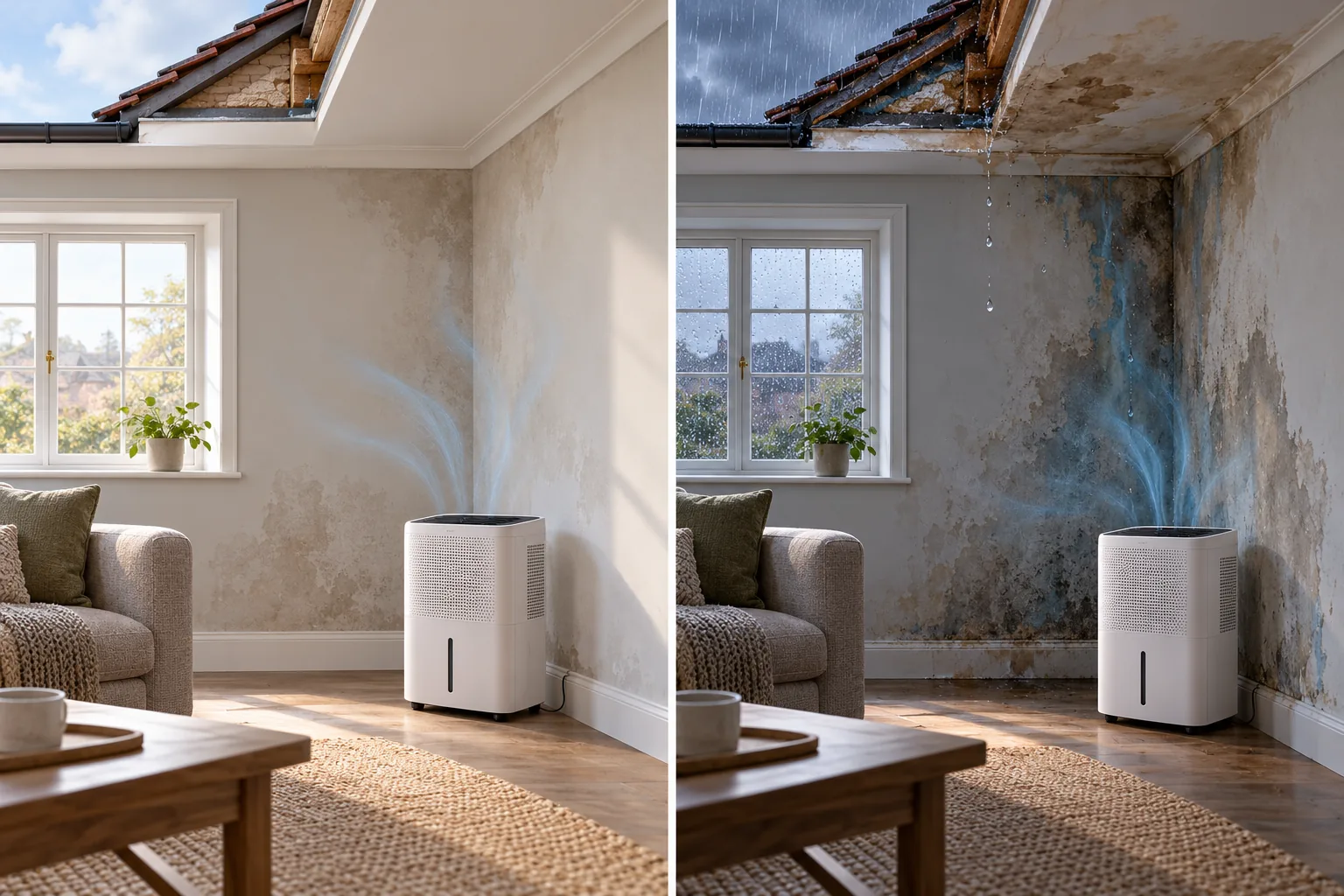
Look for a stain that grows after rain, a wet patch after upstairs water use, swelling at a skirting board or a ceiling that softens. Those patterns deserve inspection even if room humidity looks lower with the machine running. A dehumidifier may remove vapour evaporating from the wet material while the defect continues to supply water. That can make the air feel better while hidden fabric remains affected.
Mould returning on the same cold corner may indicate that surface temperature and airflow still need attention. A dehumidifier may reduce the load but not change an uninsulated junction or a wardrobe pressed against an external wall. If mould appears only when the machine is off, note that pattern, then ask why the room cannot remain dry under normal ventilation and heating. A permanent electrical appliance may not be the most suitable long-term plan.
Do not cover stains or redecorate simply because the machine has reduced visible droplets. A wall can look clean while a void remains wet; old discolouration can remain after proper drying. A damp inspection can compare the history, building fabric and accessible sources before deciding which condition applies.
Distinguish air drying from material drying
Relative humidity describes the air, not every layer of a wall or floor. The air can become drier quickly when a machine runs, while timber, plasterboard or insulation dries more slowly. Some materials may be damaged and need replacement rather than extended drying. A meter at the surface also has limits. If an expensive repair depends on the state of concealed fabric, a professional may recommend focused access or another measurement method.
After a repair, agree on reference points and a follow-up period. Compare the same surface with a similar unaffected one, photograph the stain boundary and note relevant rain or water use. If readings trend down and damage stops, that supports recovery. If the room is dry only while the dehumidifier runs at maximum, the plan may need review.
Ventilation still matters. A dehumidifier recirculates air within the room; it does not replace fresh air or remove pollutants in the way a designed ventilation system should. GOV.UK Approved Document F sets out ventilation guidance for dwellings in England. Keep background vents and extract systems under review rather than sealing them to make the dehumidifier work harder.
Keep a useful log, not a tank diary alone
Ask who will decide when the machine can be removed. If a contractor installed drying equipment after a leak, the end point should be based on the affected materials and the agreed scope, not on an arbitrary number of days. If you bought a domestic unit yourself, decide what observable improvement you expect: a window that no longer runs with water, a wall that stops changing after rain, or a drying trend after repair. If the condition returns as soon as the unit is switched off, that is a reason to reassess the building and ventilation rather than simply buying a larger machine.
If you are using a machine during investigation, record why it was introduced and what change it should support. Note run hours, setting, room conditions and tank volume, but pair these with photographs of the affected surface, odour, any mould and the repair history. A record saying “two litres collected” without room context tells an inspector little.
Try to compare similar periods, and note when the unit was moved between rooms. If it is used to dry laundry one day and to support a repaired leak the next, do not combine the volumes into one trend. If a room has active water ingress, deal with that source first. Do not delay a landlord or contractor report because the dehumidifier appears to be keeping the stain under control.
An assessment of condensation and ventilation can determine whether high indoor moisture, a cold surface or an incoming water route is dominant. For a London property where a dehumidifier runs constantly but damp or mould returns, contact our team with the room pattern, repair history and a short log. A useful outcome is a plan that explains the source and tests improvement without depending on a full tank as the only evidence.