
What a Non-Invasive Moisture Inspection Cannot See
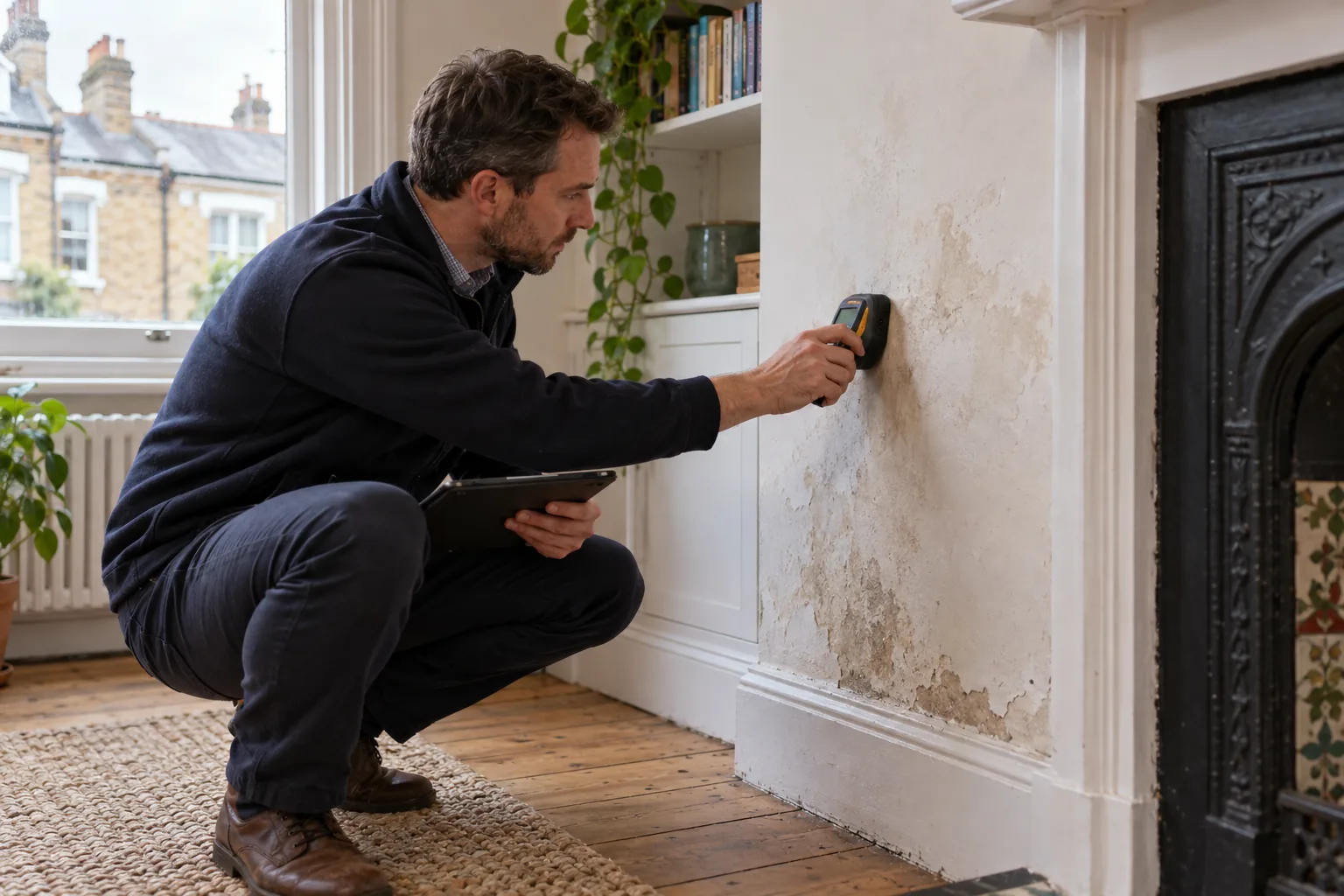
A damp inspection often begins without lifting floors, removing plasterboard or opening a ceiling. That is sensible: damage should be avoided unless a clear reason and safe plan justify it. Yet the limits of a non-invasive visit matter as much as the observations it produces. A wall can conceal pipework, insulation, a cavity or an old repair. A roof defect may be above an inaccessible void. If a report names an exact hidden source without explaining how it was confirmed, ask what evidence supports that conclusion.
A careful inspection can still be highly useful. It can establish the position and pattern of visible damage, compare surfaces, examine accessible building details and test whether the history fits one or more possible moisture routes. It may identify an obvious source, such as an overflowing gutter seen during rain. Where a concealed route remains plausible, the useful outcome may be a focused plan for the next check rather than a premature repair specification.
What a visit can examine without opening finishes
The starting point is a whole-room and often whole-building view. The inspector can ask when the problem began, whether it changes with weather or water use, and what repairs have already been made. They can look at staining, surface mould, blistered paint, damaged plaster, condensation and odour. They can note room orientation, windows, heating, ventilation, furniture placement and accessible external features. A pattern on several surfaces may tell a different story from one isolated mark.
In accessible places, it may be possible to inspect a loft, cupboard, service hatch or the exterior from ground level. Safe access and permission decide what can actually be seen. A roof viewed from the street may show displaced coverings but not a hidden junction. A floor void behind a fixed panel remains unobserved unless an agreed scope includes opening it. The RICS description of a Home Survey Level 3 inspection illustrates this distinction between thorough accessible inspection and opening building fabric without consent.
Handheld meters and environmental measurements can add context. They can help compare like-for-like surfaces or track a trend, but they do not photograph water inside a wall. Thermal imaging shows temperature patterns, which may be influenced by moisture, insulation, air movement or construction details. A cold patch is a reason to investigate, not proof of a leak. The instrument and its limitations should be stated in a report.
Concealed voids remain concealed
Plasterboard linings, suspended ceilings, built-in cupboards and floor coverings create spaces that may hold evidence unavailable from the room side. Water can follow a pipe or joist before it reaches an exposed surface. Insulation can remain wet behind a lining while the room-facing finish is only faintly marked. A non-invasive survey may identify the likely zone, but it cannot always establish the condition of every hidden layer.
That does not mean opening everything is the next step. The question is whether the hidden condition would change the repair decision. If an accessible plumbing joint is visibly leaking, repairing it may come first. If the stain continues after repair, a targeted look behind the finish may be justified. If the room is stable and the evidence is weak, monitoring through another weather or usage cycle may be a better first move.
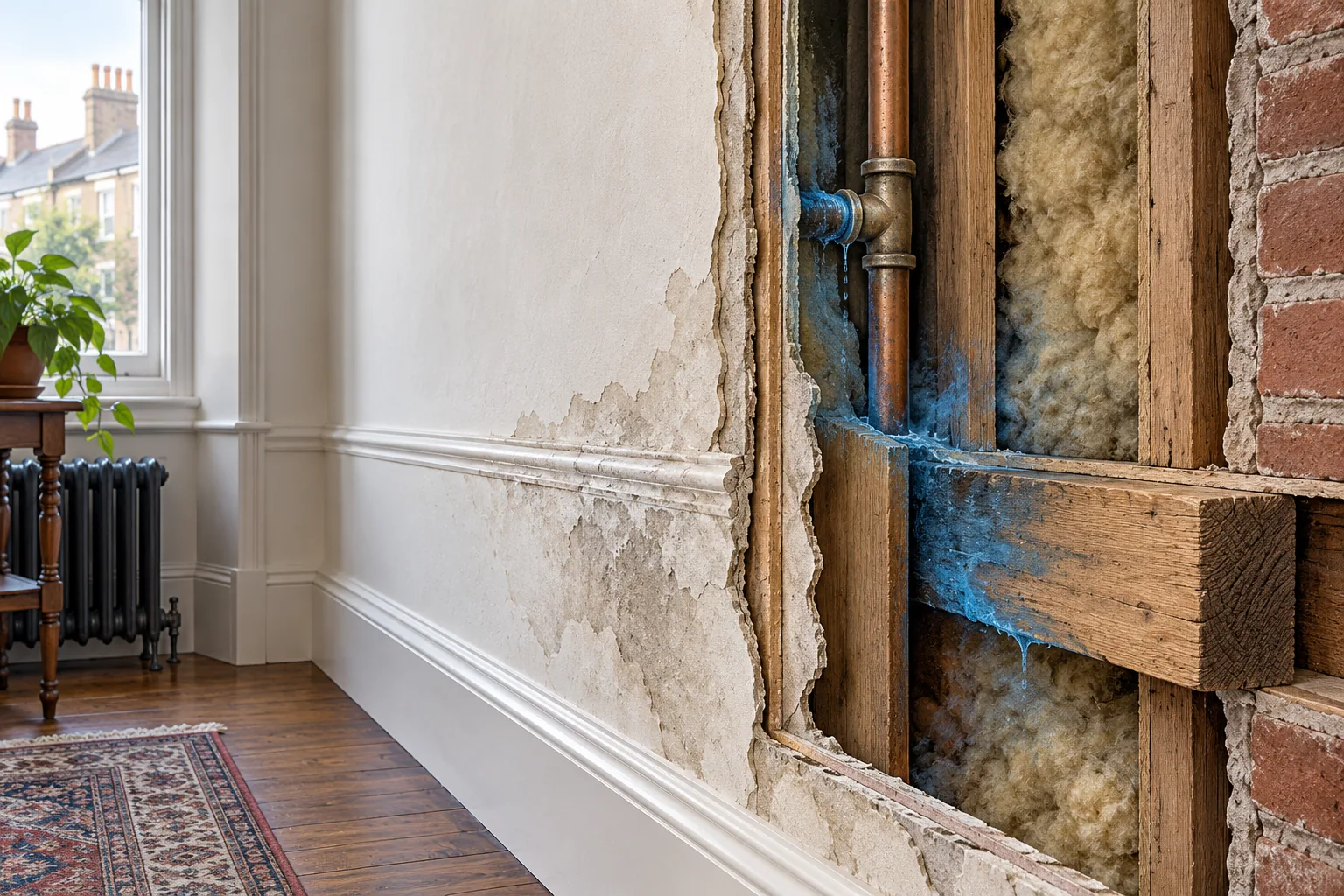
In a flat, the relevant void may not belong to the affected room. Shared pipework, a roof above another unit or a wall adjoining a service riser can require coordination with a managing agent or neighbour. The inspector should record which areas were not available, who controls them and what access would test the leading explanation. “No defect seen” in an area that was not inspected is not the same as evidence that the area is sound.
A surface meter cannot determine every material’s condition
A reading at the face of plaster or timber says something about the instrument’s response at that location under those conditions. It may support a comparison with similar nearby material. It does not tell you the precise water content of every layer behind it or identify which route supplied the water. Electrical properties can be affected by salts and metal, particularly in old or altered construction. A finish can dry at the surface while a deeper layer remains affected.
Historic England’s guide to assessing damp in historic buildings discusses why measurement methods must be chosen and interpreted in relation to the building fabric. This is especially relevant in traditional walls that may contain mixed materials, past repairs or salts. A high display does not automatically justify a particular damp-proofing product. If the result will determine an expensive intervention, ask how the interpretation was checked.
Our separate article on what moisture meter readings can really tell you goes into the different meter types and why comparisons matter. For this inspection, the practical point is to ask whether the report describes the material, the location, the reference readings and the other evidence supporting the conclusion.
Services and drains need their own tests
Visible staining beside a pipe box may point towards plumbing, but it does not confirm which connection is leaking. A non-invasive moisture survey cannot always test a concealed pipe under pressure, trace every waste run or inspect the inside of a drain. It can suggest which trade or targeted test may be appropriate. If the mark changes after water use, that timing can help a plumber plan an investigation. Our hidden leak checks service describes how a suspected concealed source can be approached.
Likewise, an external roof or gutter detail may be inaccessible from the initial appointment. A close inspection may need safe roof access, a qualified contractor or a camera from an appropriate position. The report should distinguish defects actually observed from features merely suspected. It should not imply that a roof was inspected closely if it was only viewed from the ground.
When opening-up becomes proportionate
Opening a small area may be appropriate when the evidence points to a concealed defect and the result would change the action. Examples include persistent wetness near a service route after accessible plumbing has been checked; soft lining with a risk of damaged material behind it; or a recurring patch that follows rain despite repair of visible external faults. The location, size and method of access should be planned to answer a specific question, not chosen at random.
Permission matters. A tenant may not be able to authorise cutting into a wall, and a leaseholder may need consent for a shared element. Electrical, gas, structural and hazardous-material risks also affect who should do the work. A surveyor can recommend the next step and its purpose, but the person controlling the property must arrange the appropriate permission and competent trade. The RICS and Historic England joint position statement recognises that investigation can be staged and that focused sampling or opening-up may be needed where evidence warrants it.
Sometimes a period of monitoring is more revealing than immediate opening. A dated photographic record before and after rainfall or water use can help separate two candidate routes. If a repair has just been made, monitoring may show whether the area is drying. The expected period and observations should be agreed rather than using indefinite “wait and see” as a substitute for action. Active leaking, unsafe ceilings or serious mould concerns require prompt response.
Read the limitations section of the report
A good report should tell you what was inspected, what could not be accessed and how confident the surveyor is about the proposed cause. It should connect each recommendation to the observations. A conclusion such as “probable rainwater entry at the parapet junction” is different from “parapet junction confirmed defective during close inspection”. The wording should reflect the evidence and acknowledge competing explanations when they remain credible.
Before commissioning work, ask: Which observations support this source? Which areas were inaccessible? Would another inspection, monitoring period or specialist test change the proposed repair? What would count as evidence that the repair worked? These questions help avoid paying for broad treatment when a small targeted check is still needed.
A damp inspection should help narrow the next decision, even when it cannot see through every finish. If a recurring moisture problem in a London property remains uncertain, contact our team with the visible pattern, previous reports and any access constraints. A useful plan states both what the evidence shows and what remains hidden.