
What a Musty Cupboard Can Reveal

A cupboard can smell musty even when the room around it looks dry. A closed door limits air movement, stored objects can cover a wall, and a colder surface at the back may remain hidden for months. The odour is a reason to investigate, but it is not proof that one visible patch of mould is the whole problem. A plumbing leak, rainwater path or damp material beneath the floor might be nearby. In some cases the smell comes from old stored items rather than the building.
The useful question is where the smell is strongest and what changes it. Does it worsen after rain, during winter, after a shower, or only when the cupboard stays shut? A careful first check records those details and compares the cupboard with adjacent spaces. That makes it easier to decide whether cleaning, airflow changes or a targeted building inspection is needed.
Start with a safe, undisturbed look
Open the door and photograph the whole space before moving anything. Note whether the cupboard is built into an external wall, backs onto a bathroom or kitchen, sits under stairs, or contains a service pipe. Check where shelves touch the wall and whether a gap exists behind boxes or clothing. A mark may be limited to the surface covered by stored items, or it may continue along a skirting board or into the ceiling.
If there is extensive growth, wet electrical equipment, a soft or sagging ceiling, or a vulnerable person in the household, avoid disturbing the area and seek appropriate help. Dry brushing or vigorous handling can spread material and obscure the original pattern. For a small, stable concern, record what is visible from a safe position. An inspector can then advise on access and treatment after considering the source.
Use your nose as one observation rather than a measuring instrument. Compare the air in the cupboard with the room immediately outside, an adjacent cupboard and the space behind a nearby item of furniture if accessible. Odour may linger in fabrics even after a surface has dried. Conversely, a damp void may have little obvious smell at the moment you open the door. The location and timing matter more than the strength of one impression.
Look for restricted air movement
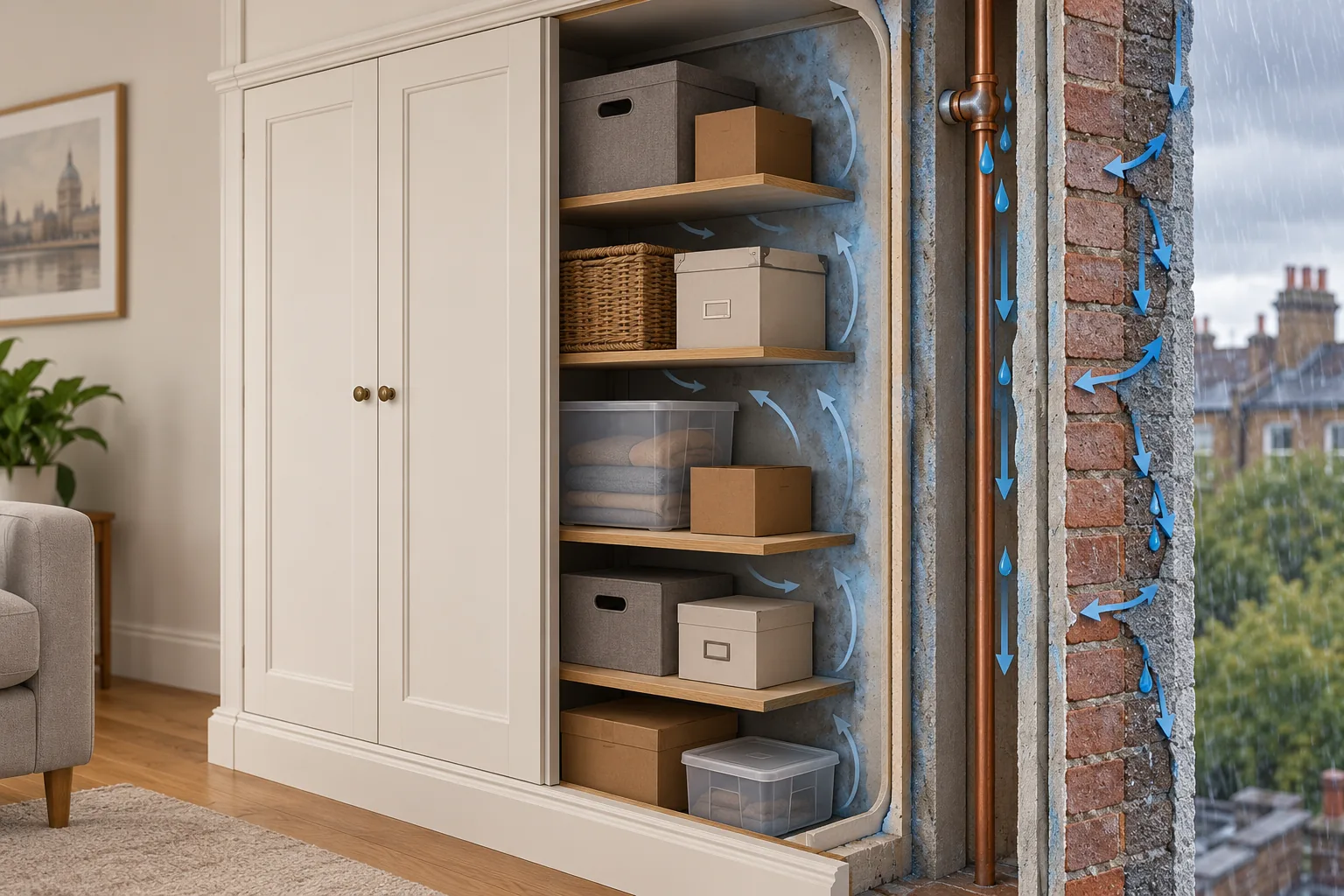
Closely packed storage can block warm room air from reaching the back wall. A cupboard door without vents may keep a cool pocket of air inside, particularly when it is built against an external wall. The conditions there can differ from the centre of a heated room. If the wall surface stays cold while indoor air carries moisture, condensation can develop behind boxes or clothes. You may see fine speckling, water droplets on a hard surface, or mould confined to the outline of an object.
Record how full the cupboard is and whether the door is normally left closed. Check for a blocked air brick or vent only if one is already visible; do not assume a hole should be added. A wardrobe against an external wall can show a similar pattern, but the construction behind a built-in cupboard may be more complex. Adding ventilation without understanding a hidden leak will not solve water entry, while sealing every gap could make a condensation problem worse.
The position of marks gives a clue. Growth spread thinly across a cold back panel may support a different line of enquiry from a sharply localised stain under a pipe joint. Yet a cold surface and a small leak can occur together. An inspection should compare surface temperature, room humidity, material condition and nearby services rather than choose a cause from the shape alone.
Examine the wall, floor and ceiling boundaries
Use a torch to view the back corners without forcing shelves or pulling fixed joinery apart. Look at the floor edge, skirting, underside of shelves and upper corner. Is there a tide mark on cardboard? Has timber swollen or paint blistered? Does the patch line up with a pipe boxing or a ceiling mark in the next room? Photograph each boundary with enough context to show where it is.
If safe access permits, compare the same wall from the room on the other side. A cupboard under stairs might share a wall with a kitchen or bathroom. A hall cupboard may border a communal riser in a flat. The apparent location of the smell does not tell you which side supplies the moisture. The adjacent room may show a small leak, a cold external corner or a previously repaired stain.
Do not rely on a single handheld meter reading. Materials such as timber, plasterboard, masonry and foil-backed lining respond differently, and some meters also react to salts or metal. RICS guidance on investigating moisture supports examining construction and environmental context alongside measurements. Mapping readings in comparable materials can be useful; declaring a cause from one number is not.
Ask what is stored and what has changed
Stored belongings can hold an odour independently of the wall. Shoes, cardboard, a damp coat or cleaning materials may smell musty after being put away wet. Remove a small number of items if it is safe to do so, noting which ones smell and whether they have visible growth. Do not mix contaminated and unaffected belongings without thought. Photograph damage before discarding anything, especially in a shared or rented property.
Ask whether the cupboard has changed recently. A new fitted shelf may have reduced airflow, a door seal may have been added, or an adjacent bathroom may have been renovated. Did the smell begin after a leak repair, a period when the property was vacant, or an unusually wet season? An old leak can leave odour in porous materials, but a recurring wet mark suggests the source may remain active. The chronology helps distinguish these possibilities.
Timing with rain is worth recording, particularly where the cupboard sits against an external wall or below a roof junction. If there is a downpipe or gutter outside, note whether it overflows or stains the wall during a storm. A smell after a shower may point towards ventilation conditions or a service route. Neither link proves causation; it tells the inspector which detail to examine first.
Compare the cupboard with room conditions
A room may be adequately heated while a cupboard stays colder because its door is shut and its wall is exposed. Take note of persistent condensation on nearby windows, extraction in bathrooms and kitchens, and whether a radiator is blocked by furniture. If an inspector measures humidity, the reading should be interpreted with the time of day and recent activity. One reading after opening the cupboard door may no longer represent its usual closed condition.
The UK government’s guidance on damp and mould for rented housing providers emphasises finding and addressing the underlying moisture cause as well as treating mould. The practical point applies here: a scented product or surface wipe may mask the smell briefly while the hidden conditions continue. Equally, a musty item should not trigger invasive building work until the fabric has been checked.
Where the cupboard contains an electrical consumer unit, boiler or other equipment, respect its clearances and do not spray cleaning products or open covers. Ask a qualified professional about any water close to electrics or heating equipment. The aim is to preserve both safety and evidence.
Plan targeted access if the cause remains hidden
If the smell persists after a careful surface check, an inspector may recommend access behind a removable panel or at a particular junction. The request should explain what question that opening will answer. It might test whether the back wall is wet, whether a pipe is leaking or whether mould is limited to a cold lining. Opening every panel at once can make it harder to trace the original pattern and increases repair work.
In a flat, ask who owns the cupboard lining, exterior wall and nearby shared services before authorising invasive work. If a managing agent controls a riser or the wall is part of the shared building fabric, arrange the necessary access. Record any limits in the report. An inspection confined to the cupboard may still be helpful, but it cannot clear an inaccessible void or neighbouring service.
A good report describes what was seen, smelled and measured; what was not accessible; the plausible causes; and the next proportionate check. It should also state when visible mould or damaged materials need treatment. If a hidden leak is possible, our guide to why a damp patch appears away from the leak explains why the visible mark may be some distance from the source. For a persistent musty cupboard, contact Mould Inspection London with its location, photographs and a short timeline so the inspection can start with the right questions.