
Trickle Vents, Draughts and Moisture: What to Check

A small vent above a window lets in air even when the window is shut. On a cold day it may feel draughty, so closing it seems sensible. Then condensation builds on the glass or mould returns at a corner. The vent may be part of the home’s planned background ventilation, yet opening it is not a universal cure for damp. Its effect depends on extract fans, air paths, heating, building fabric and any incoming water defect.
The practical task is to understand what the vent is supposed to do in your dwelling and what happens when it is used as designed. A complaint about cold air deserves investigation alongside the moisture problem. It should not be dismissed, and the vent should not be permanently sealed without checking the consequences for ventilation.
What a background vent is intended to do
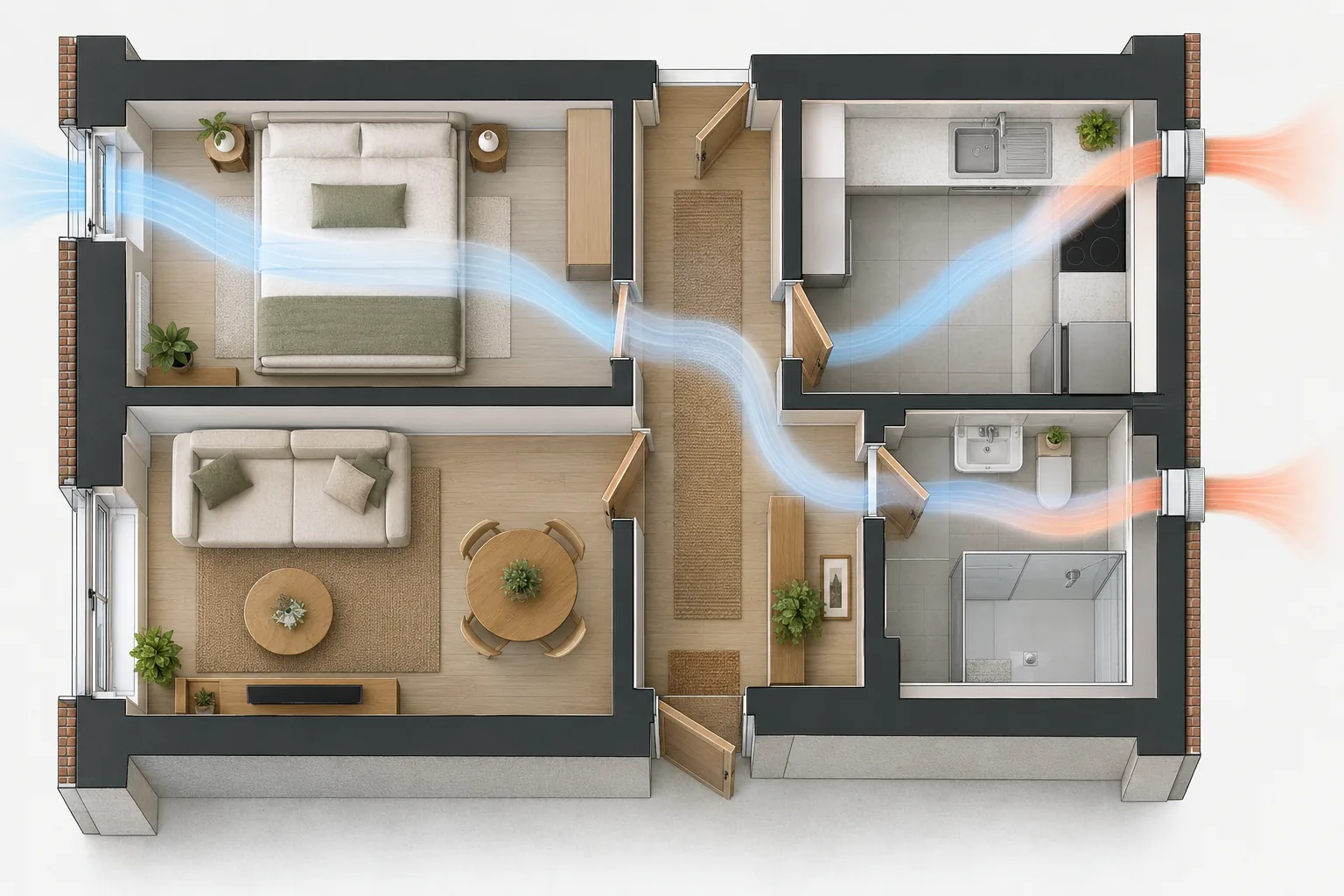
A trickle vent provides a small route for outside air to enter a room while the window remains closed. In many ventilation arrangements, wet-room extract fans remove stale or humid air and background vents supply replacement air elsewhere. That flow helps dilute indoor moisture and pollutants. It is different from opening a window wide for a short purge.
The exact arrangement depends on the building and the work carried out. GOV.UK Approved Document F sets out ventilation guidance for dwellings in England, with different editions and provisions applying according to project timing. A vent’s presence does not prove that the whole dwelling meets its intended ventilation performance. Ask what system was installed and how extract rates and air paths were checked.
Some window vents have adjustable sliders; others are designed to remain open or have limited control. Check the product information before forcing a stiff mechanism. A damaged, painted-shut or poorly fitted vent may need repair. Do not push tools into the opening or remove parts if it is not clear how the unit works.
A draught can have several causes
Air entering through an intended vent can feel cool in winter. But a stronger draught may come from an installation gap, a failed seal, an open sash, a poorly sealed frame or an unusually exposed position. Distinguish air coming through the vent itself from air around it. A tissue held gently near the area can show movement, but not measure flow or diagnose the source.
Note when the draught is strongest. Does it follow a particular wind direction? Is it felt only when a bathroom extractor runs? Does the vent whistle? Are other rooms similar? A cold sensation near the glass can also arise from the glass and reveal surface temperatures, not only moving air. A professional can inspect the frame, vent and room pressure rather than recommending closure from a brief impression.
If rain appears through a vent or around the frame, photograph the exact location during safe accessible observation. Water entry is not an expected price of ventilation. Ask the installer to check the weathering detail. Do not seal all openings with tape before the route is understood, as that can obscure the defect and affect airflow.
Closing vents can change where moisture appears
When background air is restricted, a fan may struggle to draw replacement air from the intended rooms. Moist air from cooking, bathing and occupancy may remain longer indoors. It can condense on cold glass, wall junctions or behind furniture. Oxford City Council’s condensation guidance identifies poor ventilation, cold surfaces and everyday moisture as relevant factors.
The change may not be immediate or confined to the window with the closed vent. A bathroom extractor can draw air through door gaps, and a closed bedroom vent may affect the wider air path in a small flat. Conversely, opening one vent will not repair a broken fan or a leaking roof. Record the effect of the system as a whole, not a single control.
If a room is hard to heat, ventilation advice should be realistic. A cold, damp wall can remain vulnerable even with a vent open. A home assessment may need to address thermal performance, heating and extraction together. A user should not be told simply to tolerate an uncomfortable draught without checking whether the vent is suitable and installed correctly.
Compare moisture patterns before changing settings
Record where condensation or mould appears and when. Water on room-facing glass each cold morning may relate to overnight occupancy and surface temperature. Mould on a bathroom door head can involve humid air moving through a doorway. A stain that grows after rain or water use calls for a different check. Trickle vents address part of an airflow strategy; they cannot stop water entering through a defect.
Photograph the vent position, affected window and any mould or damaged finishes. Note normal use of the room, heating periods and whether kitchen and bathroom fans run. If you alter the vent position, record the date and observe comparable mornings. Weather will vary, so improvement or worsening is a clue, not proof. Avoid sealing the vent completely as an experiment if moisture is already causing damage.
Our guide to morning window water shows how a short consistent log can separate room-facing droplets from rainwater or sealed-unit issues. If windows were recently replaced, ask what background ventilation was included and whether the installation changed the previous airflow pattern.
Check wet-room extraction and the transfer route
Background vents usually work with other parts of the home. A bathroom fan that spins but has a blocked duct may not remove moisture. A kitchen hood that recirculates air may filter grease and odours without exhausting steam. The door gaps or transfer openings that allow air to reach those rooms matter too. A ventilation assessment should trace the intended path, not just count vents.
Do not assume a vent is “too small” or “too large” from appearance. Its effective air opening and the system’s performance require suitable measurement and context. Ask whether the wet-room extractor has been tested and whether it discharges outside. If a central system serves a block, the managing agent may hold the design and maintenance records.
Noise and comfort also matter. A rattling vent or cold jet directed at a bed can make occupants close it. The installer may be able to correct a fault or consider an appropriate product without abandoning background ventilation. Any alteration should preserve the dwelling’s ventilation strategy.
Know when a vent is not the main answer
Persistent damp at one wall after heavy rain, a swollen skirting near pipework or a ceiling stain below a bathroom needs investigation of its own. An open trickle vent may help a room dry but cannot repair a leak. GOV.UK damp and mould guidance emphasises identifying the moisture source rather than relying only on a surface clean or general ventilation advice.
Equally, a recurring cold-corner mould patch should not automatically trigger roof repairs. A building inspection can compare exterior defects, surface temperature, room use and airflow. A report should distinguish what was observed from what remains a hypothesis.
Ask for a whole-system recommendation
If several windows have vents, compare them rather than focusing only on the noisiest one. A vent in a sheltered room may feel different from one on a windward facade. Note whether some are missing, painted over or blocked by curtains. That inventory can show whether the dwelling has a consistent background air route or a patchwork created by earlier replacements. Do not alter the units to make them match before their intended role is confirmed.
After any repair or adjustment, agree on a follow-up that reflects the original complaint. A draught should be reassessed during similar wind conditions, while winter condensation may need observation over cold mornings. If a fan or duct was repaired at the same time, record that separately. A report that only says “vent opened” leaves too much uncertainty about why the moisture changed. Ask what specific observation would show that the air path is working better and what further check is needed if mould returns.
Before a visit, note the vent type and position, when it is open, the draught conditions, fan operation and the pattern of moisture. Bring installation records if windows or extractors were replaced. Ask the assessor to explain where air enters, how it moves and where it leaves. If a vent is uncomfortable or admits rain, ask for that defect to be addressed explicitly.
An assessment of condensation and ventilation can relate background vents to extract performance and cold surfaces. For a London home where vents feel draughty but moisture persists, contact our team with photographs and the conditions when the problem occurs. The aim is a workable air path and a comfortable room, supported by the actual building rather than a generic instruction to open or shut a vent.