
INVESTIGATE WHERE DIFFERENT BUILDING MATERIALS MEET
Mould Inspection Northwood
Where a Northwood home combines an older elevation with later infill or an altered room, a recurring mark may sit at a material junction. Describe that exact connection and the work already done. The inspection should consider the accessible surface, weather history and indoor conditions without assuming the junction itself proves a defect.
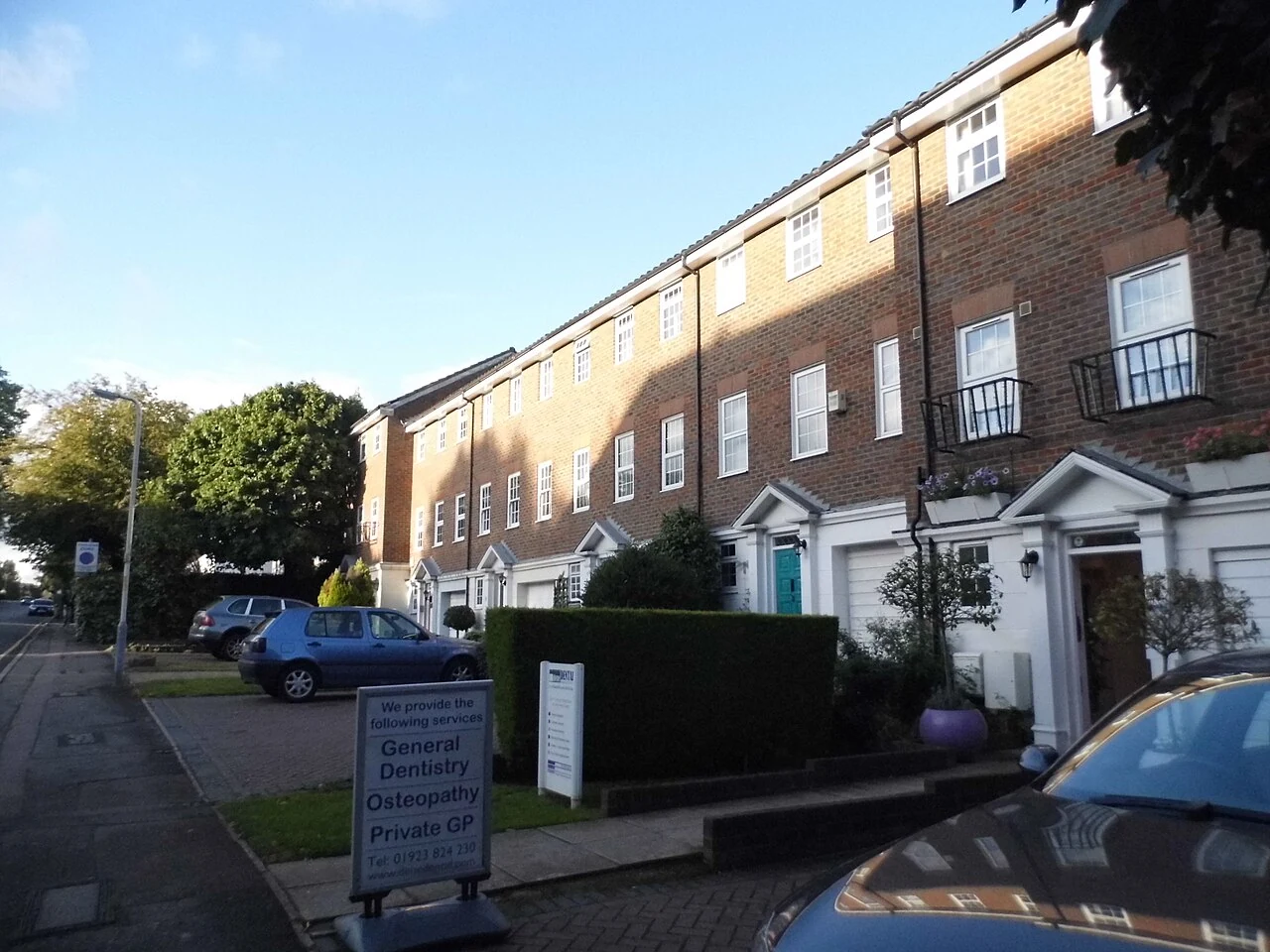
Property reference photograph; not a company job. Photo: David Howard · CC BY-SA 2.0 (resized WebP).
- Identify the old and later surfaces at the affected position
- Bring repair and alteration information into the comparison
- Separate rain-related change from normal room moisture
Local materials provide context for an individual enquiry
Hillingdon’s Northwood conservation report describes detached and semi-detached groups with combinations of brick, roughcast, tile-hung surfaces and varied roof details within its boundary. It does not describe every Northwood house. Where your property has later work meeting original material, identify that actual connection and its known history. Explain whether a former opening was infilled, a wall was relined or an adjoining room added. A wider photograph can show the mark against the junction rather than only its colour. Keep reliable facts separate from assumptions about hidden insulation or the age of material that has not been verified.
Local building context: Hillingdon Council: Northwood conservation-area report, September 2019.
A straight line does not reveal the concealed detail
Growth or staining that follows a material edge can guide attention to that location. It may relate to surface conditions, a local water route or another influence needing examination. The outline does not by itself establish poor workmanship or specify a repair. Material differences can also matter when interpreting measurements.
For assessment of the affected fabric, comparison needs the surface type, location and surrounding evidence. A response on a patch should not automatically be extended to the entire original wall. Tell us which area has softened, peeled or changed since work so the material condition is described separately from visible growth.
Bring the alteration record into the chronology
Existing drawings, invoices or photographs can show the intended change and the earlier appearance. Include the date and whether the mark existed before the work. The record may direct a further question, but it cannot confirm every concealed connection now or establish responsibility from a returning stain alone.
Where an infill or addition altered services, investigation of a possible hidden water route may be relevant. The route needs evidence and a scope of its own. A wall treatment should not be chosen on the assumption that all later changes are dry merely because the surface looked sound when installed.
Separate outside timing from the room account
If the mark changes after rain, note the location and safely accessible external details related to it. A focused external water enquiry may require another access arrangement. Do not climb or create a water test to prove your preferred explanation. Also describe ordinary window moisture, heating and extraction where they belong to the concern. Reviewing the room conditions can be useful alongside investigation of a local junction. If one pattern changes independently of another, the recommendation should keep that distinction rather than force a single cause to explain both.
Further access should be proportionate to the question
At the agreed visit we discuss the history, examine accessible material and consider suitable moisture checks. Tell us about fixed coverings, difficult exterior positions or rooms that cannot be accessed. A concealed junction may remain unverified, and the finding should state that limit.
If opening material is proposed, ask exactly what would be examined and what the result would answer. Permission, safe access and reinstatement should be discussed before work. A targeted further check differs from stripping large areas without evidence, especially where the original and later materials require different repair consideration.
Treat the confirmed area and keep the reference
Removal of affected growth can be considered with the source action and material condition. A repair, drying and final decoration may follow separate decisions. Clarify which proposed stage addresses moisture and which restores the finish, rather than treat a new coating as proof that a junction has been resolved.
After action, compare the original edge and adjacent surface under ordinary use and relevant weather. Retain the description of what was changed. If the line improves but a separate patch develops, report its position distinctly. Practical recurrence advice should follow the findings for this home, not a generic claim about all Northwood period properties.
Questions about indoor and external moisture
Does mould following an infill edge prove the infill is defective?
No. The line can locate a useful enquiry, but the materials, surface conditions and possible water sources need examination. Describe the change and its history before selecting a particular repair.
Why identify original and later materials?
They may respond differently to checks and need different repair consideration. A measurement needs that context. The material description helps avoid applying one patch finding automatically to the whole wall.
Can an alteration invoice confirm the present condition?
It can explain intended work and its location, which is useful history. It does not verify every concealed detail now. Current observations and any focused further investigation remain necessary where uncertainty persists.
Should a junction be opened before the visit?
Discuss its condition and access first. Opening should answer a specific question, with permission and reinstatement agreed. A visible line of growth does not automatically justify removing large areas of material.
Can indoor moisture and a rain-related mark coexist?
They can raise separate enquiries at different surfaces. Describe their timing and locations distinctly. A useful recommendation should identify the observation each measure or further check addresses.
Does the Northwood report cover every local property?
No. Its descriptions relate to the conservation area and building groups within it. The actual address, materials and alteration history need to be established for an individual moisture enquiry.
What should be recorded after junction work?
Keep the original location, completed action and date together, then compare that edge and adjacent surface. Describe any new patch separately. A fresh finish alone does not establish the outcome under ordinary use or relevant rainfall.
Tell us where the old and later materials meet.
Describe the affected edge, alteration records and timing of the change. Call about a Northwood inspection before another material replacement or coating is selected.