
Mould Beside a Bay Window: Read the Whole Detail
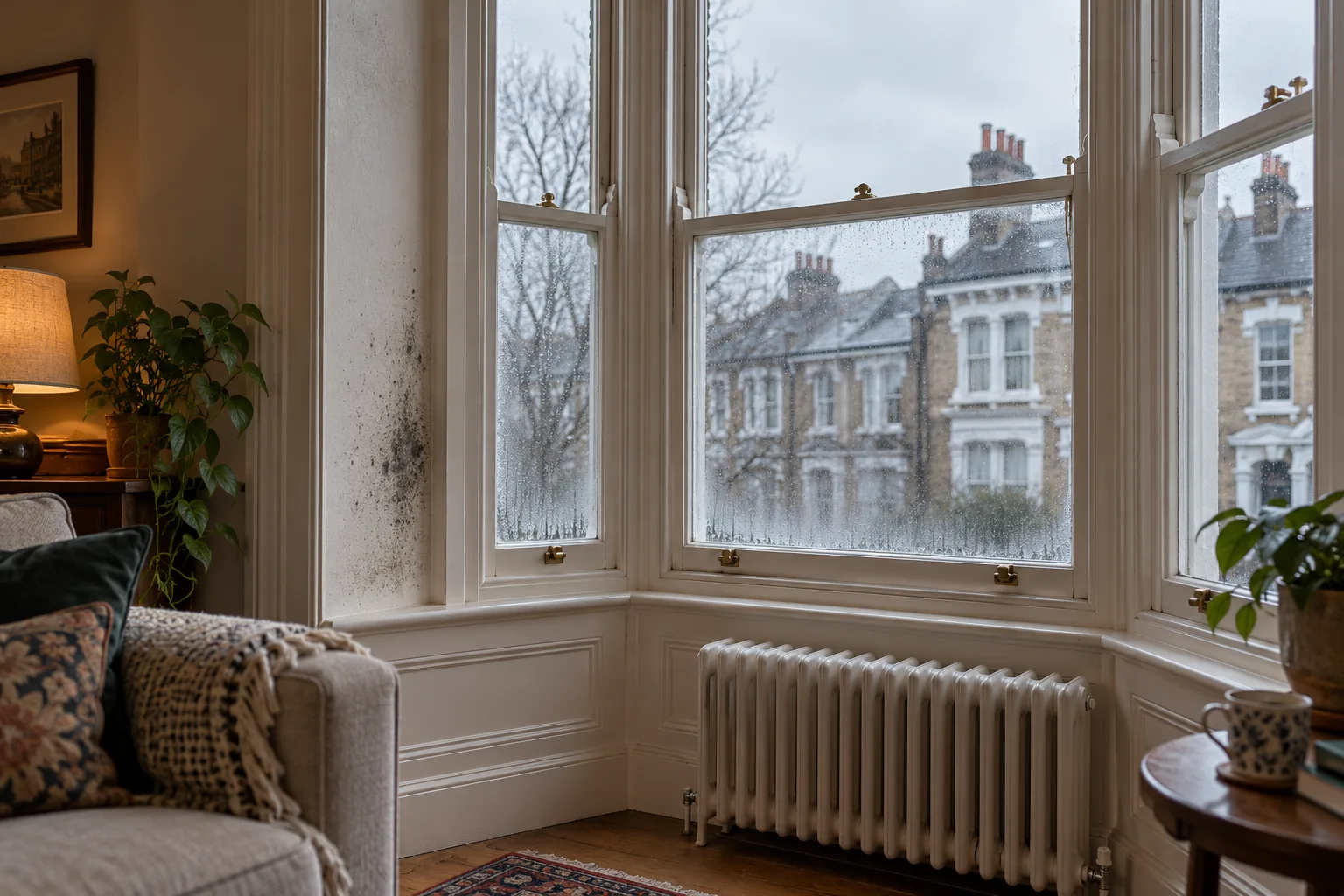
A dark mark beside a London bay window can appear in the same corner every winter. It may be tempting to call it condensation, especially when the glass is wet in the morning. Yet a bay is a complicated part of the building: the wall projects into colder outdoor air, the window frame meets several reveals, and a roof or sill may direct rainwater across the detail. Poor ventilation, a failed seal and an exterior defect can also coexist. The mould shows that a surface has stayed damp enough for growth; it does not tell you which route supplied the moisture.
Before treating or redecorating the area, compare the mark with the rest of the bay and the room. Its exact position, timing and response to weather are more informative than its colour alone. A careful first inspection should also decide what can be seen from inside and what needs a safe exterior check.
Map the mould around the entire bay
Photograph the whole bay before taking close-ups. Mark whether growth sits on the side reveal, beneath the sill, above the frame, on the ceiling of the bay, or along the junction with the main wall. Is the patch diffuse and speckled or concentrated beneath one point? Does it appear on both sides symmetrically, or only beside a particular sash? Note peeling paint, wet plaster, water marks, staining on timber and any swollen skirting.
A narrow side reveal may be much colder than the larger wall. A curtain or blind can restrict warm air movement over that surface and make the local conditions different from the centre of the room. A sofa or fitted cupboard close to the bay can have the same effect. This does not mean the occupier caused a building defect. It means airflow and surface temperature belong in the investigation alongside external and window details.
Look at other rooms for comparison. Are there droplets on several windows in the morning? Is mould present on multiple cold external corners, or only around this bay? If the same room has extensive condensation on glazing, its air conditions may be contributing. If one sharply defined patch follows a rainstorm while nearby surfaces remain dry, a local water path needs stronger consideration. Neither comparison is a final diagnosis, but it improves the next check.
Understand why bay geometry matters
A bay projects from the main building line, exposing more surfaces to cold outdoor conditions. Corners, lintels, sills and the underside of a small bay roof can create local cold areas. Replacement windows may have changed the insulation and airflow around an older wall. New plasterboard, an insulated lining or a sealed frame can alter where vapour settles and where the wall can dry.
Ask what is known about the bay’s construction and previous work. Was the window replaced? Were vents removed or sealed? Has the bay roof been repaired? Was internal insulation fitted in one room but not another? A period appearance does not guarantee original construction; alterations in neighbouring flats may also differ. Photographs taken before work can be useful when deciding where a hidden junction lies.
A surface temperature reading taken at the mould patch and at similar nearby surfaces may help compare cold spots when interpreted with the room temperature and humidity. A single cold reading on a winter morning cannot explain a leak, and a single moisture meter number cannot identify condensation. The inspector should explain how conditions were measured and what comparison makes the result meaningful.
Check the window and its immediate junctions
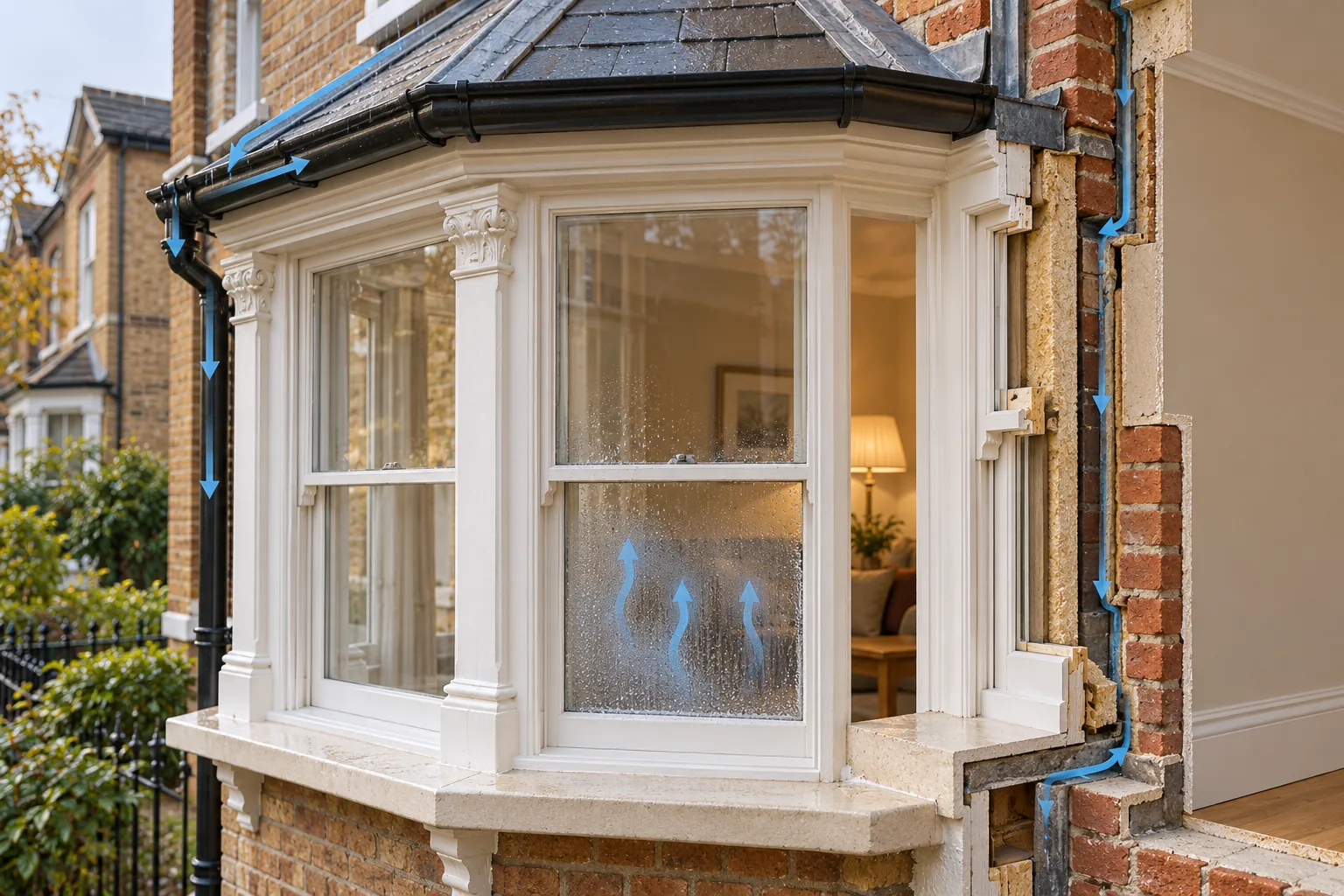
Observe the glass, frame, beads, seals and sill during dry and wet weather. Condensation on the room side of glass or frame is different from water emerging behind trim. A poorly fitted or ageing seal might admit wind-driven rain; a blocked drainage channel in some window designs may allow water to collect where it should drain away. Do not assume every gap is a leak or that a bead of sealant will solve an unexplained wall patch.
Record whether a particular sash is difficult to close or whether the frame has moved. The outer sill should shed water away from the wall. From a safely accessible position, photograph cracks, open joints and staining below the sill. A leak may travel behind plaster and appear away from the entry point. Our guide to why a damp patch can appear away from a leak explains that general route.
If the bay contains a small roof, gutter or leadwork, include it in the external inspection. A blocked outlet can send rainwater down a wall or into a junction that is otherwise sound. Historic England’s rainwater-goods guidance describes how leaking gutters and downpipes can saturate walls. The principle is relevant to a bay, although only inspection can establish whether its drainage is involved.
Compare weather, room use and the mould pattern
Keep a short log for two to three weeks if the problem is stable enough to monitor. Note when the heating is used, when glazing is wet, whether the room is occupied overnight and whether the bay is hidden by curtains. Record rainfall and wind direction when the patch changes. Use the same photograph angle each time. If the plaster becomes actively wet after rain, arrange an earlier inspection rather than waiting for a perfect log.
Humidity alone is not a verdict. A room may have normal average humidity but one unusually cold reveal; a leak may also keep a surface damp in a well-ventilated room. Consider how water enters the air from everyday use, whether an extractor works effectively and whether a window is routinely covered by a blind. The purpose is to understand conditions, not to assign blame based on a household habit.
The UK government’s guidance for housing providers on damp and mould stresses addressing the underlying cause as well as the visible mould. Although written for rented housing providers, it gives a sound practical reminder for any home: cleaning alone cannot prevent recurrence while the moisture conditions remain. A report should distinguish what needs immediate attention from the longer investigation.
Decide what the first survey can establish
Tell the inspector where the mould recurs, how it changes after rain or cold nights, and what window or bay work has been done. Provide wide and close photographs. Ask whether the visit can include safe observation of the exterior, roof edge and drainage. If access is limited by height, a neighbouring property or a shared freehold, arrange permission before the appointment where possible.
A useful report should map affected surfaces, describe indoor conditions, record visible window and wall details, and state which explanations fit or conflict with the evidence. It should not label every bay-window mark “condensation” merely because the glass is wet. Equally, it should not prescribe a new window or roof repair without finding a defect that supports it. Sometimes the next step is a focused roofer visit, a window specialist’s check, a ventilation assessment or monitoring during the next rain event.
If opening a lining is proposed, agree where, why and who will make good afterwards. Small targeted access may reveal a hidden route, but indiscriminate removal can damage finishes without improving the diagnosis. In a multi-flat building, the bay may form part of the shared exterior; record who can authorise access and repair. Keep the investigation factual until the source is identified.
Treat the mould and verify the change
Mould should be handled safely and in proportion to its extent. Avoid dry brushing or disturbing a large affected area without appropriate advice, especially if a vulnerable person is in the home. Cleaning or replacement of damaged finishes may be needed, but it should be planned with moisture-source repair. If a rainwater defect is fixed, watch the patch through further wet weather. If cold-surface conditions are addressed, compare the same area during similar winter conditions. A single clear week does not prove the cause is gone.
The goal is a surface that can remain dry under normal use. That may require a building repair, a window detail correction, better extraction, an insulation detail review or a combination. For a recurring patch beside a bay, contact Mould Inspection London with photos of the whole bay, a close view of the patch, weather timing and details of previous work. That gives the survey a practical starting point without guessing a single cause.