
Why Mould Appears Behind Built-In Joinery
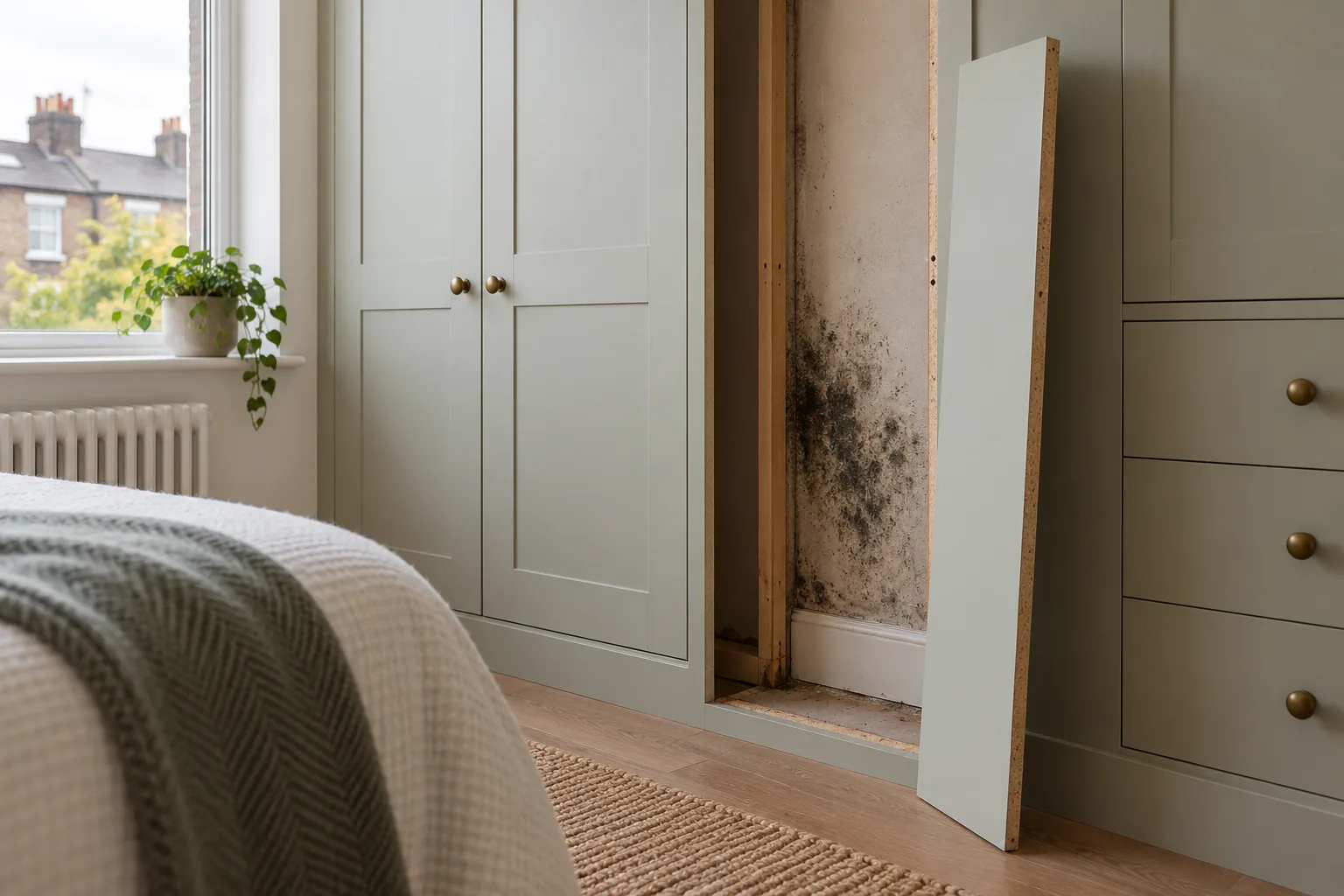
A fitted wardrobe or cabinet can hide a patch of wall for years. When a musty smell develops, the first visible mould may appear at a side gap or where a plinth meets the floor. That small opening does not reveal the full condition behind the joinery. The concealed wall may be colder than the room, warm air may not reach it, and a pipe or exterior defect may also be nearby. The visible mould shows that moisture has supported growth; it cannot identify the source on its own.
An inspection should locate the affected gap, compare the room and adjacent spaces, then decide whether targeted access is justified. Removing an entire installation before recording the pattern can destroy evidence and add cost. Leaving a wet void closed without a plan can allow the condition to persist. The aim is to find enough evidence to choose a proportionate next step.
Establish where the joinery meets the building
Draw the outline of the fitted furniture on a simple room plan. Mark external walls, windows, radiators, pipe routes and any bathroom or kitchen on the other side. Was the joinery installed against original plaster, a newer lining or an insulated wall? Are there skirting boards behind it, or was the unit built directly to the floor and ceiling? These details change the airflow and the possible moisture paths.
Photograph the whole installation before taking close-ups of the mould. Show the side gaps, plinth, top and any accessible service opening. Record whether the mark is on timber, plaster, wallpaper or sealant. Is there swelling, lifting veneer, discoloured plaster, a drip or a fine speckled pattern? Look for staining that continues beyond the joinery into the visible wall or ceiling.
The furniture may be immovable without damaging it. Do not pull fixed panels loose or drill through a concealed service route to satisfy curiosity. Identify who owns the joinery and who can authorise access, especially in a rented flat. An inspector can often narrow the question from the visible edges and neighbouring areas before proposing a small opening.
Understand the cold-wall and airflow effect
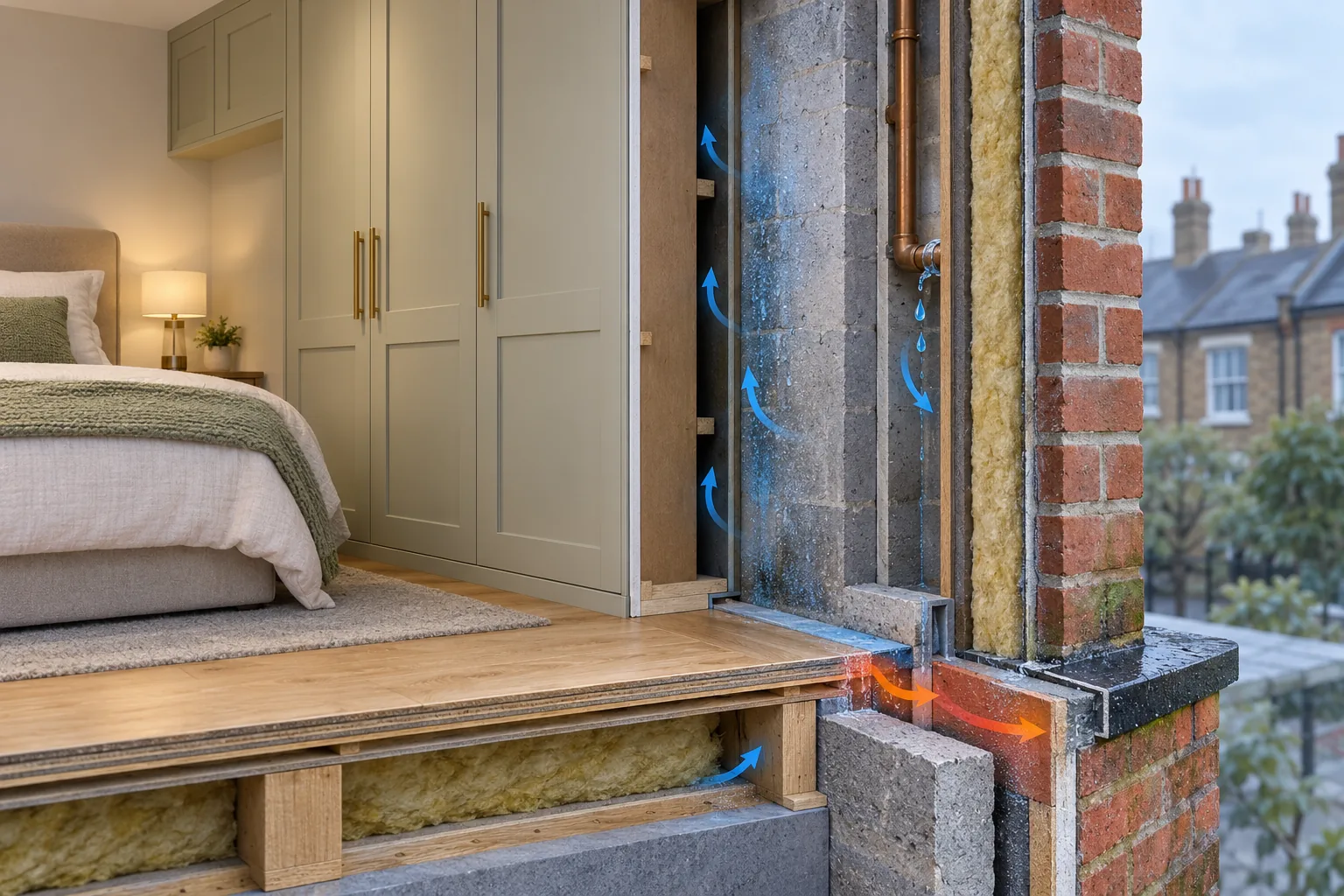
Built-in joinery creates an enclosed space between its back panel and the wall. Warm room air may circulate poorly there, while the wall behind remains cold because it faces outdoors or an unheated stairwell. Moisture in the air can then condense on the colder surface, even if the room itself feels comfortable. A radiator may heat the visible part of the room while leaving the concealed gap untouched.
A thermal bridge at a floor edge, column, window reveal or old solid wall can make one strip colder than the rest. A fitted unit may span several materials, producing a patchy mould pattern. The fact that mould is behind the furniture does not mean the furniture alone caused it. The underlying construction, insulation continuity and indoor conditions all matter. The report should describe how these factors were assessed rather than prescribe a ventilation hole from a photograph.
Compare with other hidden areas. Is there mould behind a freestanding chest on the same wall, or on an open corner away from furniture? Does glazing gather condensation in the morning? Is the room used for drying clothes, or does a bathroom extractor discharge properly? These comparisons may support a cold-surface explanation. They do not rule out a leak, which can also feed a concealed gap.
The room’s history can also change the interpretation. A new insulated lining may have stopped the wall from warming through, while a recent replacement window may have reduced background air leakage. Neither change is automatically wrong, but each can move the coldest point to a junction behind the unit. If the fitted furniture was moved, extended or sealed to the ceiling, note when that happened. These details help an inspector separate a long-standing fabric condition from a new source of moisture.
Keep other moisture routes in view
Fitted units often cover pipework, an old chimney breast or a wall below a roof junction. A small supply leak, waste pipe defect or rainwater path can remain hidden until timber swells or an odour appears. Check whether the mark changes after rain, after plumbing use or during a heating cycle. Ask about previous repairs and whether the unit was fitted after the wall had already shown damp. Old photographs can be valuable.
Observe any accessible exterior detail from a safe position. A leaking gutter or downpipe outside the same wall might be relevant, but the interior mould may still reflect condensation. Water can travel behind finishes and appear away from an entry point; our guide to why a damp patch appears away from a leak explains why the nearest visible defect is not always the source.
Do not interpret a single moisture meter reading through a timber panel as a verdict on the wall behind. Metals, fixings and different materials can affect the reading. The RICS investigation of moisture standard supports using measurements alongside construction details and environmental evidence. A systematic comparison at accessible edges can help guide a targeted opening, but it cannot certify an unseen void.
Decide whether and where to open the void
The best access point is the one that answers a specific question with the least damage. A removable plinth, service panel or small section of backboard may reveal the wall and floor junction. Before opening it, photograph the unit, check for wires and pipes, agree who will make good, and consider whether disturbing visible mould calls for containment or specialist help. If the installation is valuable or shared property, get the appropriate permission.
Once an opening is made, record the wall surface, back of the panel, fixings and any insulation. Mould limited to a cold plaster surface suggests a different response from a wet pipe joint or a water track descending from above. Do not clean everything immediately; photographs and a simple location sketch preserve the pattern for the report. If the void is wet or the area of growth is extensive, plan further work with the relevant professional.
An inaccessible space remains a limitation, even after a careful first visit. A report should say what was not inspected and what further access would establish. This is more useful than a blanket claim that there is no mould behind the rest of the unit. The risk may be low or high depending on the evidence, but the uncertainty should be explicit.
Separate source repair, material treatment and redesign
If a leak is found, stop it and allow affected materials to dry appropriately. If the problem is a persistently cold, poorly ventilated gap, changes may be needed to insulation detail, heating, airflow or the layout of the joinery. Cleaning the visible mould without changing the conditions may produce only a short improvement. The UK government’s damp and mould guidance for rented housing providers stresses dealing with the underlying cause as well as the mould itself.
Materials matter. Porous backboards, swollen timber and damaged plaster may need further assessment or replacement; sound surfaces may be treatable. The extent of work should follow the actual condition behind the panel. Avoid promising that a small surface treatment will clear a concealed void that has not been seen. Equally, avoid replacing a whole wall based solely on a few specks at the edge.
After work, monitor the same location during comparable weather and use. Photograph any reopened access point before closing it. If an insulation or ventilation change is made, check the hidden surface when safe access permits, not just the visible room. A warm, dry week does not prove the problem is resolved for the next winter.
Give the inspector a clear starting point
Send photographs showing the whole unit and the affected gap, a note of when the smell or mould appeared, details of any exterior or plumbing events, and what access is possible. Mention whether anyone in the home is especially vulnerable, so the inspection and treatment plan can account for the situation. Ask for observations, plausible causes, limits and a targeted next action in the report.
If the main clue is an odour inside a closed storage space, record where it is strongest and whether it changes with weather or room use. For persistent mould behind fitted joinery, contact Mould Inspection London with the room layout, photos and access constraints. That allows a useful first survey without treating the furniture edge as a diagnosis.