
Mould Around a Bathroom Door Rather Than the Shower
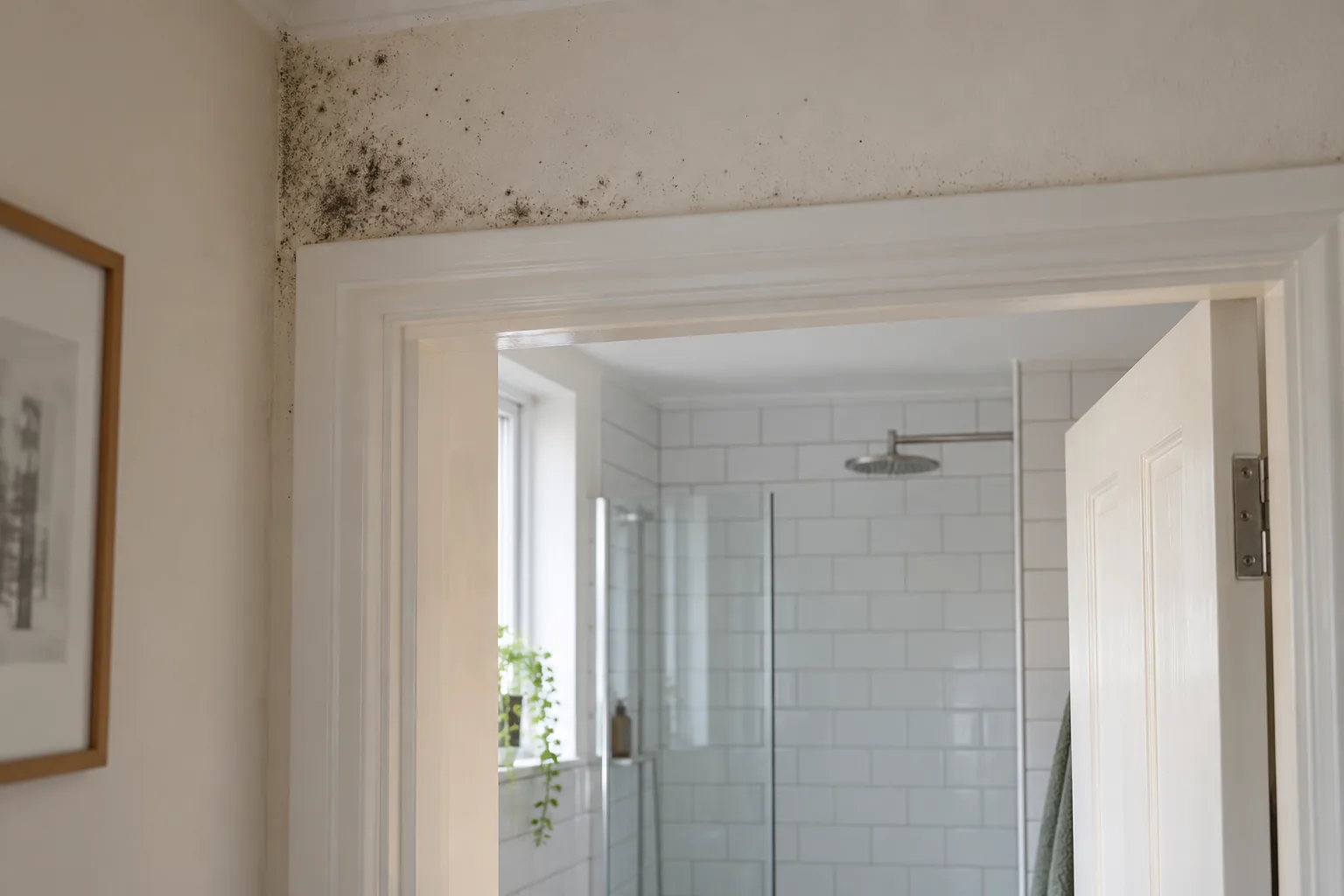
The shower tiles are clean, yet dark spots keep appearing above the bathroom door or along one side of its frame. Moisture does not stay inside the shower enclosure. Humid air can move across the room and meet a colder doorway, lintel or wall. The door may also affect how replacement air enters a bathroom extractor. A local mould patch can therefore reveal something about the room’s airflow rather than the amount of water splashed on the tiles.
It can also have another cause. A leak in a pipe above the door, rainwater at an external junction or earlier water damage may affect the same area. Record the exact position and timing before treating it as ordinary bathroom condensation. The question is why that particular material stays damp.
Map the mould around the doorway
Photograph the full doorway and close views of the affected section. Is mould on the room-facing side of the frame, the corridor side, the plaster above the head or a strip beside the hinges? Does it follow a paint crack, a cold external wall or the edge of a built-in cupboard? A narrow band on the corridor side can mean vapour is escaping through the doorway and settling on a cooler surface there. A stain that extends from a ceiling void may suggest another route.
Note the condition of the material. Is timber swollen, paint blistering or plaster soft? Are there droplets on the surface after a shower? Does the mark worsen in winter, after long showers or after heavy rain? Colour alone cannot identify the moisture source. A short photographic series can show whether the boundary grows and whether cleaning only resets the visible mould temporarily.
Do not sand a mouldy frame or paint over the patch to make it look better before the source is assessed. Preserve useful photographs, then arrange appropriate prompt attention. GOV.UK damp and mould guidance stresses dealing with both visible mould and the underlying moisture.
Humid air can leave the bathroom at the door
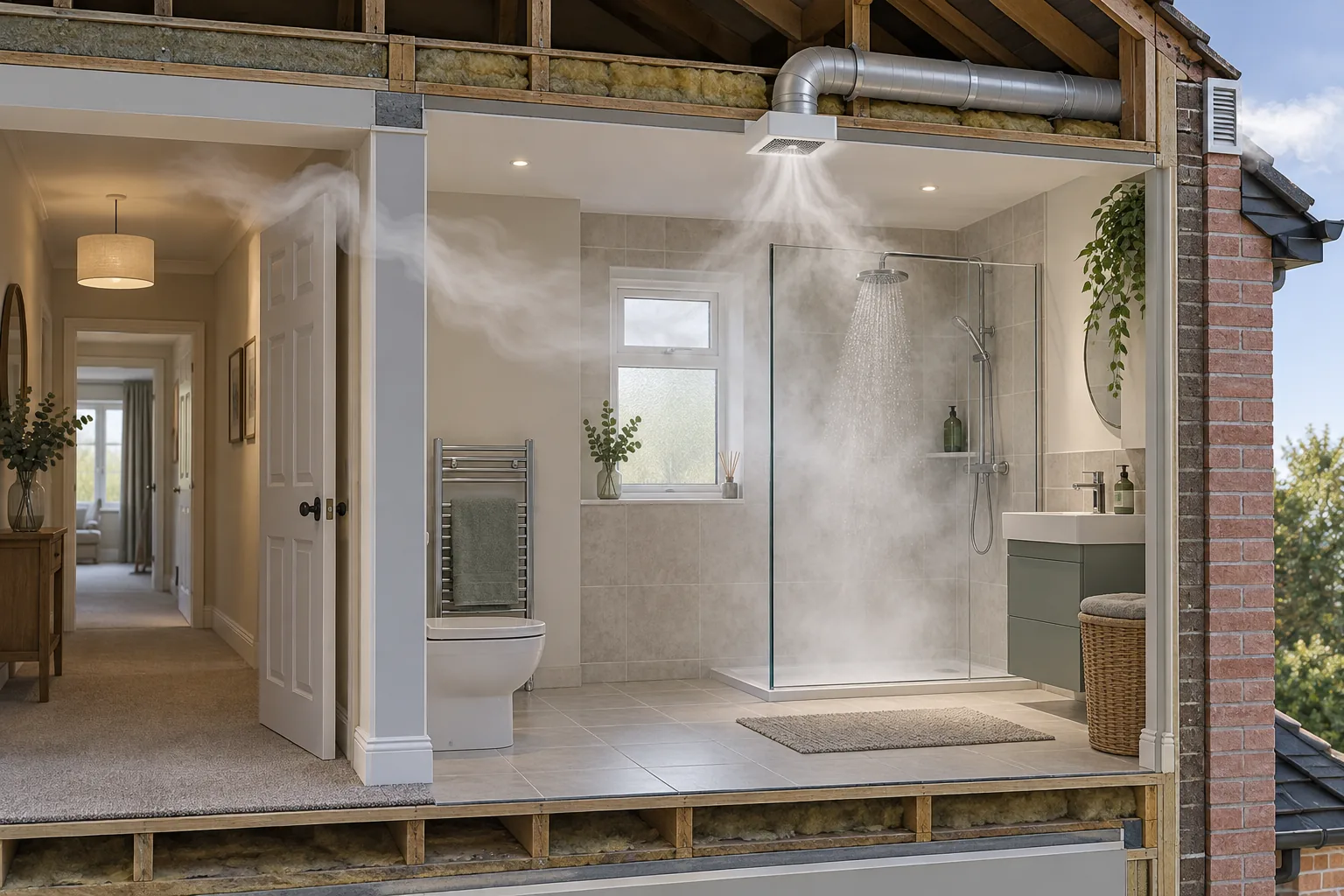
A shower produces a plume of warm, humid air. If extraction is weak or stops early, opening the bathroom door can let that air move into a cooler corridor or bedroom. A cold door head, plaster corner or metal fixing may become the first surface where vapour condenses. The shower wall can remain clean because tile is regularly wiped or stays warmer during bathing.
Observe the normal routine: door open or closed during the shower, extractor on or off, and how long the fan runs afterwards. Does the mirror remain wet when the door is opened? Is there a draught or visible mist moving into the corridor? The pattern can change with the heating and ventilation of neighbouring rooms. Do not deliberately fill the room with steam to test a theory.
A little condensation at a cold doorway may occur occasionally, but repeated mould and damage require a plan. Oxford City Council’s condensation guidance explains the role of cold surfaces, moisture generation and ventilation. The doorway’s position tells you where to look, not who is responsible.
The extractor needs replacement air
An extractor removes air from the bathroom, so replacement air must be able to enter. If the door seals tightly at the floor and no transfer path is designed, the fan may struggle. If the door is left open to compensate, steam may spread into another room. A ventilation assessment can inspect the intended air path, including fan, duct, external outlet and door transfer route. It should not recommend a random gap or alteration without considering the system.
Hearing the fan run is not evidence of its flow rate. Dust, a stuck shutter or a poorly connected duct can reduce extraction. Some fans run continuously with a boost; others stop with the light or have a timer. Record how your fan is controlled. Our guide to a bathroom extractor that runs while moisture lingers sets out practical observations to make before an appointment.
GOV.UK Approved Document F provides ventilation guidance for dwellings in England. The applicable requirements depend on the building and work carried out, so ask a competent installer to assess the actual system rather than guessing compliance from the fan size. A bathroom in a converted London flat may use a central extract route that is not obvious from the grille.
A cold junction can make one spot vulnerable
The door head may meet an external wall, a concrete beam or an uninsulated void. It can be cooler than surrounding tile and plaster. If the mould appears only along one narrow edge and mainly in cold weather, a surface-temperature difference deserves attention. A thermometer or thermal image may help compare areas, but neither can prove the presence or absence of a water leak.
Check adjacent rooms. Is the corridor unheated? Does a wardrobe or curtain block airflow near the frame? Is there mould at other cold corners or windows? Several similar sites make a room-wide humidity and ventilation issue more plausible. A single local mark with soft plaster or a rain-related stain may need a closer building investigation.
In some bathrooms, the shower is on an internal wall while the doorway opens onto a cold external hall. The position of mould may be explained by where vapour meets the coldest material, not by where water is generated. A remedy may involve improving extraction and addressing the cold detail, rather than replacing shower seals without evidence of a leak.
Check concealed services and rainwater routes
Pipes may run above a doorway or through a wall adjacent to a bathroom. If the mark grows after water use, an accessible plumbing check may be warranted. A leak can track along a lintel or frame and show away from the fitting. Do not open a wall or ceiling yourself simply because the stain is high. A competent person can plan a targeted inspection if the evidence supports it.
If the doorway is on or near an external wall, compare changes with rain and wind. A roof edge, window or external joint above may admit water. Photograph safe, visible outside details but do not lean out or climb. A damp inspection can compare the weather history with internal patterns and decide whether a roofer or plumber should investigate further.
The two routes can coexist. A previously wetted door head may be colder and become a condensation point. Mould returning after cleaning therefore does not automatically prove that the extractor is faulty, nor does a working fan rule out a hidden leak. The report should state what evidence supports each conclusion.
Monitor a change rather than guessing
If mould is present on both sides of the doorway, note whether the corridor side is cooler and whether a nearby bedroom door or window is usually closed. Humid air leaving a bathroom can settle at more than one junction. A room plan showing the extractor, door, outside wall and neighbouring rooms is often more useful than another close-up of the spots. It can reveal whether the air path runs past the affected frame and whether a different surface might be receiving moisture too.
Ask the person checking the system to describe where air enters the bathroom and where it leaves the dwelling. A fan measured at the grille may appear to operate, yet a blocked external terminal or poorly routed duct can still limit effective moisture removal. Conversely, a good extraction route may shift attention to a cold bridge or a concealed leak at the door head. A written explanation of those alternatives helps avoid repeated cleaning with no clear follow-up test.
Keep a one-page record over normal bathroom use. Note when the door is open, when the fan runs, how long the mirror stays wet and when the doorway surface feels damp. Take photographs at similar times. If an extractor is repaired, record the date and compare the same doorway through subsequent showers and colder days. If a roof or pipe repair is made, include that as a separate event.
If you can safely wipe small droplets from the frame, do so to protect the finish, but record that action. It is a protective measure, not a source fix. Where mould is extensive, returns quickly or has affected porous material, seek appropriate assessment. In a rented home, report the condition with photographs and ask for the moisture cause to be investigated rather than only the visible spots to be cleaned.
An assessment of condensation and ventilation can test the extraction and air path while inspecting the doorway’s surface and any competing water route. For recurring mould around a bathroom door in a London home, contact our team with the mould position, fan behaviour and timing. Those details lead to a more useful first visit than assuming all bathroom mould starts at the shower.