
Damp at the Edge of a Flat Roof: Trace the Junction

A stain close to the edge of a flat roof often prompts the same response: the roof must be leaking. It might be, but the position of the stain does not identify the failed part. Rainwater can pass a parapet coping, an upstand, a rooflight, a blocked outlet or the joint where a later extension meets an older wall. Water may then travel along insulation, timber or a ceiling void before it becomes visible. A cold roof edge can also support condensation inside the construction or on the room surface.
The first investigation should connect the interior mark to the roof layout and the weather pattern. That avoids replacing a broad area of roof covering when the evidence points to one outlet, or repairing a gutter when the actual cause is elsewhere. It also makes the limits of an interior-only inspection clear.
Photograph the interior pattern before it changes
Take one photograph of the entire ceiling and wall, then closer images of the affected area. Include a scale and date. Is the mark a narrow line along the wall-ceiling junction, a rounded patch beneath a rooflight, or a series of stains spaced along a beam? Note whether paint is blistered, plasterboard tape is opening, or a drip appears during rain. Look for mould or a musty smell in nearby corners, but do not assume they share the same source.
Record the conditions when the mark changes. Does it darken during a short, windy shower or only after prolonged rain? Does it appear when snow melts, when the sun warms a wet roof, or during cold dry weather? A roof may retain water above a ceiling before a stain becomes visible, so allow for a delay. A dry surface at the time of the visit does not prove the source has stopped.
If the ceiling is sagging, water is dripping near electrics or material is coming loose, keep people clear and arrange urgent appropriate help. Avoid pressing the ceiling or opening it casually. A safe photograph and a clear report of the timing are enough to begin the response.
Sketch the roof edge from the inside out
Draw a simple plan showing the stain, external wall, roof edge, parapet and any rooflight or plant equipment. Add the likely positions of gutters, outlets and downpipes. If a flat-roof extension joins a pitched roof or older wall, mark that junction too. Plans and previous repair photographs can help, but confirm the actual arrangement during inspection; building work may not match an old drawing.
Flat roofs are rarely perfectly level. Falls direct water towards an outlet, and a slight change in the roof surface can create a ponding area. The nearest visible roof edge may not be the nearest drainage route. Water can enter at a higher point and follow a structural member to a ceiling joint. Our guide to why a damp patch appears away from a leak explains that general movement.
Where the roof is shared by several flats, establish who controls access and maintenance records. A resident may see the interior stain, while the managing agent holds keys to the roof and knows about previous repairs. Provide the sketch and photographs before an appointment so the exterior inspector knows which part of the roof corresponds to the room below.
Pay attention to the direction of the mark across rooms. If the same ceiling line continues into a hallway or neighbouring flat, the route may follow a joist or common void. If the stain is confined to one rooflight reveal, examine that detail closely, but keep the outlet and nearby wall in scope. A clear map makes these comparisons possible without cutting into the ceiling first. It also helps the contractor avoid inspecting only the most convenient roof area.
Examine the edge details and drainage route
From a safe authorised viewpoint, look for debris at outlets, standing water, displaced flashings, open seams, damaged copings or staining on the outside wall. Do not step onto an unprotected roof or lean out to get a better photograph. The edge details may include an upstand that turns the waterproof layer up a wall, a parapet with a coping, or a gutter hidden behind the facade. Each has a different failure route and requires direct observation.
The Society for the Protection of Ancient Buildings’ guidance on dampness describes the seriousness of blocked or defective parapet and valley gutters in traditional buildings. Although a modern flat roof may use different materials, the underlying lesson is relevant: concealed drainage can wet areas below without an obvious hole in the roof surface. Historic England’s rainwater guidance likewise explains why the capacity and condition of rainwater goods matter.
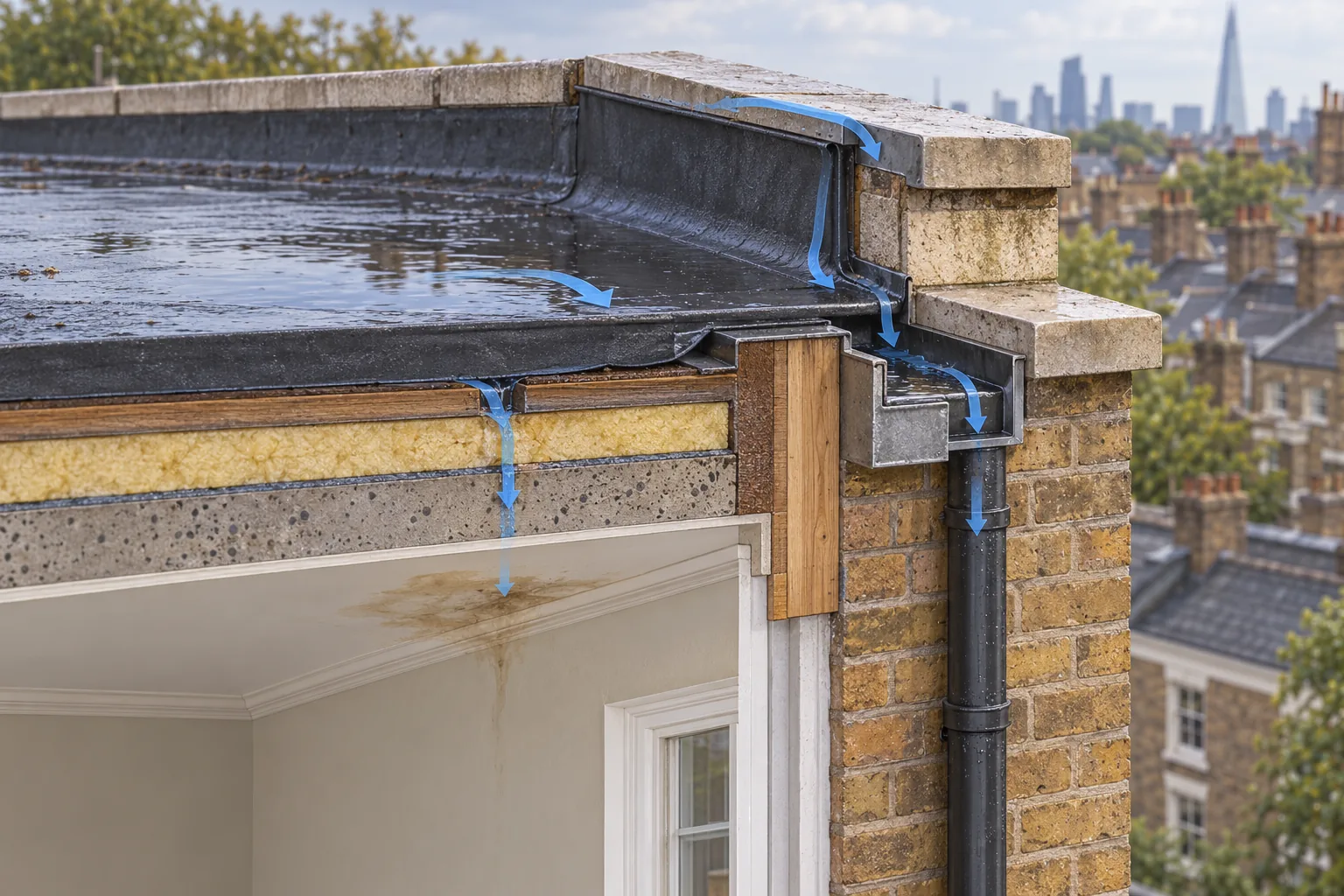
After a storm, photograph where water sits or overflows if the view is safe. A stain on the outside wall below a downpipe joint may point to a different repair from a wet ceiling beneath a rooflight. Ask whether the outlet connects to a concealed pipe and whether a blockage has been cleared before. A roof covering can perform as intended while an outlet backs up; equally, a clear outlet does not rule out a defective junction.
Consider cold-surface moisture and hidden services
Some marks at roof edges are associated with thermal bridging or restricted airflow rather than rain entry. A cold ceiling corner behind a curtain or cupboard may collect condensation when indoor air is humid. Mould that appears mainly in winter, with no clear response to rain, warrants a comparison of surface temperature, room humidity, insulation continuity and extraction. A roof leak can coexist with this pattern, so the survey should test both lines of enquiry where evidence supports them.
Flat roofs can also contain equipment and services. A condensate drain, pipe, roof-mounted unit or water-fed appliance may release water into a void. Ask what sits above the affected room and whether the mark changes with equipment operation. A service route should be checked by the appropriate person, not guessed from a stain. If opening-up is needed, identify the exact question and gain permission before disturbing the ceiling or waterproofing.
Materials can preserve old marks after a source is repaired. Brown staining may remain visible while the underlying plasterboard dries, and salts can reappear through new paint. Compare current moisture, recent weather and repair records before declaring a new roof failure. Conversely, a coat of stain-blocking paint can conceal an active route for a time. The repair history belongs in the investigation.
Ask for a scoped inspection and a testable repair
Give the inspector the interior photographs, a roof sketch, timing notes and any previous roof reports. Ask them to record what they could see, what was inaccessible and which detail is most likely to explain the pattern. A useful report should distinguish a visible defect from a hypothesis. “The flat roof is leaking” is too broad to guide proportionate work; “the outlet overflows into the parapet junction during heavy rain” is a finding that can be tested and repaired.
Where a roofer recommends work, request photographs of the relevant edge, outlet and any opened detail. Ask how the repair will be checked. That might involve observing the next substantial rain, inspecting the concealed drainage or monitoring marked interior points as the material dries. A short water test can be useful in some cases but can also send water into a vulnerable structure if poorly planned. The specialist should decide whether it is appropriate.
Avoid replacing the whole roof solely because an interior stain sits near its edge. Equally, avoid a small patch repair when the evidence points to widespread covering failure. The scope should follow the defect found, the roof’s age and condition, and any shared-building constraints. If several contractors have tried different repairs, give the next inspector the complete chronology so the same assumption is not repeated.
The practical outcome is a narrower question: which junction, outlet or surface is feeding the mark, and what evidence will show that the source has stopped? For a recurring stain at a flat roof edge, contact Mould Inspection London with dated photographs, roof access information and details of prior work. A moisture survey can organise the interior evidence and identify the most useful exterior check without pretending the ceiling patch alone identifies the defect.