
Shared Pipework and a Damp Flat Wall: Organise the Evidence
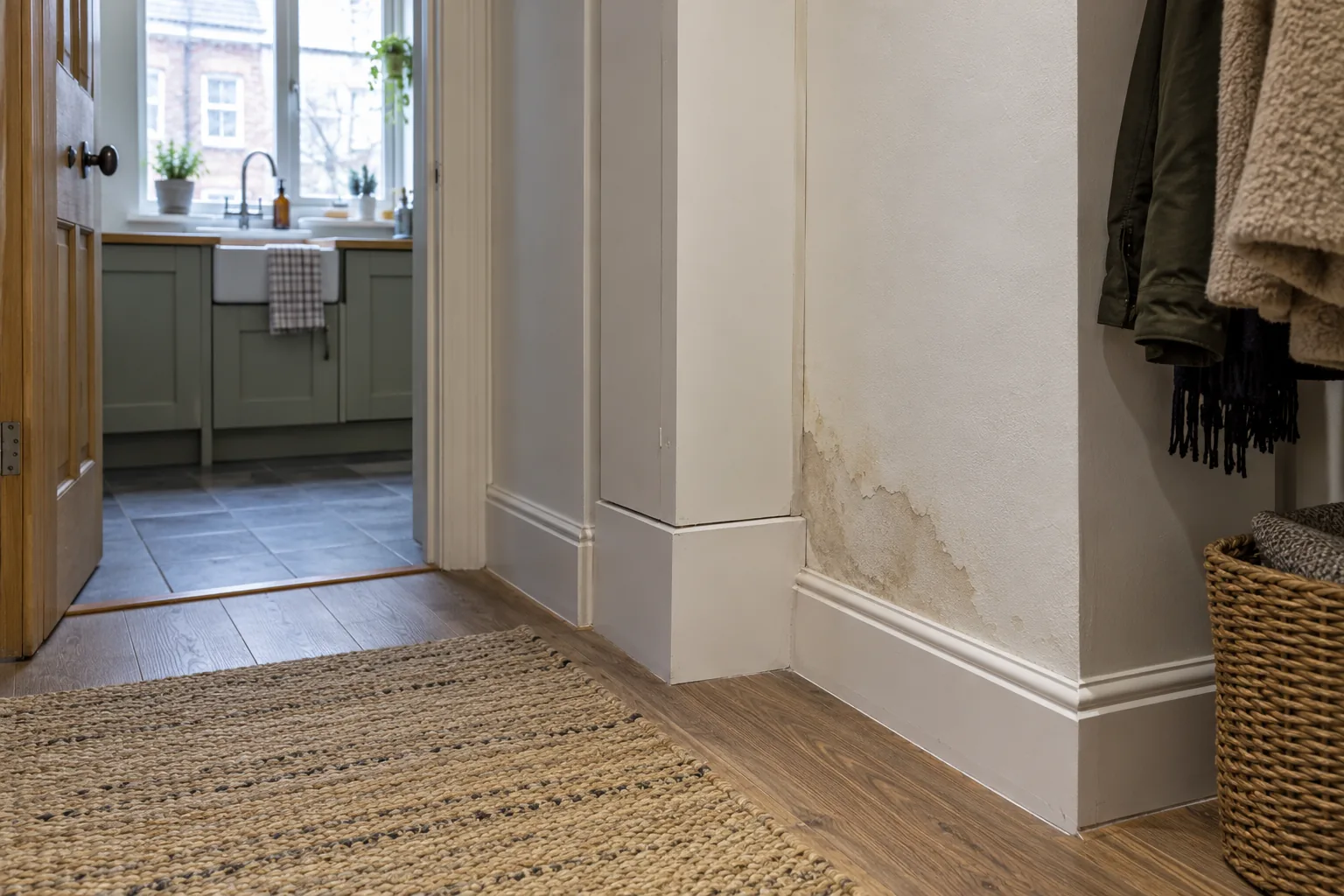
A damp wall in a flat may sit close to a pipe boxing, a communal riser or the bathroom in the next unit. That proximity makes shared pipework worth investigating, but it does not identify the source. Water can travel behind finishes, descend from a floor above or cross a wall cavity before it appears in one room. Condensation, rainwater and an individual flat’s plumbing may create similar marks. Opening the nearest boxing without a plan can leave the original route undiscovered.
The practical difficulty is often access. The affected resident can photograph the stain, while the service route may lie in a locked cupboard, another home or a common area controlled by a managing agent. A useful first inspection connects these pieces of evidence and records which spaces could not be checked. It gives everyone a clear next request rather than a claim based on one damp patch.
Map the stain against the building layout
Start with a simple floor plan. Mark the stained wall, floor and ceiling junctions, and any visible boxing, radiators, sinks, baths, showers or appliances nearby. Add the corresponding rooms above, below and next door if known. A wet patch low on a party wall can originate higher up; a mark at skirting level may simply be where water has collected. Write down which side of the wall is affected and whether the mark continues into the ceiling or floor.
Take dated photographs from the same viewpoint. Include a wide shot that shows the room and a closer view with a scale. Note the stain’s edge, colour, peeling paint, swollen skirting, mould or an active drip. Avoid drawing a line around the patch with permanent marker. A temporary paper scale in the image is enough to show whether it grows. If the surface changes rapidly, share the evidence promptly with whoever can arrange an urgent plumbing check.
Ask what lies behind the wall, but keep uncertain information labelled as uncertain. An old plan can show a former bathroom where there is now a kitchen. A boxing may contain heating, drainage, water supply, ventilation or data cables. The visible position of one pipe does not establish where every concealed line runs.
Record when the moisture changes
Timing can narrow the inspection. Does the wall darken after a shower upstairs, after a heating cycle, during heavy rain or continuously? A pressurised supply leak may persist even when a fixture is not used, while a waste pipe leak may coincide with discharge. Neither pattern is universal. Water stored in a void can emerge after the triggering event, and a recently redecorated wall may hide older staining until it is saturated again.
If there is an active drip, pooling water, a rapidly swelling ceiling or water close to electrics, treat it as urgent and follow the building’s emergency reporting route. Photograph from a safe position and avoid touching wet electrical fittings. When a suspected supply pipe has an identifiable isolation valve, the appropriate person can decide whether to isolate it. The inspection article is no substitute for urgent leak response.
For slower changes, keep a short chronology: date, weather, occupation pattern, plumbing use if known, photographs and any response from neighbours or maintenance staff. State observations in plain words such as “wall patch increased by approximately 5 cm after Tuesday evening” rather than “the upstairs shower leaked”. The latter may be a reasonable question to investigate, but it should remain a hypothesis until tested.
Coordinate access without assuming responsibility
Contact the person who can arrange entry to the relevant space: the occupier of the affected flat, landlord, managing agent or freeholder may each control different parts. The aim at this stage is to inspect and stop the source, not to assign blame from the stain’s location. Share a concise evidence pack with the address or unit reference, room location, dates, photographs and any sign of active water. Ask for the next inspection date and the areas the plumber or surveyor expects to see.
If another flat is involved, request access through the building’s normal process. Avoid sending neighbours a confident accusation or asking them to dismantle fittings. They may also have a leak they cannot see. A coordinated visit can compare the affected wall with the matching side, inspect accessible service voids and check likely fixtures while someone records what was actually done.
For shared risers or locked cupboards, note who holds the key and whether isolation or opening-up work needs a building representative. If a service route is inaccessible at the first visit, that limit should appear in the written findings. An inspector can still map moisture and recommend a targeted return visit, but cannot identify a concealed pipe from a single surface reading.

Make the first technical checks proportionate
A surveyor or leak specialist may compare the stain with adjacent dry materials, look for cold-surface patterns, inspect accessible pipes and ask for safe operational tests. Readings can show the extent of an affected area, especially when taken systematically across similar surfaces. RICS guidance on investigating moisture supports interpreting such evidence alongside the building’s construction and conditions. A number on a handheld meter cannot name a particular pipe.
Where a suspected fixture can be used safely, a staged test may help: observe the wall before use, operate one fixture, then recheck the relevant accessible area. Some leaks need longer to become visible, and water from a previous event can confuse the result. A negative short test is not proof that the service is sound. Pressure testing or opening a concealed route should be planned by a suitably qualified person with permission from those affected.
Check whether the damp could have another source. A cold external wall behind furniture may collect condensation; an overflowing rainwater pipe may wet a wall close to a riser. In older conversions, the service boxing may have been built over an existing external or chimney wall. Keep alternative explanations in view until the evidence makes one more likely.
Document repairs and follow-up
Once a fault is found, record the pipe or fitting, the photographs, the repair date and any area that was opened. The visible wall may remain damp after the leak stops because plaster, timber and insulation need time to dry. Measure progress at consistent points rather than judging only by paint colour. Damaged finishes or mould may need separate treatment after the source is fixed and the material condition is understood.
If the mark continues growing, check whether the repair addressed the only route. Another connection, drain or source may remain active. Ofwat’s explanation of responsibility for supply pipes shows that shared supply pipes can have different ownership arrangements. That general guidance does not determine responsibility for an internal riser or fitting in a particular block; the building documents and service route matter. Keep the findings of each visit together so the next contractor does not have to reconstruct the history.
A good report distinguishes the observed wet area, the tested service, the result, remaining uncertainty and the next action. For a flat where several homes share infrastructure, that clarity is as important as the moisture reading itself. If a damp wall may relate to a shared route, contact Mould Inspection London with your photographs, chronology and access details. We can help frame the first inspection and its limitations without assuming which neighbour or pipe is responsible.